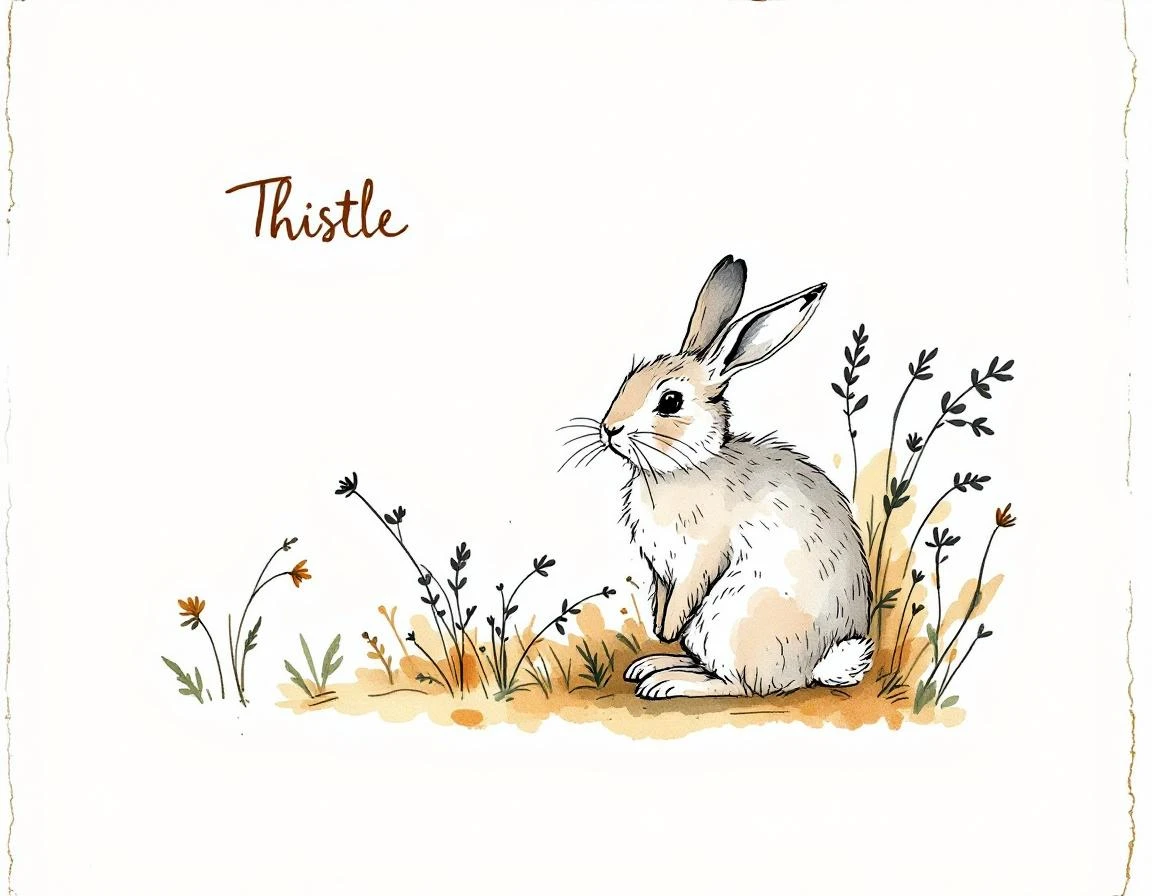

Rabbit Name Generator - Names for Rabbit Characters and Companions
Generate rabbit names drawn from folklore, literature, and the long symbolic history of rabbits - for trickster figures, lucky charms, moon rabbits, and the companions who always know the fastest way out.
Rabbits in Myth and Symbol
The rabbit appears in the folklore of nearly every culture that lived alongside them: trickster in West African and African-American tradition (Br'er Rabbit), moon symbol in East Asian tradition (the Jade Rabbit of Chinese mythology lives on the moon, pounding the elixir of immortality), emblem of spring and fertility in European tradition (the Easter association predates Christianity). The rabbit is a prey animal that survived by being cleverer and faster than its hunters - which is why the rabbit trickster figure is one of the most persistent in world mythology. Br'er Rabbit specifically - from the Joel Chandler Harris recordings of African-American folklore, which drew from West African Anansi spider traditions - wins by being underestimated. The trickster rabbit succeeds not through strength but through reading the situation better than everyone around them. Rabbit names in a trickster context tend to be deceptively plain as a result: Brer, Jack (jackrabbit), Cottontail. The Jade Rabbit of East Asian mythology (*Yuè Tù* in Chinese) lives on the moon with Chang'e, the moon goddess, and spends eternity pounding the elixir of immortality. The associations here are entirely different: not trickster but sacred servant, not earthy cleverness but divine patience. Japanese tradition also places a rabbit on the moon - *Tsuki no Usagi* - making mochi rather than immortality elixir, domestic where the Chinese version is mystical.
Literary Rabbits
The White Rabbit of *Alice in Wonderland* is a portal - the figure whose urgency and strangeness pull Alice into a world she can't control. He is always late, always running, always disappearing around corners. His name is never given; he is defined entirely by his role. That absence is itself meaningful: he is a function, not a character, which is why every "White Rabbit" reference in subsequent fiction (Jefferson Airplane, *The Matrix*) invokes the same thing: follow this into somewhere you'll regret and not regret. *Watership Down* gives us a full cast of named rabbits - Hazel-rah, Fiver, Bigwig, Silver, Bluebell - each name suggesting something about the character within the conventions Richard Adams invented. These feel like rabbit names because they come from the landscape: hazel trees, a count of siblings, the unusual fur on one rabbit's head. The naming system signals that the world-building is serious. In children's literature, rabbits are almost always given warm diminutives or plain human names that make the animal feel approachable. Peter, Benjamin, Flopsy, Mopsy, Cottontail. The names in Beatrix Potter's books do real work: they are small, soft, and slightly comic, which is exactly how Potter wanted her characters to sit in a child's imagination.
Using the Generator
Rabbit names depend entirely on what role the rabbit plays. A trickster rabbit needs a name that sounds harmless - nothing in it should hint that this character will outmaneuver everyone around them. A sacred moon rabbit needs stillness in its name. A rabbit companion in a cozy fantasy needs warmth and approachability. A rabbit scout or spy (rabbits are exceptionally good at holding still and watching) needs a name that suggests watchfulness. In fantasy settings, rabbit companions tend to be the characters who survive by knowing the exits. They map terrain instinctively, they know which way to run, they distrust open ground. A rabbit named Bolt or Warrener or Clover carries that practical intelligence without announcing it. For the rabbit-as-familiar in witch traditions, rabbits were historically linked to witchcraft in England - Matthew Hopkins's trials produced several accounts of rabbit familiars. Names in that tradition draw from herb lore, landscape features, and the minor servants of the devil.
Rabbit Names Craft Guide for Role, Behavior, Tone, and Story Use
Rabbit names work best when the name grows from the specific companion on the page, rather than from a thin pet-name list. This generator is meant for a rabbit companion: a quick, soft, nervous or clever companion tied to burrows, gardens, luck, speed, and escape routes. The name should tell the reader how the animal or companion moves through a scene, who named it, and what kind of relationship it has with the characters around it.
Start with Behavior in the Scene
Before choosing a name, picture the companion doing something concrete. Is it guarding a door, stealing food, scouting ahead, refusing a command, comforting a child, or warning the party before anyone else notices danger? Behavior keeps the name from floating free. For rabbit names, the best candidates usually point toward a habit the story can prove later.
Use Sound as a Handling Cue
Sound tells the reader how close the bond feels. For this page, listen for light syllables, twitchy rhythm, soft endings, and names easy to call gently. A name shouted across a field has different needs than one whispered in a sickroom or written on a brass tag. Test the rhythm in dialogue, especially if the companion appears often. The most useful names can become nicknames without losing their original flavor.
Match the Genre Register
Rabbit names can fit garden fantasy, trickster tales, cozy farms, moon folklore, and chase-heavy adventure. The register changes the name fast. A comic adventure can tolerate brighter, quicker choices. A solemn fantasy may need a name with older texture. A modern setting often benefits from names that sound owned by real people rather than invented for lore. Decide whether the companion is beloved pet, working animal, omen, familiar, mount, scout, mascot, or equal partner before locking in the final sound.
Respect Species, Culture, and Point of View
Avoid making every rabbit harmless. Fear, speed, fertility symbols, trickster history, and underground homes can deepen the name. Also ask who gives the name. A child, sailor, witch, scientist, farmer, soldier, priest, shop clerk, or lonely traveler will choose differently. Names become more convincing when they reveal the namer's world as well as the companion's body. If the name borrows from a real language or cultural tradition, give it a reason inside the setting and avoid using that culture as decorative shorthand.
Turn the Shortlist into Story Material
Put three generated options into three scenes: an introduction, a moment of trouble, and a moment of affection or loss. If the name only works in the introduction, it is probably a label rather than a story tool. Keep the rabbit name that gives you future uses: a command, a joke, a warning, a title, a rumor, or a memory another character repeats after the companion has changed the course of the plot.
Who Named the Companion Matters
For a rabbit, the source of the name changes the whole emotional reading. It might come from the gardener, moon priest, burrow clan, child, hunter, or companion who learns its hiding places. A practical worker may choose a short call that cuts through noise. A child may choose softness, rhyme, or a private joke. A court or archive may preserve titles and lineage. A rescuer may keep the old name out of respect, while a new owner may rename the companion to mark safety after a bad past. That choice tells the reader who had power when the name was given.
Check the Name across Repeated Use
Because companion names repeat so often, test the rabbit choice in ordinary beats as well as dramatic ones. It should work on a tag, in a command, inside a scolding, as a fond nickname, and in a sentence where another character does not understand the bond yet. If the story has sequels, related animals, litters, herds, packs, or familiars, keep notes on the naming logic now. The useful final choice gives you a family of possible names without making every future companion sound copied from the first.