
Owl Name Generator - Names for Owl Characters and Companions
Owl names drawn from mythology, folklore, and the natural world - for familiars, messengers, wisdom-figures, and the owls that watch from the edges of the known world.
Owls in Mythology and Folklore
The owl's link to wisdom is Greek in origin: Athena's companion was the little owl (*Athene noctua*), whose image appeared on Athenian coins, and the Greek word for owl gave us the genus name. But the association predates Athens. Owls appear in Mesopotamian mythology as creatures of the underworld, and in Sumerian tradition Lilith was accompanied by them. In many Indigenous North American traditions, owls are associated with death and the spirit world - not as evil omens, but as messengers between the living and the dead. Hearing an owl call your name meant a relative had died, or would. This is a different kind of wisdom than the Greek: not intellectual virtue, but knowledge of the boundary between worlds. In European folklore the bird is ambiguous. Shakespeare's Lady Macbeth calls the owl "the fatal bellman" who announces death; Chaucer treats it as a figure of learning. The owl is nocturnal, sees in darkness, and rotates its head nearly all the way around. Those qualities read easily as supernatural knowledge, which is probably why the bird ends up on both sides of the line between scholar and witch.
Owl Characters in Fiction
Hedwig in *Harry Potter* is the most recognizable owl companion in modern fiction - a snowy owl who carries mail, keeps Harry company through the miserable years at the Dursleys', and dies at the start of *Deathly Hallows* in a moment Rowling uses to signal that the old protections are gone. Her name comes from Saint Hedwig of Silesia, patron of orphans. The choice was not accidental. Archimedes in *The Sword in the Stone* plays the skeptical tutor: more practically minded than Merlin, openly impatient with Wart's ignorance. This is a recognizable type in fiction - the owl who corrects the protagonist, flatly, when they are wrong. Tolkien's Eagles fill some of the same roles owls occupy elsewhere: messengers, observers from height, agents of the Valar who appear when the plot requires a perspective above the human scale. *Guardians of Ga'Hoole* goes further, building an entire civilization from owls, with named species functioning as cultural groups and individual characters named according to their own internal tradition.
Using the Generator
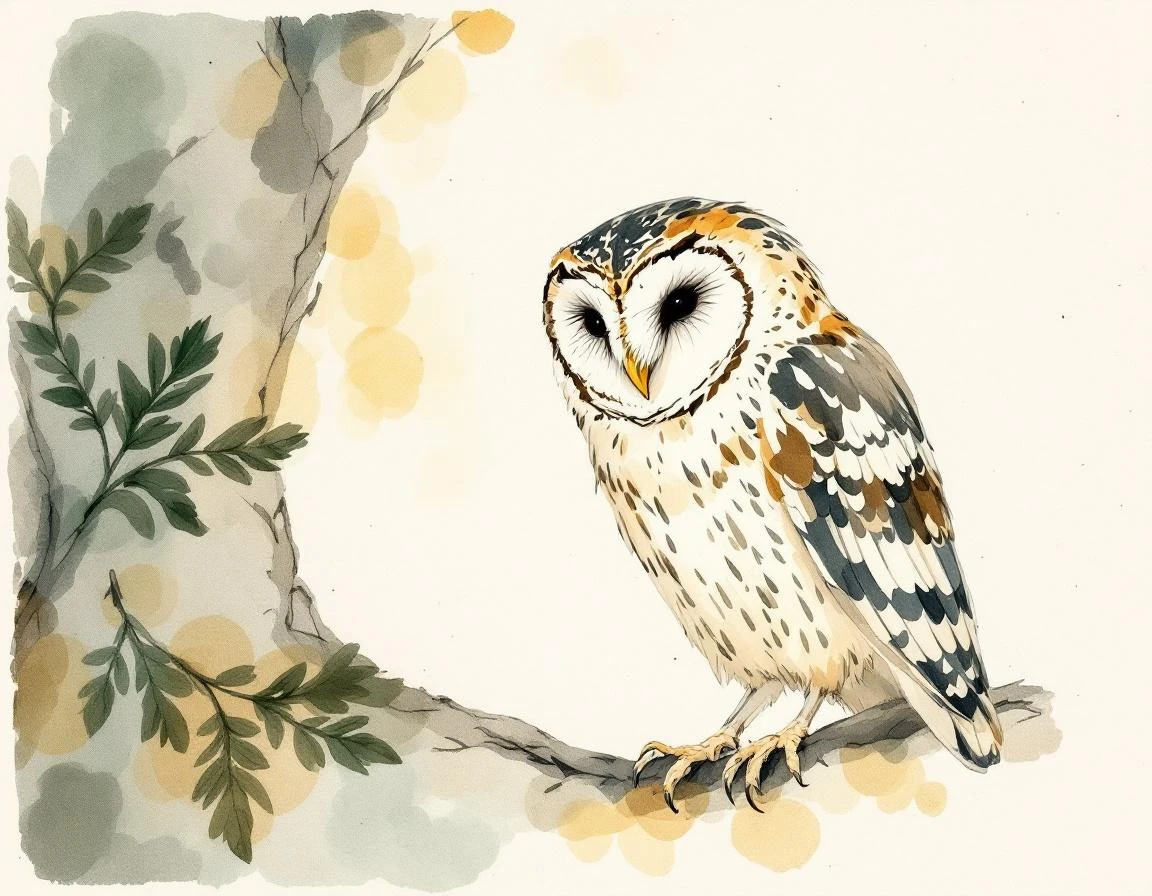
Owl names in fiction tend to announce the bird's role before it does anything. Archimedes or Ptolemy signals an advisor, a creature of libraries and marginalia. Shadow or Dusk places the owl at the threshold - between day and night, between the living and whatever comes after. Pearl or Ivory points to the bird itself: pale feathers, something cool and untouched. Species matters more than writers usually acknowledge. A barn owl, with its heart-shaped face and ghostly coloring, carries different weight than a great horned owl - large, tufted, built for intimidation. A burrowing owl, small and ground-dwelling, quietly dismantles the whole aerial-mystery tradition. The species can generate the name, or at least constrain it. Owls outside the European tradition require different research. In Japanese folklore, *fukuro* sounds like the words for "bag" and "trouble," which gives owls an ambiguous luck association that has nothing to do with Athena or Merlin's Archimedes. In Aztec cosmology, owls belonged to Mictlantecuhtli, the god of the dead - a harder, less romantic association than Western fiction usually reaches for. Names drawn from those traditions will carry that weight, whether the reader recognizes the source or not.
Owl Names Craft Guide for Role, Behavior, Tone, and Story Use
Owl names work best when the name grows from the specific companion on the page, rather than from a thin pet-name list. This generator is meant for an owl companion: a night watcher associated with silence, hunting, wisdom, omen, and unsettling patience. The name should tell the reader how the animal or companion moves through a scene, who named it, and what kind of relationship it has with the characters around it.
Start with Behavior in the Scene
Before choosing a name, picture the companion doing something concrete. Is it guarding a door, stealing food, scouting ahead, refusing a command, comforting a child, or warning the party before anyone else notices danger? Behavior keeps the name from floating free. For owl names, the best candidates usually point toward a habit the story can prove later.
Use Sound as a Handling Cue
Sound tells the reader how close the bond feels. For this page, listen for rounded vowels, soft feathers, sudden stops, and names that can be whispered after midnight. A name shouted across a field has different needs than one whispered in a sickroom or written on a brass tag. Test the rhythm in dialogue, especially if the companion appears often. The most useful names can become nicknames without losing their original flavor.
Match the Genre Register
Owl names can fit wizard towers, haunted woods, libraries, prophecy plots, and winter courts. The register changes the name fast. A comic adventure can tolerate brighter, quicker choices. A solemn fantasy may need a name with older texture. A modern setting often benefits from names that sound owned by real people rather than invented for lore. Decide whether the companion is beloved pet, working animal, omen, familiar, mount, scout, mascot, or equal partner before locking in the final sound.
Respect Species, Culture, and Point of View
Avoid making every owl automatically wise. Species, training, appetite, and eerie timing can make the name fresher. Also ask who gives the name. A child, sailor, witch, scientist, farmer, soldier, priest, shop clerk, or lonely traveler will choose differently. Names become more convincing when they reveal the namer's world as well as the companion's body. If the name borrows from a real language or cultural tradition, give it a reason inside the setting and avoid using that culture as decorative shorthand.
Turn the Shortlist into Story Material
Put three generated options into three scenes: an introduction, a moment of trouble, and a moment of affection or loss. If the name only works in the introduction, it is probably a label rather than a story tool. Keep the owl name that gives you future uses: a command, a joke, a warning, a title, a rumor, or a memory another character repeats after the companion has changed the course of the plot.
Who Named the Companion Matters
For an owl, the source of the name changes the whole emotional reading. It might come from the falconer, wizard, scholar, winter shrine, haunted forest, or person who trusts its silence. A practical worker may choose a short call that cuts through noise. A child may choose softness, rhyme, or a private joke. A court or archive may preserve titles and lineage. A rescuer may keep the old name out of respect, while a new owner may rename the companion to mark safety after a bad past. That choice tells the reader who had power when the name was given.
Check the Name across Repeated Use
Because companion names repeat so often, test the owl choice in ordinary beats as well as dramatic ones. It should work on a tag, in a command, inside a scolding, as a fond nickname, and in a sentence where another character does not understand the bond yet. If the story has sequels, related animals, litters, herds, packs, or familiars, keep notes on the naming logic now. The useful final choice gives you a family of possible names without making every future companion sound copied from the first.
Let Silence Do Some of the Work
Owl names can become over-written fast. The better approach is usually quieter. Let the name carry timing: when the owl appears, what it watches, what it refuses to answer, and who feels judged by its attention. A school owl, a hunting owl, a temple owl, and a half-wild attic resident should not share the same register. If the bird belongs to a wizard, ask whether it is servant, messenger, witness, or old accomplice. That one decision will do more for the name than another layer of moonlit decoration.