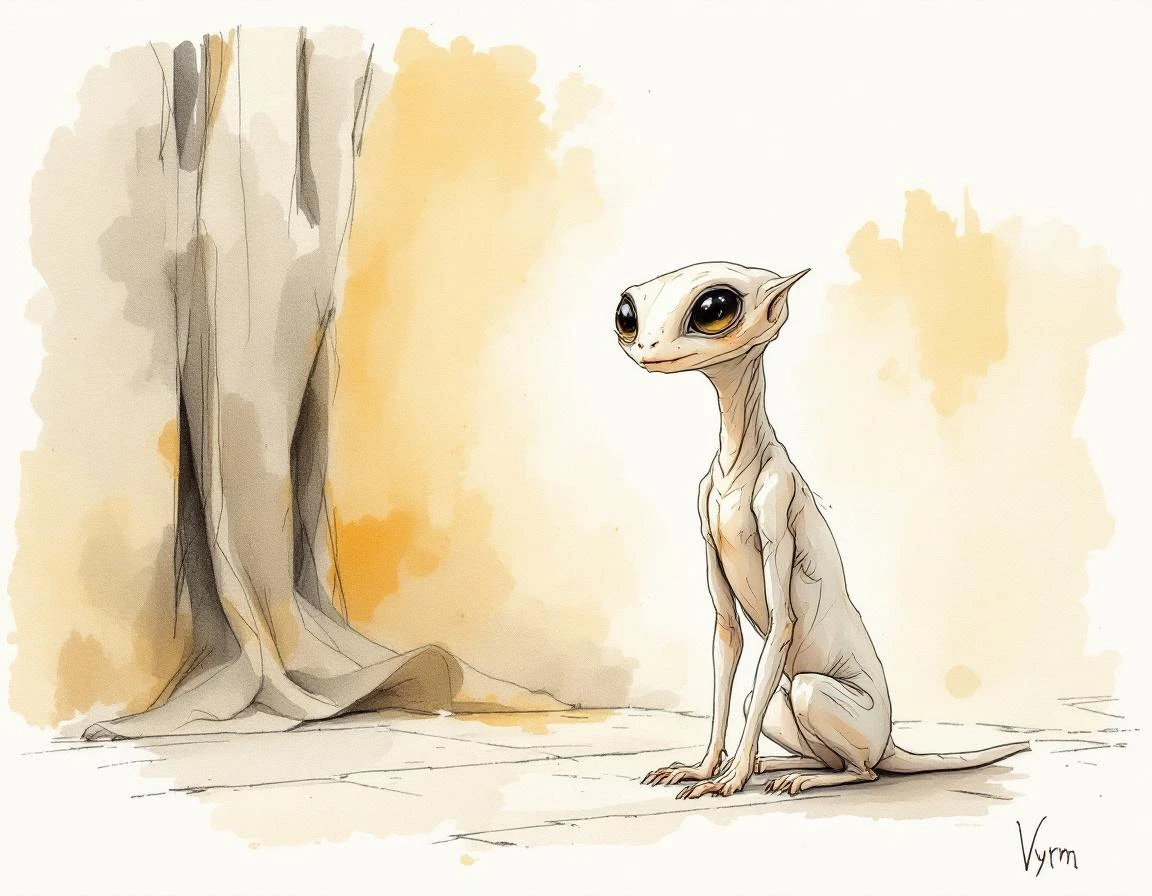

Alien Pet Name Generator - Names for Extraterrestrial Animal Companions
Generate names for alien creature companions in science fiction: for the creatures who live in the margins of spaceships, thrive in atmospheres humans never designed for, and bond with their keepers despite sharing no evolutionary history.
Alien Companions in Science Fiction
Your alien companion is one of science fiction's most effective tools for world-building through relationship. What a character keeps as a companion animal tells you about the world they live in: what lives on their planet, what the culture values, what relationships are possible across biological difference. The alien pet is often the reader's first real measure of how different things are. Owlbears and displacer beasts in D&D, the Salarians' lab rats in *Mass Effect*, the Roombas that Garrus and Tali somehow made sentimental - the alien companion can range from biologically plausible extrapolation (a creature adapted to a different atmosphere or gravity well) to outright fantasy biology (something that defies physical laws as we understand them). Chewbacca, while not a pet, illustrates the dynamic clearly. He's a being from a different species who bonds with a human protagonist, and whose perspective comes from a fundamentally different evolved background. The relationship with Han works because the difference is load-bearing: Chewie understands things Han doesn't, and vice versa, and neither can assume the other shares their intuitions.
Naming Across Species Gaps
The question of how an alien creature gets named in fiction usually resolves in one of three ways: the human protagonist names it in the human tradition (a creature called "Spot" who happens to have six legs and bioluminescent fur), the creature has its own-species name that the protagonist attempts to transliterate, or it carries a name given by whichever culture first encountered it. Each produces a different story texture. A human name for an alien creature signals the protagonist mapping their frame of reference onto something genuinely new. A transliterated species-name signals an attempt at respect that also acknowledges the gap - the acknowledgment itself being a kind of honesty. A cultural name, the way we name geological features on other planets after scientists or give common names to organisms, signals human expansion more than alien identity. For creatures who are genuinely alien in biology and cognition, the name a protagonist chooses often says more about the protagonist than the creature. Douglas Adams understood this: the animals in *Hitchhiker's Guide* that humans name in human ways are quietly hilarious because the naming exposes how small the human frame of reference actually is.
Using the Generator
When naming an alien companion, start with three questions: What does it sound like - does it communicate in frequencies humans can't hear, or in sounds that map onto language? What does it eat, and does that eating interact with the protagonist in any way? What does it *want* - not need, but want? Names work best when they feel phonologically consistent with the species without relying on apostrophes and random consonant clusters that signal "alien" without actually creating alienness. *Vrex* sounds alien by convention; *Silhaven* sounds alien in a different register. What phonological rules the species' language follows shapes what their pet names look like on the page. For science fiction with serious biological world-building - Ursula K. Le Guin's work is the obvious touchstone, but Octavia Butler's *Lilith's Brood* does this too - the companion's name often comes from its biosphere: the star system, the home world, the organism class it belongs to. These names feel more earned because they root the creature in its own biology rather than in the protagonist's naming tradition.
Alien Pet Names Craft Guide for Role, Behavior, Tone, and Story Use
Alien pet names work best when the name grows from the specific companion on the page, rather than from a thin pet-name list. This generator is meant for an extraterrestrial companion: a creature whose body plan, senses, and social instincts may not match human expectations. The name should tell the reader how the animal or companion moves through a scene, who named it, and what kind of relationship it has with the characters around it.
Start with Behavior in the Scene
Before choosing a name, picture the companion doing something concrete. Is it guarding a door, stealing food, scouting ahead, refusing a command, comforting a child, or warning the party before anyone else notices danger? Behavior keeps the name from floating free. For alien pet names, the best candidates usually point toward a habit the story can prove later.
Use Sound as a Handling Cue
Sound tells the reader how close the bond feels. For this page, listen for clicks, hums, pressure changes, bioluminescent pulses, and translated syllables. A name shouted across a field has different needs than one whispered in a sickroom or written on a brass tag. Test the rhythm in dialogue, especially if the companion appears often. The most useful names can become nicknames without losing their original flavor.
Match the Genre Register
Alien Pet Names can fit space opera, first-contact drama, xenobiology logs, and cozy shipboard fiction. The register changes the name fast. A comic adventure can tolerate brighter, quicker choices. A solemn fantasy may need a name with older texture. A modern setting often benefits from names that sound owned by real people rather than invented for lore. Decide whether the companion is beloved pet, working animal, omen, familiar, mount, scout, mascot, or equal partner before locking in the final sound.
Respect Species, Culture, and Point of View
Do not make alienness a pile of apostrophes. Decide whether the name comes from the creature, the handler, or the culture studying it. Also ask who gives the name. A child, sailor, witch, scientist, farmer, soldier, priest, shop clerk, or lonely traveler will choose differently. Names become more convincing when they reveal the namer's world as well as the companion's body. If the name borrows from a real language or cultural tradition, give it a reason inside the setting and avoid using that culture as decorative shorthand.
Turn the Shortlist into Story Material
Put three generated options into three scenes: an introduction, a moment of trouble, and a moment of affection or loss. If the name only works in the introduction, it is probably a label rather than a story tool. Keep the alien pet name that gives you future uses: a command, a joke, a warning, a title, a rumor, or a memory another character repeats after the companion has changed the course of the plot.
Who Named the Companion Matters
For an alien pet, the source of the name changes the whole emotional reading. It might come from the handler, translator, field scientist, smuggler, colony child, or the creature's own species. A practical worker may choose a short call that cuts through noise. A child may choose softness, rhyme, or a private joke. A court or archive may preserve titles and lineage. A rescuer may keep the old name out of respect, while a new owner may rename the companion to mark safety after a bad past. That choice tells the reader who had power when the name was given.
Check the Name across Repeated Use
Because companion names repeat so often, test the alien pet choice in ordinary beats as well as dramatic ones. It should work on a tag, in a command, inside a scolding, as a fond nickname, and in a sentence where another character does not understand the bond yet. If the story has sequels, related animals, litters, herds, packs, or familiars, keep notes on the naming logic now. The useful final choice gives you a family of possible names without making every future companion sound copied from the first.