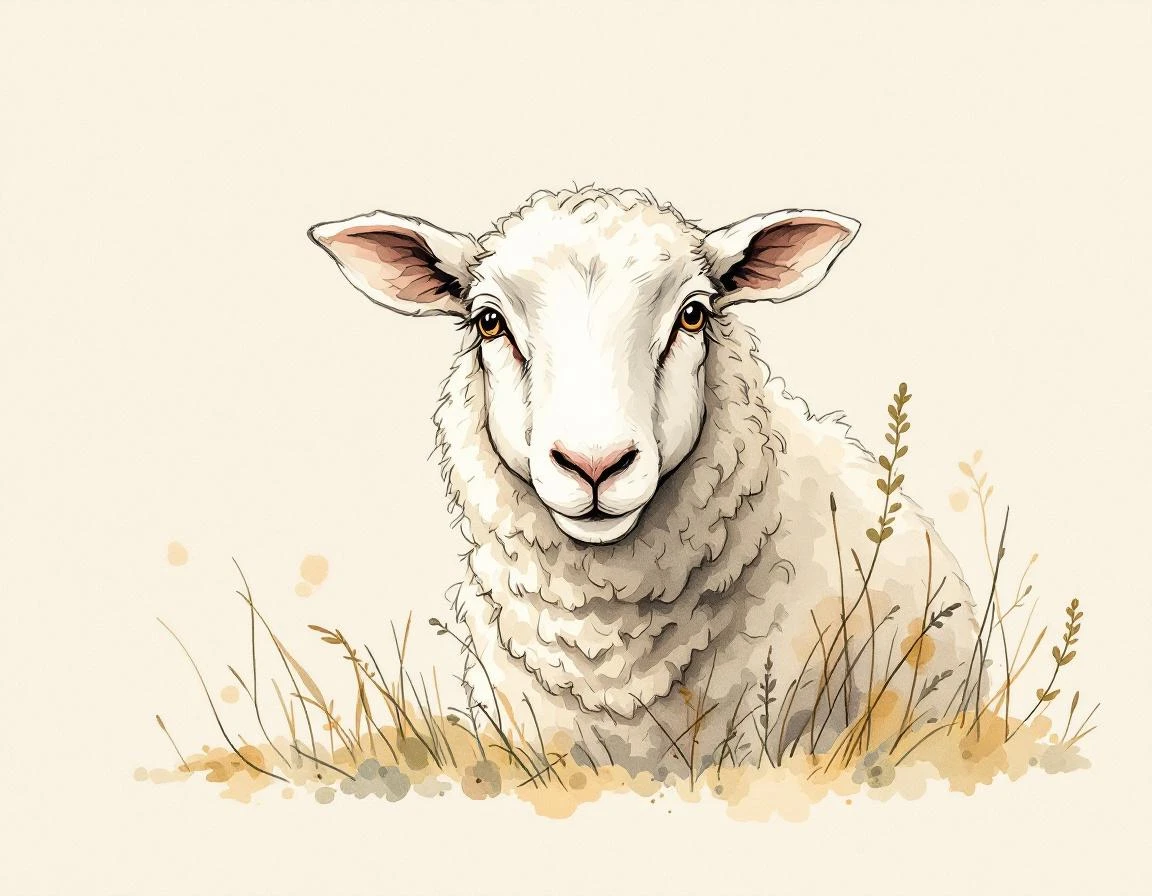

Sheep Name Generator - Names for Sheep and Ram Characters
Sheep names drawn from pastoral tradition, heraldry, and the long mythology of wool, sacrifice, and the flocks that built civilization.
Sheep in Mythology and Religion
Chrysomallos, the ram with the golden fleece, was divine in Greek myth - a gift of Hermes, whose fleece hung in the grove of Ares at Colchis and drew the Argonauts across the Black Sea. The Golden Fleece meant legitimate kingship: whoever held it had the right to rule. That single object gave sheep an association with sovereignty that persisted through centuries of heraldry. In Abrahamic tradition, the sacrifice of sheep is so central that Abraham's near-sacrifice of Isaac, interrupted by a ram caught in a thicket, becomes the founding story of substitutionary sacrifice. The Passover lamb's blood on the doorposts, the Lamb of God as Christian metaphor for Christ - sheep are more deeply woven into the symbolic vocabulary of the Western tradition than any other domestic animal. Aries, the ram, opens the zodiac because the sun enters Aries at the spring equinox. The ram as new beginning, as force, as the animal whose curved horns are weapons as well as symbols, runs from ancient sky-watching into modern astrology.
Sheep in Literature and Pastoral Tradition
Pastoral literature - from Theocritus's *Idylls* to Virgil's *Eclogues* to Sidney's *Arcadia* - is built around sheep and the shepherds who tend them. The shepherd occupied a specific social role in the ancient world: isolated, itinerant, carrying only a crook, living outside the village structure but dependent on it. This made the shepherd a figure for the marginal wise person, the prophet, the one who sees from the outside. The sheep themselves in pastoral tradition are named: Virgil names his flocks, Spenser names them. Naming a sheep is part of the pastoral fiction - a sheep with a name has status, belonging both to the flock and to a specific relationship with a specific shepherd. Baaabra in Douglas Adams's *The Hitchhiker's Guide* (mentioned in passing), Shaun in *Shaun the Sheep*, Dolly the first cloned mammal - sheep accumulate cultural weight from unexpected directions. The most technically advanced biological achievement of the 1990s was announced in the form of a sheep who looked entirely ordinary.
Using the Generator
Sheep names in fiction reveal the shepherd more than the sheep. A character who names each animal in a flock is already a different kind of person than one who knows them by ear tag. The naming practice is characterization before a single scene is written. For a ram - horned, heavy, capable of real force - names from the mythological register fit naturally: Chrysomallos (the golden-fleece ram of Greek myth), Aries, Ramses (Egyptian royal names that fold in the ram-headed god Amun). For a ewe in pastoral fiction, the tradition runs toward smaller landscape words: Clover, Bramble, Briar, Meadow. For fantasy sheep companions in a setting that takes shepherding seriously - a shepherd who is also a mage, or a sheep who turns out to be a god in poor disguise - the name should carry both registers at once. Approachable and pastoral on the surface. Something older underneath.
Sheep Names Craft Guide for Role, Behavior, Tone, and Story Use
Sheep names work best when the name grows from the specific companion on the page, rather than from a thin pet-name list. This generator is meant for an ovine companion: a flock animal connected to wool, hills, weather, bells, shepherding, softness, and communal instinct. The name should tell the reader how the animal or companion moves through a scene, who named it, and what kind of relationship it has with the characters around it.
Start with Behavior in the Scene
Before choosing a name, picture the companion doing something concrete. Is it guarding a door, stealing food, scouting ahead, refusing a command, comforting a child, or warning the party before anyone else notices danger? Behavior keeps the name from floating free. For sheep names, the best candidates usually point toward a habit the story can prove later.
Use Sound as a Handling Cue
Sound tells the reader how close the bond feels. For this page, listen for gentle vowels, bell-like names, pastoral rhythm, and words that feel spoken across a field. A name shouted across a field has different needs than one whispered in a sickroom or written on a brass tag. Test the rhythm in dialogue, especially if the companion appears often. The most useful names can become nicknames without losing their original flavor.
Match the Genre Register
Sheep names can fit pastoral fantasy, shepherd tales, mountain villages, farm comedy, and ritual offerings. The register changes the name fast. A comic adventure can tolerate brighter, quicker choices. A solemn fantasy may need a name with older texture. A modern setting often benefits from names that sound owned by real people rather than invented for lore. Decide whether the companion is beloved pet, working animal, omen, familiar, mount, scout, mascot, or equal partner before locking in the final sound.
Respect Species, Culture, and Point of View
Avoid treating sheep as only foolish. Flock awareness, memory, weather sense, and livelihood can all matter. Also ask who gives the name. A child, sailor, witch, scientist, farmer, soldier, priest, shop clerk, or lonely traveler will choose differently. Names become more convincing when they reveal the namer's world as well as the companion's body. If the name borrows from a real language or cultural tradition, give it a reason inside the setting and avoid using that culture as decorative shorthand.
Turn the Shortlist into Story Material
Put three generated options into three scenes: an introduction, a moment of trouble, and a moment of affection or loss. If the name only works in the introduction, it is probably a label rather than a story tool. Keep the sheep name that gives you future uses: a command, a joke, a warning, a title, a rumor, or a memory another character repeats after the companion has changed the course of the plot.
Who Named the Companion Matters
For a sheep, the source of the name changes the whole emotional reading. It might come from the shepherd, flock, mountain village, wool merchant, child, or person listening for its bell. A practical worker may choose a short call that cuts through noise. A child may choose softness, rhyme, or a private joke. A court or archive may preserve titles and lineage. A rescuer may keep the old name out of respect, while a new owner may rename the companion to mark safety after a bad past. That choice tells the reader who had power when the name was given.
Check the Name across Repeated Use
Because companion names repeat so often, test the sheep choice in ordinary beats as well as dramatic ones. It should work on a tag, in a command, inside a scolding, as a fond nickname, and in a sentence where another character does not understand the bond yet. If the story has sequels, related animals, litters, herds, packs, or familiars, keep notes on the naming logic now. The useful final choice gives you a family of possible names without making every future companion sound copied from the first.