
Pig Name Generator - Names for Pig Characters and Companions
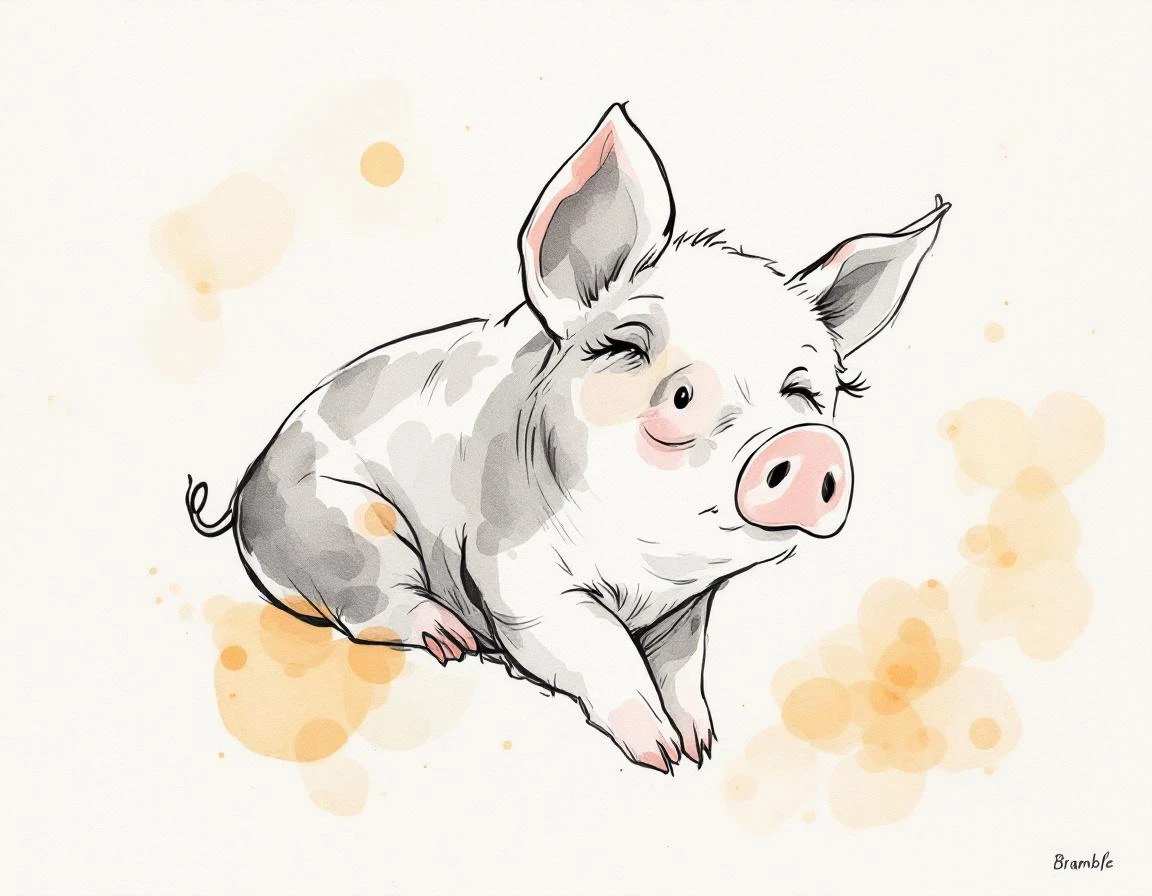
Pigs have a longer literary and mythological record than most people expect. Celtic tradition gave us Henwen, the sow of prophecy, and the divine boars of the Mabinogion. Orwell's Napoleon and Snowball think in terms of political power. Wilbur survives on friendship and the unlikely eloquence of a spider. The tradition runs from sacred to satirical, from ancient to modern. The generator draws on that range: names suited to the commanding boar, the clever runt, the sow with her own agenda, the animal companion who turns out to be the most perceptive character in the room.
Pigs in Mythology
The wild boar was one of the most dangerous animals a hunter could face in temperate Europe and Asia - fast, armored with a bristled hide and curved tusks, and unwilling to flee. Celtic mythology treats the boar as a symbol of warrior virtue: great feasts served boar as the hero's portion, and boar hunts were the central test of valor. The Calydonian Boar Hunt in Greek mythology brought the heroes together to kill a boar sent by Artemis as punishment. The Fomorian boar Orc Triath in Irish mythology and the divine boar Twrch Trwyth in Welsh mythology (*Mabinogion*) are monstrous and nearly unkillable - hunted by Arthur and his knights across Ireland and Wales in the *Culhwch and Olwen* story. These are boars as chaos, as something the civilized world must contain but can barely manage. In Hindu mythology, Varaha is the boar avatar of Vishnu, who takes boar form to rescue the earth goddess Bhudevi from the demon Hiranyaksha, diving to the bottom of the cosmic ocean and lifting the earth on his tusks. The divine boar here is not chaos but salvation: enormous, unstoppable, working on behalf of creation.
Literary Pigs
George Orwell chose pigs for *Animal Farm* deliberately. They're intelligent, they're associated with excess in human culture, and their eventual bipedalism - Napoleon and Snowball rising onto two legs - becomes the novella's most disturbing image. Squealer the propagandist, Snowball the idealist, Napoleon the tyrant: the names carry political weight without announcing it. Wilbur in *Charlotte's Web* is the most purely sympathetic pig in fiction. Sweet, anxious, grateful, certain he will die. His name is small and warm, entirely unlike the mythological boar ancestors that haunt older European literature. He is a farm pig who became a literary pig: particular, named, loved. *Babe* is a pig who does sheep-herding because he asks politely, and the 1995 film turns that premise into a quiet argument: nature doesn't determine destiny; character does. Pig names in fiction after *Babe* and *Charlotte's Web* carry that inheritance. The pig who was supposed to be something else entirely.
Using the Generator
Pig names in fiction split between the mythological register and the domestic. A sacred or giant boar needs weight: Twrch, Orc, Varaha, Gullinbursti (the golden-bristled dwarf-made boar of Norse myth who pulls Freyr's chariot). A beloved farm pig needs something small and human: Wilbur, Charlotte's Ward, Hamlet, Oink. For intelligent pig companions in fantasy - the pig who is smarter than they appear, who reads a room better than anyone credits - names that hint at hidden depth do quiet work. A pig named Solomon or Prospero or Archimedes tells the reader something is different before the pig does anything to prove it. In historical fiction with breeding or farm contexts, pig naming often follows the informal tradition of farmers naming animals they will eventually eat: affectionate, specific, honest about the relationship without flinching from how it ends. A pig named Pork Chop by a farmer who loves her anyway is a different kind of name than a pig named Wilbur by a lonely child.
Pig Names Craft Guide for Role, Behavior, Tone, and Story Use
Pig names work best when the name grows from the specific companion on the page, rather than from a thin pet-name list. This generator is meant for a porcine companion: a clever, food-motivated, strong-nosed companion tied to farms, mud, folklore, stubbornness, and surprising intelligence. The name should tell the reader how the animal or companion moves through a scene, who named it, and what kind of relationship it has with the characters around it.
Start with Behavior in the Scene
Before choosing a name, picture the companion doing something concrete. Is it guarding a door, stealing food, scouting ahead, refusing a command, comforting a child, or warning the party before anyone else notices danger? Behavior keeps the name from floating free. For pig names, the best candidates usually point toward a habit the story can prove later.
Use Sound as a Handling Cue
Sound tells the reader how close the bond feels. For this page, listen for round vowels, snorts, barn warmth, and sturdy names with comic or affectionate weight. A name shouted across a field has different needs than one whispered in a sickroom or written on a brass tag. Test the rhythm in dialogue, especially if the companion appears often. The most useful names can become nicknames without losing their original flavor.
Match the Genre Register
Pig names can fit farm comedy, fairy tales, survival fiction, village fantasy, and talking-animal stories. The register changes the name fast. A comic adventure can tolerate brighter, quicker choices. A solemn fantasy may need a name with older texture. A modern setting often benefits from names that sound owned by real people rather than invented for lore. Decide whether the companion is beloved pet, working animal, omen, familiar, mount, scout, mascot, or equal partner before locking in the final sound.
Respect Species, Culture, and Point of View
Avoid using only appetite. Pigs are smart, social, forceful animals, and the name can show strategy or dignity too. Also ask who gives the name. A child, sailor, witch, scientist, farmer, soldier, priest, shop clerk, or lonely traveler will choose differently. Names become more convincing when they reveal the namer's world as well as the companion's body. If the name borrows from a real language or cultural tradition, give it a reason inside the setting and avoid using that culture as decorative shorthand.
Turn the Shortlist into Story Material
Put three generated options into three scenes: an introduction, a moment of trouble, and a moment of affection or loss. If the name only works in the introduction, it is probably a label rather than a story tool. Keep the pig name that gives you future uses: a command, a joke, a warning, a title, a rumor, or a memory another character repeats after the companion has changed the course of the plot.
Who Named the Companion Matters
For a pig, the source of the name changes the whole emotional reading. It might come from the farmer, village child, butcher who spared it, circus owner, witch, or family that underestimates it. A practical worker may choose a short call that cuts through noise. A child may choose softness, rhyme, or a private joke. A court or archive may preserve titles and lineage. A rescuer may keep the old name out of respect, while a new owner may rename the companion to mark safety after a bad past. That choice tells the reader who had power when the name was given.
Check the Name across Repeated Use
Because companion names repeat so often, test the pig choice in ordinary beats as well as dramatic ones. It should work on a tag, in a command, inside a scolding, as a fond nickname, and in a sentence where another character does not understand the bond yet. If the story has sequels, related animals, litters, herds, packs, or familiars, keep notes on the naming logic now. The useful final choice gives you a family of possible names without making every future companion sound copied from the first.