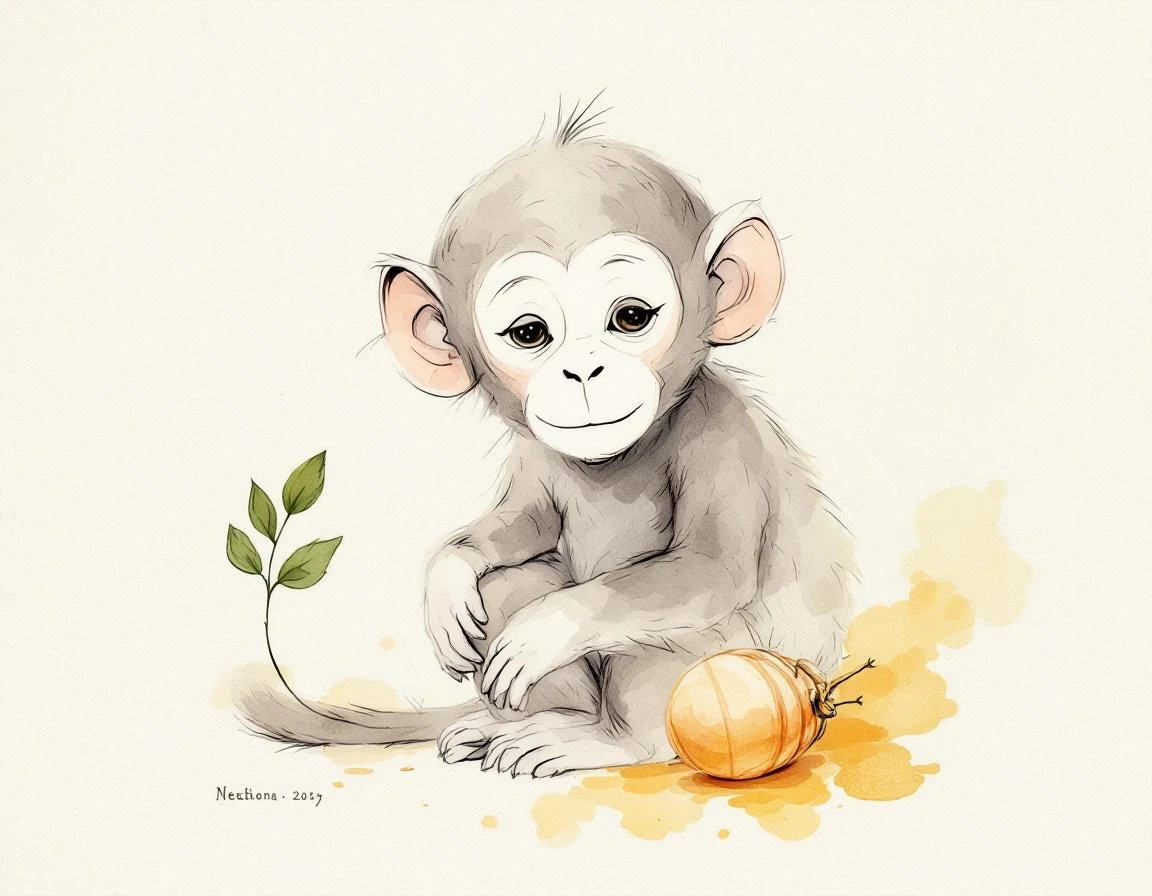

Monkey Name Generator - Names for Primate Characters and Companions
Monkey and ape names drawn from Hindu mythology, East Asian legend, African folklore, and the literary tradition of primates who sit just close enough to human to unsettle every assumption.
Primates in Mythology
Hanuman is the best-known monkey deity in world mythology - the divine warrior of the *Ramayana*, devotee of Rama, who crosses to Lanka with an army of monkeys to rescue Sita. He is characterized by strength, loyalty, and the ability to make himself large or small at will. His name comes from the Sanskrit for "having (a prominent or disfigured) jaw." He remains one of the most widely worshipped figures in Hinduism, particularly among wrestlers and soldiers. Sun Wukong, the Monkey King of Wu Cheng'en's *Journey to the West* (16th century CE), is among the most distinctive figures in world literature. Born from stone, he learns all forms of magic, steals from the Jade Emperor, gets imprisoned under a mountain by the Buddha, and becomes the disciple of Xuanzang. His name means "Awakened to Emptiness." He carries a staff that can grow to the size of a mountain or shrink to the size of a needle, kept behind his ear. In West African and African-diaspora tradition, the spider Anansi sometimes takes monkey form or allies with monkey figures. In Yoruba tradition, monkeys (*edun*) carry specific ceremonial associations. Throughout sub-Saharan Africa, primates appear in folklore as figures of cunning and social intelligence - animals who understand human behavior because they share enough biology to read it.
Apes and Monkeys in Fiction
The ape in fiction often carries the question of what makes humans human. *Planet of the Apes* inverts the human-animal hierarchy to examine human behavior from outside. *Tarzan* uses an ape-raised human to interrogate civilization. *King Kong* makes a great ape the figure of the sublime - vast, powerful, destroyed by the civilization that captured him. Maurice and Caesar in *Rise of the Planet of the Apes* give chimpanzees full interior lives and political consciousness. Caesar's name signals his arc toward leadership and the betrayal of natural order. The naming does the work: you name a chimpanzee Caesar when you intend him to become a revolutionary. For fantasy monkey companions - the flying monkeys of *The Wizard of Oz*, the vanaras of the *Ramayana*, the clever monkey sidekick of comic tradition - the name should reflect the monkey's nature: loyal servant, trickster, revolutionary, or something divine in animal form.
Using the Generator
Monkey and primate names in fiction depend heavily on the cultural tradition the story draws from. A Hanuman-tradition monkey companion in a Hindu-mythology-inspired story calls for a Sanskrit-adjacent name that fits that register. A Sun Wukong-tradition monkey in East Asian-inspired fantasy might draw from Chinese naming patterns. A trickster monkey in an African-tradition story pulls from entirely different sources. For a companion monkey in a pirate or explorer narrative - the cute capuchin on a sailor's shoulder was a genuine fixture of the Age of Sail - names tend toward the small and affectionate: Jacko, Chico, Captain, Señor. Exotic pets and comedic companions; their names reflect their role. For the superintelligent chimpanzee or gorilla who functions as a character in the morally full sense, the name needs to carry that weight. Caesar does. Koko (the real gorilla who learned sign language) does. Nim (from *Project Nim*) does. Names that signal individual-being rather than animal-pet.
Monkey Names Craft Guide for Role, Behavior, Tone, and Story Use
Monkey names work best when the name grows from the specific companion on the page, rather than from a thin pet-name list. This generator is meant for a monkey companion: a clever, social, handsy companion that can be trickster, scout, thief, mimic, or loyal nuisance. The name should tell the reader how the animal or companion moves through a scene, who named it, and what kind of relationship it has with the characters around it.
Start with Behavior in the Scene
Before choosing a name, picture the companion doing something concrete. Is it guarding a door, stealing food, scouting ahead, refusing a command, comforting a child, or warning the party before anyone else notices danger? Behavior keeps the name from floating free. For monkey names, the best candidates usually point toward a habit the story can prove later.
Use Sound as a Handling Cue
Sound tells the reader how close the bond feels. For this page, listen for quick syllables, chatter rhythm, nimble consonants, and names that can survive mischief. A name shouted across a field has different needs than one whispered in a sickroom or written on a brass tag. Test the rhythm in dialogue, especially if the companion appears often. The most useful names can become nicknames without losing their original flavor.
Match the Genre Register
Monkey names can fit jungle quests, market cities, circus backstories, temple ruins, and comic adventures. The register changes the name fast. A comic adventure can tolerate brighter, quicker choices. A solemn fantasy may need a name with older texture. A modern setting often benefits from names that sound owned by real people rather than invented for lore. Decide whether the companion is beloved pet, working animal, omen, familiar, mount, scout, mascot, or equal partner before locking in the final sound.
Respect Species, Culture, and Point of View
Avoid lazy caricature. Intelligence, social rank, curiosity, and environment should guide the name more than chaos alone. Also ask who gives the name. A child, sailor, witch, scientist, farmer, soldier, priest, shop clerk, or lonely traveler will choose differently. Names become more convincing when they reveal the namer's world as well as the companion's body. If the name borrows from a real language or cultural tradition, give it a reason inside the setting and avoid using that culture as decorative shorthand.
Turn the Shortlist into Story Material
Put three generated options into three scenes: an introduction, a moment of trouble, and a moment of affection or loss. If the name only works in the introduction, it is probably a label rather than a story tool. Keep the monkey name that gives you future uses: a command, a joke, a warning, a title, a rumor, or a memory another character repeats after the companion has changed the course of the plot.
Who Named the Companion Matters
For a monkey, the source of the name changes the whole emotional reading. It might come from the market keeper, temple caretaker, performer, jungle scout, thief crew, or exasperated friend. A practical worker may choose a short call that cuts through noise. A child may choose softness, rhyme, or a private joke. A court or archive may preserve titles and lineage. A rescuer may keep the old name out of respect, while a new owner may rename the companion to mark safety after a bad past. That choice tells the reader who had power when the name was given.
Check the Name across Repeated Use
Because companion names repeat so often, test the monkey choice in ordinary beats as well as dramatic ones. It should work on a tag, in a command, inside a scolding, as a fond nickname, and in a sentence where another character does not understand the bond yet. If the story has sequels, related animals, litters, herds, packs, or familiars, keep notes on the naming logic now. The useful final choice gives you a family of possible names without making every future companion sound copied from the first.