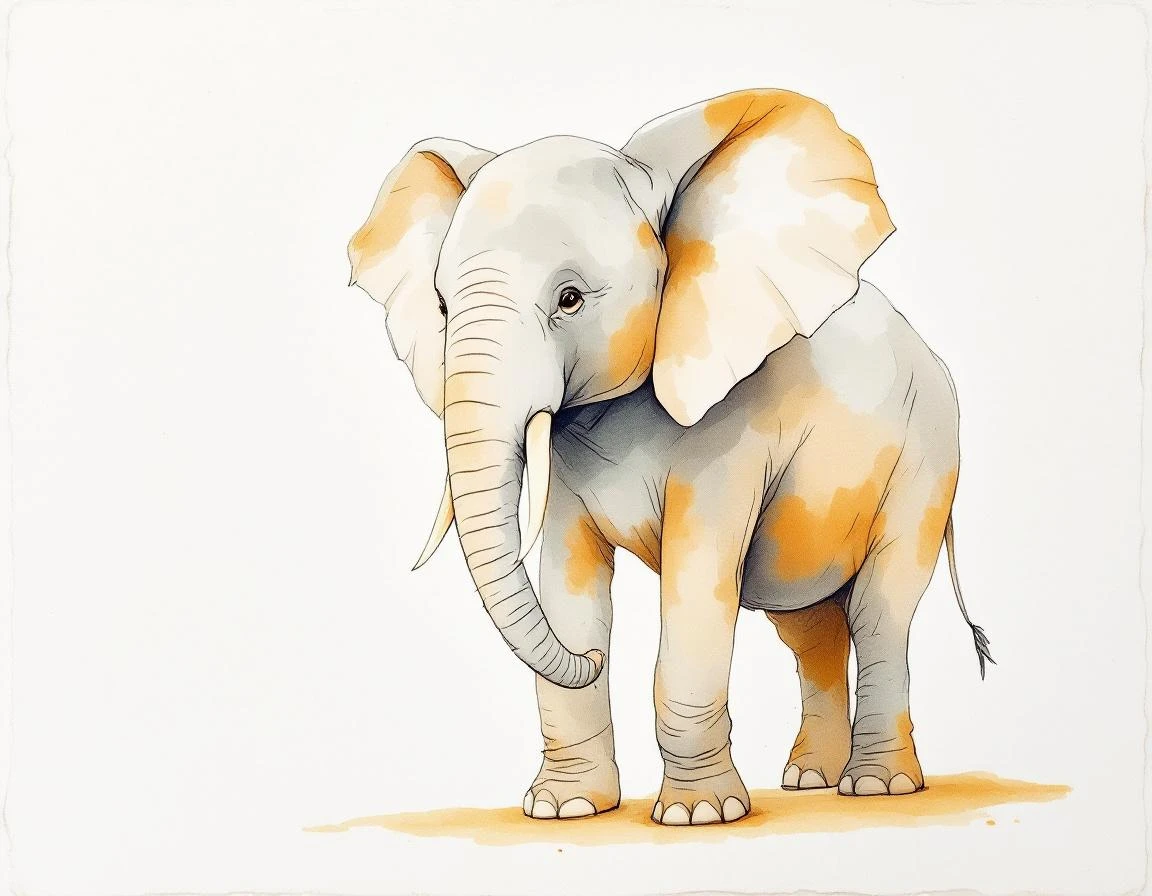


Elephant Name Generator - Names for Elephant Characters and Companions
Elephant names drawn from South and Southeast Asian mythology, from the war elephant traditions of the ancient world, and from a literary history longer than most people remember.
Elephants in Mythology
Ganesha - the elephant-headed son of Shiva and Parvati - is one of Hinduism's most widely worshipped deities: remover of obstacles, patron of beginnings, writing, wisdom, and the arts. His elephant head has several origin stories (Shiva beheaded him in a rage and replaced it with the first animal found; or he was simply born that way), but in every version the result is the same. The elephant head is not a curse or a transformation. It is Ganesha. Airavata, the white elephant who emerged from the churning of the cosmic ocean (*samudra manthan*), became the mount of Indra, king of the gods. White elephants in South and Southeast Asian tradition are sacred: in Thailand, a white elephant is a royal symbol belonging to the king alone. The English phrase "white elephant" - meaning a costly, useless possession - comes from the tradition that a king might gift one to a courtier he wished to ruin. The animal was too sacred to put to work and too expensive to keep. In Cambodian, Thai, and Burmese mythology, the royal war elephant was a figure of state sovereignty. Winning or losing one in battle carried symbolic weight alongside the military kind. Specific elephants were named, recorded in chronicles, and mourned when they died.
Historical Elephants
Hannibal's war elephants crossing the Alps is one of the most famous military images of the ancient world, though most of his elephants died in the cold. The image survived. His lead elephant, *Surus* ("the Syrian"), was the largest and most battle-reliable, possibly the one who made it through. Pyrrhus of Epirus used war elephants against Rome in the Pyrrhic Wars. The Romans, who had never seen elephants, initially called them "Lucanian oxen." When Rome eventually captured elephants, they put them in triumphs and public spectacles. Specific circus elephants were known by name. Gunpowder changed what war elephants were for, but they continued in South and Southeast Asian armies into the 19th century. Tipu Sultan used decorated war elephants; the Marathas had elephant corps. The last major military use by a major power came in World War II in Burma, where elephants carried supplies through terrain no vehicle could navigate.
Using the Generator
Elephant names in South Asian-influenced fiction often draw from Sanskrit - compound words carrying positive meanings: Airavata (cloud-white elephant of Indra), Gajendra (elephant lord, from *gaja*), Elephas (the genus name, from Greek). War elephant names in historical chronicles tend to describe color, markings, or home region. Children's fiction and gentler adult fiction follow a different logic. Dumbo, Babar, Elmer the Patchwork Elephant - these names favor simple sounds that stick in a child's mouth. Babar gets a French name because he lives in Paris; the name carries the central comic and political irony of the series without explaining it. African elephant naming traditions differ substantially from South Asian ones, and the difference matters. Communities that have lived alongside African elephants - the San people, various Bantu cultures - tend to recognize individual animals as distinct personalities rather than symbols or types. The Amboseli Elephant Research Project has documented this extensively, assigning human names to individual elephants for tracking. That real practice is worth knowing before you invent fictional names.
Elephant Names Craft Guide for Role, Behavior, Tone, and Story Use
Elephant names work best when the name grows from the specific companion on the page, rather than from a thin pet-name list. This generator is meant for an elephant companion: a vast, intelligent companion tied to memory, kinship, strength, ceremony, grief, and careful movement. The name should tell the reader how the animal or companion moves through a scene, who named it, and what kind of relationship it has with the characters around it.
Start with Behavior in the Scene
Before choosing a name, picture the companion doing something concrete. Is it guarding a door, stealing food, scouting ahead, refusing a command, comforting a child, or warning the party before anyone else notices danger? Behavior keeps the name from floating free. For elephant names, the best candidates usually point toward a habit the story can prove later.
Use Sound as a Handling Cue
Sound tells the reader how close the bond feels. For this page, listen for deep vowels, slow rhythm, resonant names, and syllables that feel carried by breath. A name shouted across a field has different needs than one whispered in a sickroom or written on a brass tag. Test the rhythm in dialogue, especially if the companion appears often. The most useful names can become nicknames without losing their original flavor.
Match the Genre Register
Elephant Names can fit royal processions, jungle epics, war caravans, sanctuary stories, and mythic travel. The register changes the name fast. A comic adventure can tolerate brighter, quicker choices. A solemn fantasy may need a name with older texture. A modern setting often benefits from names that sound owned by real people rather than invented for lore. Decide whether the companion is beloved pet, working animal, omen, familiar, mount, scout, mascot, or equal partner before locking in the final sound.
Respect Species, Culture, and Point of View
Avoid using grandeur alone. Elephants are social and emotionally complex, so the name should honor relationship as much as size. Also ask who gives the name. A child, sailor, witch, scientist, farmer, soldier, priest, shop clerk, or lonely traveler will choose differently. Names become more convincing when they reveal the namer's world as well as the companion's body. If the name borrows from a real language or cultural tradition, give it a reason inside the setting and avoid using that culture as decorative shorthand.
Turn the Shortlist into Story Material
Put three generated options into three scenes: an introduction, a moment of trouble, and a moment of affection or loss. If the name only works in the introduction, it is probably a label rather than a story tool. Keep the elephant name that gives you future uses: a command, a joke, a warning, a title, a rumor, or a memory another character repeats after the companion has changed the course of the plot.
Who Named the Companion Matters
For an elephant, the source of the name changes the whole emotional reading. It might come from the herd, mahout, royal stable, sanctuary keeper, caravan, or elder who remembers its lineage. A practical worker may choose a short call that cuts through noise. A child may choose softness, rhyme, or a private joke. A court or archive may preserve titles and lineage. A rescuer may keep the old name out of respect, while a new owner may rename the companion to mark safety after a bad past. That choice tells the reader who had power when the name was given.
Check the Name across Repeated Use
Because companion names repeat so often, test the elephant choice in ordinary beats as well as dramatic ones. It should work on a tag, in a command, inside a scolding, as a fond nickname, and in a sentence where another character does not understand the bond yet. If the story has sequels, related animals, litters, herds, packs, or familiars, keep notes on the naming logic now. The useful final choice gives you a family of possible names without making every future companion sound copied from the first.
Give the Animal Room on the Page
Elephant companions rarely feel convincing when the prose treats them like furniture with tusks. Give the name space to carry slowness, appetite, irritation, affection, memory, and danger. A mahout may use one working call in public and a softer private name at night. A royal court may preserve a long ceremonial name while stable hands use a clipped version that says more about the actual relationship. If the elephant has survived war, captivity, migration, or sanctuary life, let the name know that history without turning it into a lecture.
Do the Respect Check before You Keep It
Elephant names can drift into borrowed sacredness if the draft is careless. Slow down when a candidate comes from Sanskrit, Pali, Thai, Burmese, Khmer, Sinhala, Swahili, or another real language tied to living communities and real elephant histories. Ask whether the setting has earned that borrowing. Ask whether the elephant is being treated as a working animal, a family member, a royal possession, a research subject, or a person-like companion with its own choices. The name should make that relationship plainer. It should not grab ceremony because ceremony sounds impressive.