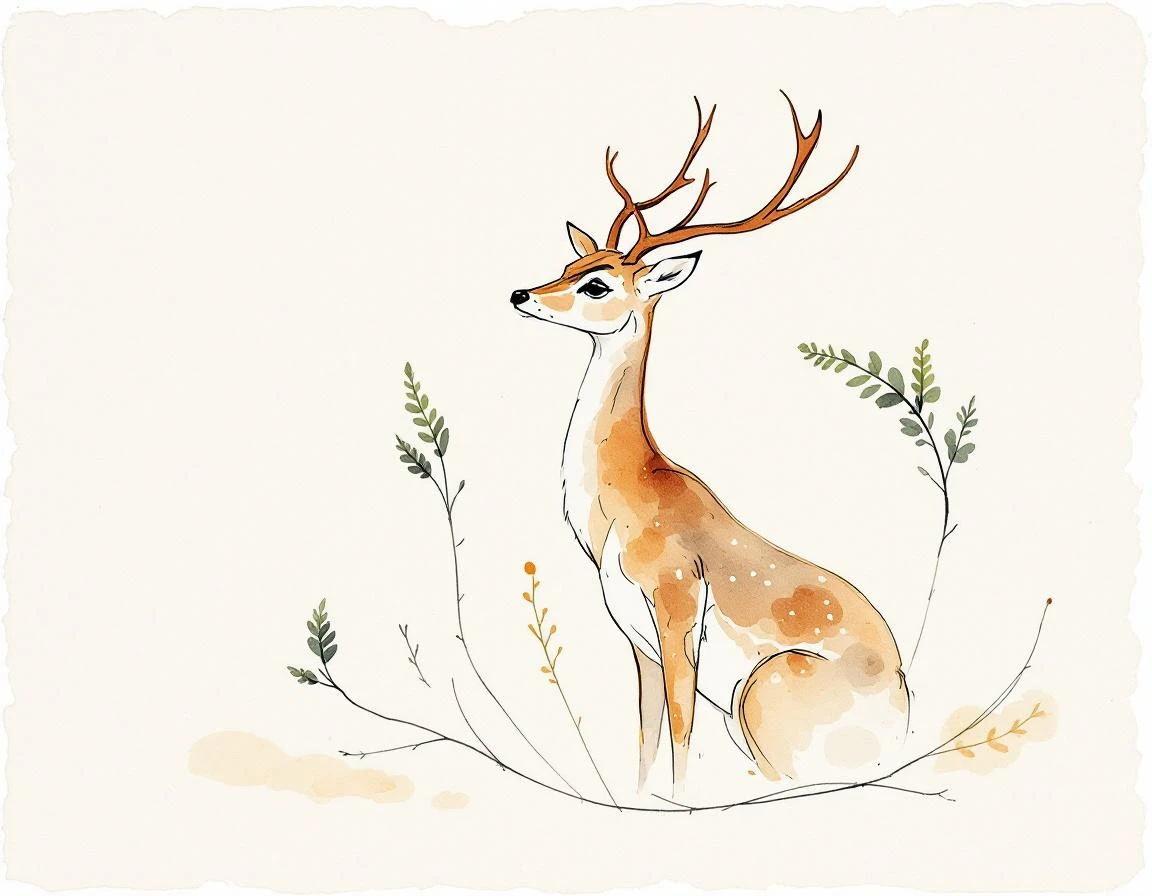

Deer Name Generator - Names for Deer Characters and Companions
Deer have carried meaning in human storytelling for a long time - the white stag of Arthurian legend that could never be caught, the golden-horned Ceryneian Hind that Heracles spent a year pursuing, the sacred deer of Nara that Japanese tradition held as messengers of the gods. A name drawn from that tradition carries weight that "Forest" or "Swiftfoot" simply cannot. This generator pulls from that accumulated history: Celtic epithets for sacred animals, Latin names from Roman hunting ritual, the heraldic vocabulary of attires and lodged stags, and the quieter folklore of deer as threshold creatures - the ones who appear at the edge of the wood and vanish before you reach them. Use it for the stag who leads your protagonist somewhere they cannot return from, the hind who speaks once in a dream, the companion who is not quite animal and not quite spirit. The names lean old, deliberate, and a little strange, because deer in fiction are rarely just deer.
Deer in Mythology
The white stag or white hind is one of the most persistent mythological figures in European tradition - a creature so rare that encountering one signals you have crossed from the ordinary world into something else. In Celtic mythology, the white stag appears at the threshold of the Otherworld, drawing hunters who pursue it into faerie territory. In Arthurian legend, it recurs as the beginning of quests. In Greek mythology, the Ceryneian Hind was a golden-horned, bronze-hoofed deer sacred to Artemis. Capturing it was one of Heracles's twelve labors. He caught it without harming it, which was the point: the labor tested restraint as much as strength. Artemis herself was goddess of the hunt, and deer were sacred to her - hunted, yes, but also protected, understood as belonging to the natural order she governed. In East Asian mythology, deer are associated with longevity and the immortals. Chinese mythological deer are often depicted alongside sages, carrying the fungus of immortality (*lingzhi*) or accompanying the Old Man of the South Pole. A white deer in a forest is a sign of good fortune. Korean mythological deer (*baengnoggwa*) appear in similarly auspicious contexts.
Deer as Guides and Messengers
The central narrative function of deer in fiction is the guide - the creature who leads the protagonist somewhere they need to go but didn't know they were looking for. This is the oldest deer story: the hunter follows the deer and arrives somewhere changed. The deer is rarely the destination. The deer is the path. In *A Midsummer Night's Dream*, the forest is thick with deer; Titania sleeps in a bower where they come to rest. In Bambi, the deer is the forest made personal. In *Princess Mononoke*, Shishigami is both life-giver and death-bringer, godlike and not fully comprehensible - a spirit the forest contains but does not explain. For a deer companion, the narrative question is whether the deer chooses to guide or simply goes where it goes and the protagonist has the sense to follow. These produce different dynamics. A deer who guides with intention is closer to a mentor. A deer who moves through the world and pulls the protagonist in its wake is closer to a force of nature.
Using the Generator
Deer names in fiction tend to reflect either appearance (Buck, Blaze, Dapple, Tawny) or a quality assigned through human relationship (Scout, Gentle, Grace). Sacred deer in fantasy contexts often take names from the tradition they belong to: a Celtic sacred hind might be named Oisín, which means "little deer" - Oisín was the son of Fionn mac Cumhaill and a woman transformed into a deer - or Fionn's mother, Sadbh. For stags specifically, the names often emphasize size, antler configuration, and dominance. Male deer in the rut are among the most impressive large animals in temperate forest, and hunters have long given trophy stags descriptive names before the hunt. A fictional hunter's stag called Twelve-Points or the Old King signals a long relationship between hunter and hunted. For spirit deer and guide figures outside European tradition, names drawn from the specific culture's language create authenticity. A Shinto *shika* companion in a Japanese-inspired setting might be named from *waka* poetry conventions; a Cherokee or Lakota deer spirit would draw from those cultures' relationships with deer, which differ substantially from European heraldic tradition.
Deer Names Craft Guide for Role, Behavior, Tone, and Story Use
Deer names work best when the name grows from the specific companion on the page, rather than from a thin pet-name list. This generator is meant for a deer companion: a wary, graceful presence associated with forests, thresholds, flight, gentleness, and sudden alarm. The name should tell the reader how the animal or companion moves through a scene, who named it, and what kind of relationship it has with the characters around it.
Start with Behavior in the Scene
Before choosing a name, picture the companion doing something concrete. Is it guarding a door, stealing food, scouting ahead, refusing a command, comforting a child, or warning the party before anyone else notices danger? Behavior keeps the name from floating free. For deer names, the best candidates usually point toward a habit the story can prove later.
Use Sound as a Handling Cue
Sound tells the reader how close the bond feels. For this page, listen for light consonants, woodland vowels, hoof taps, and names that vanish cleanly into trees. A name shouted across a field has different needs than one whispered in a sickroom or written on a brass tag. Test the rhythm in dialogue, especially if the companion appears often. The most useful names can become nicknames without losing their original flavor.
Match the Genre Register
Deer Names can fit enchanted forests, ranger tales, shrine guardians, winter courts, and quiet survival stories. The register changes the name fast. A comic adventure can tolerate brighter, quicker choices. A solemn fantasy may need a name with older texture. A modern setting often benefits from names that sound owned by real people rather than invented for lore. Decide whether the companion is beloved pet, working animal, omen, familiar, mount, scout, mascot, or equal partner before locking in the final sound.
Respect Species, Culture, and Point of View
Avoid turning deer into decoration. Fear, speed, herd memory, and alertness can all shape the name. Also ask who gives the name. A child, sailor, witch, scientist, farmer, soldier, priest, shop clerk, or lonely traveler will choose differently. Names become more convincing when they reveal the namer's world as well as the companion's body. If the name borrows from a real language or cultural tradition, give it a reason inside the setting and avoid using that culture as decorative shorthand.
Turn the Shortlist into Story Material
Put three generated options into three scenes: an introduction, a moment of trouble, and a moment of affection or loss. If the name only works in the introduction, it is probably a label rather than a story tool. Keep the deer name that gives you future uses: a command, a joke, a warning, a title, a rumor, or a memory another character repeats after the companion has changed the course of the plot.
Who Named the Companion Matters
For a deer, the source of the name changes the whole emotional reading. It might come from the hunter who spared it, forest shrine, ranger, lost child, or village watching the tree line. A practical worker may choose a short call that cuts through noise. A child may choose softness, rhyme, or a private joke. A court or archive may preserve titles and lineage. A rescuer may keep the old name out of respect, while a new owner may rename the companion to mark safety after a bad past. That choice tells the reader who had power when the name was given.
Check the Name across Repeated Use
Because companion names repeat so often, test the deer choice in ordinary beats as well as dramatic ones. It should work on a tag, in a command, inside a scolding, as a fond nickname, and in a sentence where another character does not understand the bond yet. If the story has sequels, related animals, litters, herds, packs, or familiars, keep notes on the naming logic now. The useful final choice gives you a family of possible names without making every future companion sound copied from the first.