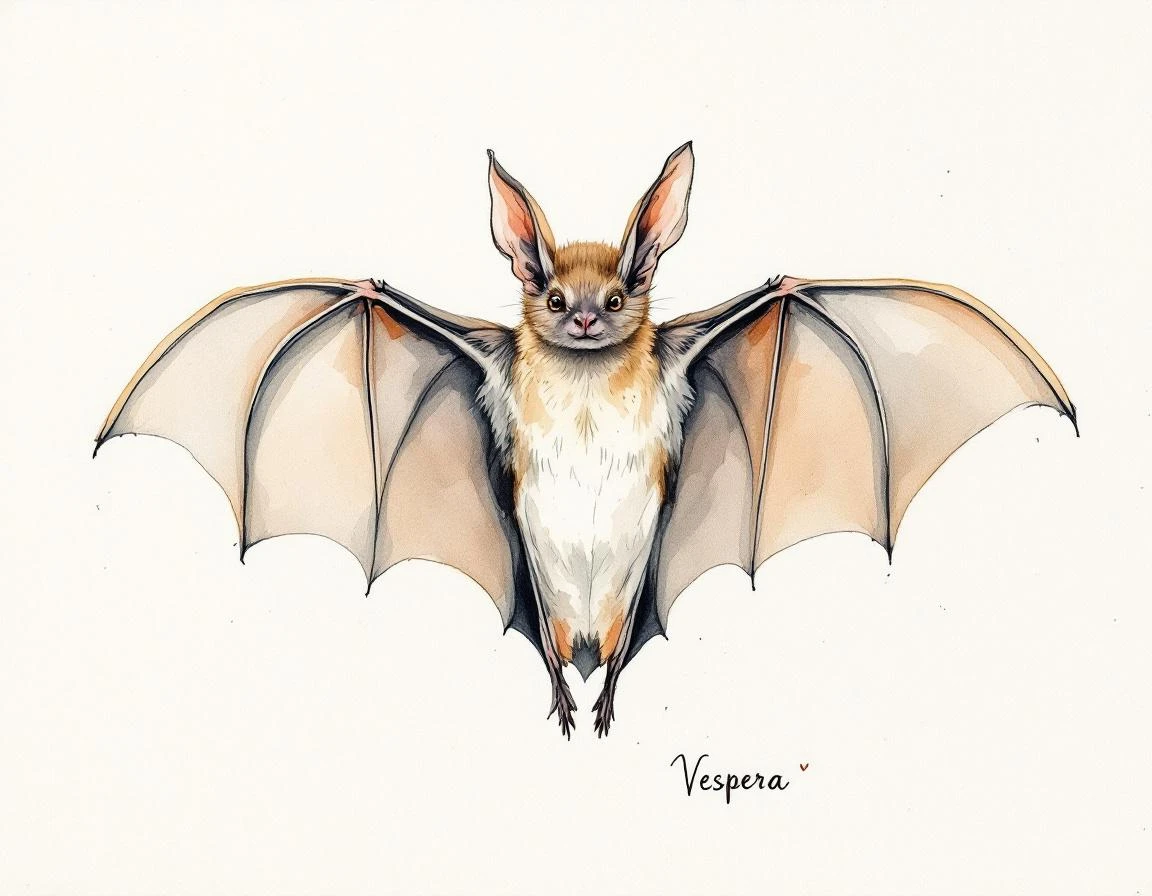

Bat Name Generator - Names for Bat Characters and Companions
Bat names drawn from folklore, natural history, and fantasy tradition - for vampire familiars, cave scouts, spirit guides, and anything that finds its way by sound rather than sight.
Bats in Folklore
Bats are nocturnal, echolocating, and fly on membranous wings rather than feathers - qualities that made them deeply strange to pre-scientific cultures. In European tradition, bat wings became the default for demonic figures: Satan's wings in Milton's *Paradise Lost*, devil imagery in medieval woodcuts. The association with vampires in Eastern European folklore transformed bats from merely uncanny into something specifically predatory. In Mesoamerican mythology, Camazotz is the bat god of the Mayan *Popol Vuh*, a death figure who dwells in the House of Bats, one of the underworld challenges the Hero Twins face. He decapitates Hunahpu by trickery. Camazotz means "death bat" in K'iche' Maya, and he was associated with darkness, death, and sacrifice. In Chinese tradition, bats carry the opposite meaning. The word for bat (*biān fú*) sounds like the word for good fortune, making bats symbols of luck. Five bats together represent the Five Blessings: health, wealth, longevity, virtue, and a peaceful death. Red bats are especially auspicious. A bat companion in a story set in China or a China-influenced world carries entirely different symbolic weight than in a Western setting.
Bat Biology and Fiction
Bat echolocation works by producing ultrasonic calls and reading the returning echoes - a sensory system precise enough to detect a human hair in complete darkness. Bats are not blind (the phrase is false; most have functional eyesight), but echolocation extends their perception beyond what vision provides. This makes bats natural scouts and spies in fiction. A bat who navigates by sound in darkness is a fitting familiar for a mage who works with secrets, with information, with things that resist being seen. The metaphor maps cleanly onto certain kinds of magical practice: finding what is hidden by sensing its outline indirectly. Vampire bats (*Desmodus rotundus*, native to the Americas) are the only mammals that survive on blood alone. They are also among the most socially cooperative animals studied - they share blood meals with roosting companions who went hungry, in reciprocal networks of mutual aid. The fictional association with vampires distorted this biology and gave the bat its modern horror connotations. The actual animal is stranger and more interesting than the myth.
Using the Generator
Bat names should follow the story's tradition and the bat's role within it. Western Gothic and vampire fiction pull toward Germanic darkness: Nacht, Vesper, Umbra, Dusk, Shade. Stories drawing from Mesoamerican sources - K'iche' Maya or Nahuatl - produce names with entirely different resonance, and the difference isn't cosmetic. For the bat-as-familiar, the naming question is really a question about the magic. A necromancer's bat doesn't share conventions with an illusionist's bat, and neither maps onto a diviner's bat that echolocates through time rather than space. Scale shifts the register too. A pipistrelle familiar calls for something small and quick. A cave bat the size of a large dog wants weight. A dragon-bat is its own territory - closer to a mount or a monster than a companion - and names that work for one rarely survive the translation to another.
Bat Names Craft Guide for Role, Behavior, Tone, and Story Use
Bat names work best when the name grows from the specific companion on the page, rather than from a thin pet-name list. This generator is meant for a bat companion: a night flyer that can read darkness, hang in silence, or turn fear into useful scouting. The name should tell the reader how the animal or companion moves through a scene, who named it, and what kind of relationship it has with the characters around it.
Start with Behavior in the Scene
Before choosing a name, picture the companion doing something concrete. Is it guarding a door, stealing food, scouting ahead, refusing a command, comforting a child, or warning the party before anyone else notices danger? Behavior keeps the name from floating free. For bat names, the best candidates usually point toward a habit the story can prove later.
Use Sound as a Handling Cue
Sound tells the reader how close the bond feels. For this page, listen for thin vowels, wing clicks, cave echoes, squeaks, and velvet-soft names. A name shouted across a field has different needs than one whispered in a sickroom or written on a brass tag. Test the rhythm in dialogue, especially if the companion appears often. The most useful names can become nicknames without losing their original flavor.
Match the Genre Register
Bat Names can fit gothic mystery, cave fantasy, vampire courts, and moonlit adventure. The register changes the name fast. A comic adventure can tolerate brighter, quicker choices. A solemn fantasy may need a name with older texture. A modern setting often benefits from names that sound owned by real people rather than invented for lore. Decide whether the companion is beloved pet, working animal, omen, familiar, mount, scout, mascot, or equal partner before locking in the final sound.
Respect Species, Culture, and Point of View
Avoid treating every bat name as spooky by default. Some bats are comic messengers, fruit thieves, lab companions, or shy scouts. Also ask who gives the name. A child, sailor, witch, scientist, farmer, soldier, priest, shop clerk, or lonely traveler will choose differently. Names become more convincing when they reveal the namer's world as well as the companion's body. If the name borrows from a real language or cultural tradition, give it a reason inside the setting and avoid using that culture as decorative shorthand.
Turn the Shortlist into Story Material
Put three generated options into three scenes: an introduction, a moment of trouble, and a moment of affection or loss. If the name only works in the introduction, it is probably a label rather than a story tool. Keep the bat name that gives you future uses: a command, a joke, a warning, a title, a rumor, or a memory another character repeats after the companion has changed the course of the plot.
Who Named the Companion Matters
For a bat, the source of the name changes the whole emotional reading. It might come from the keeper, cave guide, nocturnal scout, vampire household, or child who found it injured. A practical worker may choose a short call that cuts through noise. A child may choose softness, rhyme, or a private joke. A court or archive may preserve titles and lineage. A rescuer may keep the old name out of respect, while a new owner may rename the companion to mark safety after a bad past. That choice tells the reader who had power when the name was given.
Check the Name across Repeated Use
Because companion names repeat so often, test the bat choice in ordinary beats as well as dramatic ones. It should work on a tag, in a command, inside a scolding, as a fond nickname, and in a sentence where another character does not understand the bond yet. If the story has sequels, related animals, litters, herds, packs, or familiars, keep notes on the naming logic now. The useful final choice gives you a family of possible names without making every future companion sound copied from the first.