
Middle Eastern Town Names: Places from the Levant to the Persian Gulf
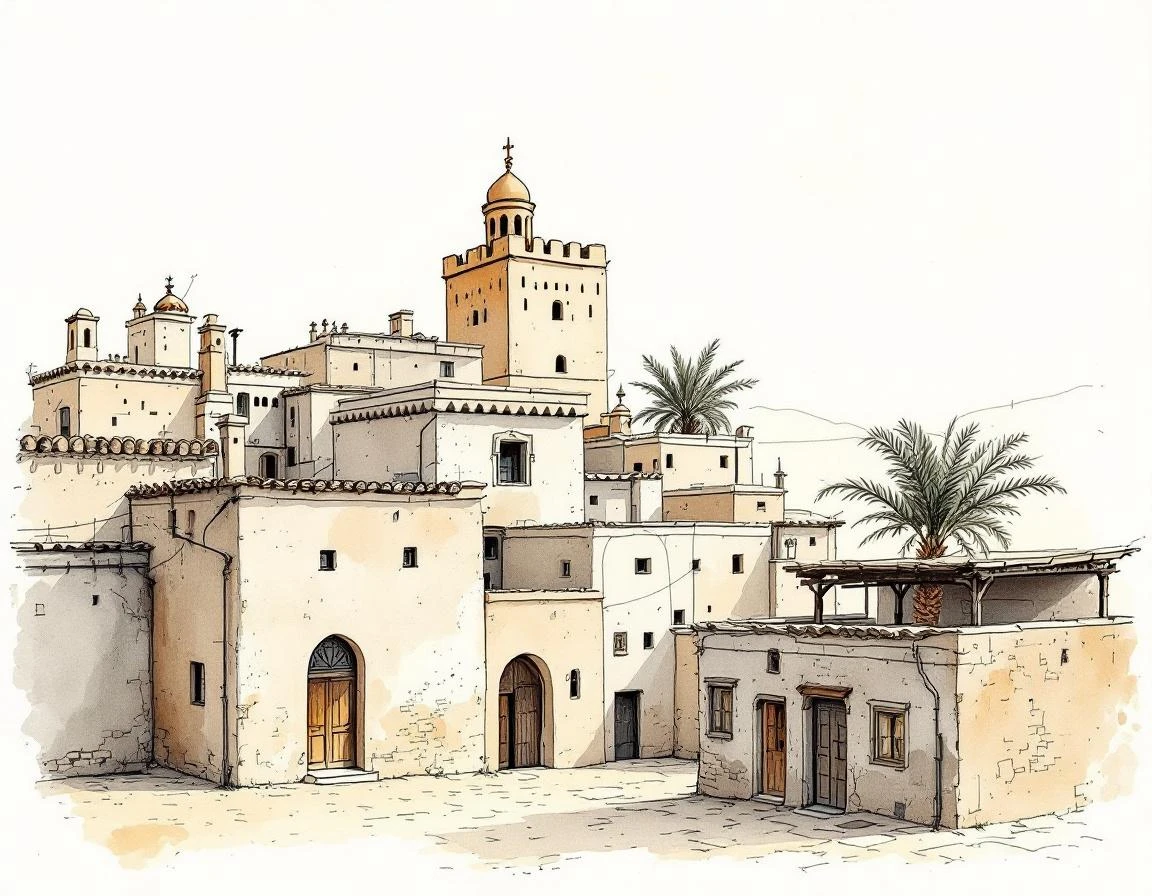
Generate Middle Eastern town names drawn from Arabic, Persian, Turkish, and Hebrew traditions: the old cities of the Fertile Crescent, the Ottoman provincial towns, and the modern Gulf cities shaped by coastal trade and rapid oil-era development. The generator works from actual naming patterns. Arabic place names tend to layer prepositions and definite articles onto roots such as *al-*, *beit*, *umm*, and *wadi* in ways that compress geography and meaning into a single word. Persian names often preserve pre-Islamic roots, Zoroastrian or older, that survived the Arab conquest and the Mongol one after it. Turkish names carry the Ottoman administrative habit of pairing a geographic feature with a suffix: *-köy*, *-tepe*, *-hisar*. Hebrew names, especially in the Levant, frequently echo Bronze Age sites that appear in the same form in the Torah, in Crusader chronicles, and on modern road signs. Use these for fiction set anywhere from the ancient Near East to contemporary Beirut or Dubai. The names work for villages that have stood since the Umayyad period and for cities that did not exist forty years ago.
Ancient Urban Traditions
The Middle East contains some of the oldest continuously inhabited cities on earth. Damascus (*Dimashq* in Arabic) has been settled for at least 11,000 years. Jericho is sometimes cited as the oldest city in the world, dating to around 9000 BCE. Ur, in modern Iraq, was among the largest cities of ancient Mesopotamia at its height around 2500 BCE. These names survived multiple language shifts, adapted through Sumerian, Akkadian, Aramaic, Greek, Arabic, and Ottoman Turkish before arriving in the modern national languages. The naming layers are worth pausing on. Baghdad (*Bagh-dad*, possibly Old Persian for "gift of God," though Arabic scholars contest this), Damascus, Aleppo (*Halab* in Arabic, possibly from an older Semitic root), Jerusalem (*Yerushalayim* in Hebrew, carrying the *-shalom/-salem* root meaning "peace"; *al-Quds* in Arabic, "the holy city"): each name passed through language after language while staying attached to the same ground. Persian city names follow similar patterns. Isfahan (*Esfahān*, possibly "place of the army"), Shiraz (*Shīrāz*, possibly from the Old Persian *Tiraziš*), Tehran (*Tehrān*, possibly "warm slope"), Mashhad ("place of martyrdom," where the Imam Reza is buried).
Ottoman and Arabic Naming
Ottoman administrative naming across the Arab world, where the Ottoman period ran from the early 16th to the early 20th century in most of the region, produced the *vilayet* system, a hierarchy of provinces whose capitals were often pre-existing cities reorganized under Ottoman bureaucratic logic. The vocabulary of that system (*vilayet*, *sanjak*, *kaza*) shaped the administrative geography that modern nation-states inherited without always inheriting the logic behind it. Arabic naming conventions in the Middle East include the *al-* definite article embedded in city names (*al-Riyadh*, "the gardens"; *al-Madinah*, "the city," meaning the Medina of the Prophet; *al-Qāhira*, "the conqueror," meaning Cairo); the *umm* (mother of) toponymic formula (*Umm al-Qura*, "mother of villages," meaning Mecca); *Beit/Bayt* (house of); *Kafr* (village); and *Wadi* (valley or seasonal riverbed). Israeli naming conventions after 1948 produced a dual-naming situation common to post-colonial contexts: Hebrew names for Israeli settlements, neighborhoods, and renamed cities running alongside Arabic names for the same places, maintained by Palestinian and Arab communities. Tel Aviv (*Tel*-Aviv, "hill of spring," a Hebrew rendering of the title of Herzl's novel *Altneuland*) sits alongside Jaffa (*Yafo*), which is at once a neighborhood and an ancient port city whose Hebrew name happens to be identical to its Arabic one.
Using the Generator
For ancient Mesopotamian settings (Sumerian city-states like Ur, Uruk, Nippur, and Eridu; the Akkadian empire; Babylon under Hammurabi or Nebuchadnezzar), names should draw from Sumerian and Akkadian sources, which survive in extensive cuneiform records. For Islamic Golden Age settings - the Abbasid Caliphate's Baghdad, the Umayyad Caliphate's Damascus, the Fatimid Caliphate's Cairo - Arabic Islamic naming conventions apply. Baghdad in 800 CE was probably the largest city in the world. For contemporary Middle Eastern settings, naming reflects the specific political context of each country: the Gulf cities (Dubai, Abu Dhabi, Doha) whose place names bear the imprint of rapid twentieth-century development; Israel-Palestine; the Syrian cities caught in recent conflict (Aleppo, Homs, Raqqa); and Iran.
Middle Eastern Town Names: A Working Naming Guide
Middle Eastern town names should feel used, not arranged. Start with wadi settlements, oasis towns, shrine roads, bazaars, Red Sea ports, Gulf harbors, citadels, and caravan routes. Then decide what sort of place is being named, because an oasis town, tribal fort, port city, pilgrimage stop, bazaar city, oil camp, or mountain market asks for a different kind of word than a capital or a ruin. The generator can give you a quick spread, but the choice still has to sound like someone could say it while giving directions, filing a complaint, selling dates, passing a checkpoint, or pointing at a dust storm. Keep a few candidates that disagree with each other. One may sound contested; another may feel like a mapmaker cleaned it up too much. That friction is useful.
Who Gets to Name the Place
Pick the naming authority before you fall in love with the syllables. Local speakers carry names in ways officials rarely predict. A tax office wants tidy spelling. A sailor wants speed. A clerk, elder, imam, rabbi, priest, surveyor, rebel, tribal leader, or company lawyer may all have a reason to push a different version. For Middle Eastern town names, the useful candidate usually reveals who got to write the sign and who kept saying the older word anyway. Read the name in a sentence of dialogue. If every character would pronounce it the same way, the place may be too clean.
Language Care Before Style
Arabic, Persian, Turkish, Kurdish, Hebrew, Aramaic, Armenian, Greek, tribal, sacred, and colonial spellings carry different stakes. Some names are contested or holy. This is where many generated names go wrong. They borrow surface sound while ignoring who owns the language, whether the place is real, and what history the word may touch. Fiction gives you room to invent, but it does not make every source available for casual decoration. If you need a real cultural reference, narrow it to a specific region and period. If you are making a secondary world, decide what parts of the naming logic you are adapting and what parts you are leaving alone.
The Work Inside the Name
The town needs work inside it. Maybe people came for a well, shrine, port, caravan road, bazaar, oil camp, citadel, or mountain pass that made the place worth naming. Maybe they stayed because leaving cost too much. Let that practical reason roughen the name. A good result can hold an official story and a private one at the same time: the polished name on the station board, the clipped version in a market, the older name used at home, the insult outsiders keep repeating. That layered feel matters more than a rare letter combination.
The Scene Test
Before keeping a result, run it through a small scene. Put it on a bus timetable, in a grandmother's warning, on a shipping crate, and in the mouth of someone who wants the place forgotten. For Middle Eastern town names, the winner should make one concrete promise about water, geography, danger, faith, trade, language, or memory. It should also leave room for a writer to disagree with it later. Town names age. They get translated badly, painted over, shortened by children, revived by activists, sold by developers, or cursed by people who left. Choose the one that can survive that kind of handling.