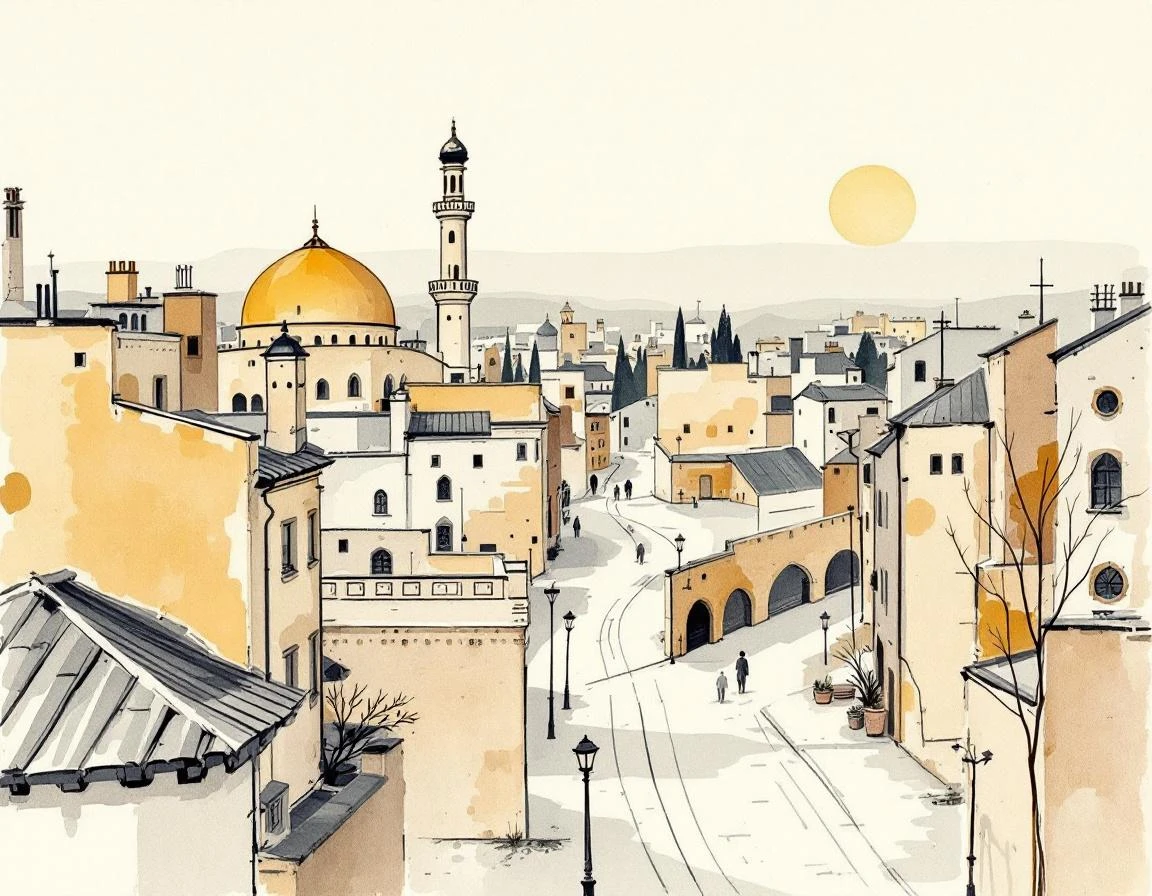

Central Asian Town and City Naming Traditions
Central Asia - Kazakhstan, Uzbekistan, Turkmenistan, Kyrgyzstan, Tajikistan, and parts of western China - has urban naming conventions shaped by nomadic traditions, Silk Road commerce, Islamic influence, and layered imperial histories.
Silk Road Commercial Centers
Many Central Asian cities began as staging posts on the Silk Road, and their names show it. Words like *bazar*, *caravanserai*, and *rabat* (a fortified commercial outpost) turn up repeatedly in the region's toponyms. Samarkand, Bukhara, and Khiva became shorthand in medieval European and Chinese sources alike for luxury goods moving between worlds - silk, lapis, saffron, horses. Some settlements took their names from a specific trade: a particular craft guild, a product, a merchant community that dominated the market quarter. Others were named for the geography that made commerce possible in the first place - a ford, a mountain pass, a bridge. The result is a category of urban names built around movement and exchange rather than the administrative or agricultural logic that shaped naming elsewhere in the region.
Nomadic Heritage
Central Asia's nomadic past left a direct mark on how its towns got their names. Settlements across Kazakhstan, Kyrgyzstan, and the Tarim Basin took their names from seasonal gathering places, clan territories, or the leaders of particular tribal groups. Practical concerns show up everywhere in the toponyms: access to water, quality of pasturage, shelter from the dzut winters that could kill a herd overnight. The *kishtak* - winter quarters - is a useful lens here. Many of these temporary encampments gradually became permanent, keeping names that still signal their seasonal origins to anyone who knows the vocabulary. Where sedentarization happened recently, you can sometimes read the transition in a single place name, a compound that fuses nomadic and agricultural elements in the same word. Xinjiang complicates the picture further. Most towns there carry parallel names in Uyghur and Chinese that are not translations of each other so much as separate acts of naming, each reflecting a different relationship to the same ground. Kashgar and 喀什 point at the same city and share almost nothing else. None of this resembles the naming logic of the Fertile Crescent or the Ganges plain, where settled agriculture is old enough to have buried its origins. In Central Asia, the pastoral world is recent enough to still be legible in the map.
Imperial Transformations
Central Asian urban names carry the fingerprints of every empire that moved through the region. Persian influence survives in endings like *-abad* and *-shahr* - Hyderabad, Dushanbe's older quarters, dozens of smaller towns whose names outlasted the dynasties that coined them. Russian Imperial expansion brought Russified names and entirely new settlements, especially along rail lines and administrative posts where the tsarist bureaucracy needed to plant its flag. Soviet ideology then swept through with a fresh round of renaming: cities were rechristened after revolutionary figures (Leninabad), abstract concepts (Komsomolsk), or industrial ambition (*-grad*, *-stroi* suffixes bolted onto whatever came before). After 1991, many of those names were reversed - Frunze became Bishkek again, Kyrgyzstan reclaiming a toponym that predated Lenin's cartographers. In Xinjiang, Chinese administration has produced dual naming systems, official Mandarin designations running alongside traditional Uyghur ones, the two often bearing no phonetic resemblance to each other. The result is a naming record with visible Persian, Mongol, Tsarist, Soviet, and post-independence layers, each reflecting who controlled the territory and what they wanted the map to say.
Religious and Cultural References
Religious layers run deep in Central Asian place names. Islamic terminology dominates: *masjid* (mosque), *mazar* (shrine), and the names of significant figures appear across the region's urban map, which makes sense given Central Asia's role as the homeland of scholars like Ibn Sina and al-Biruni. Older settlements sometimes preserve Zoroastrian roots beneath the Islamic surface, traces of the faith that shaped Persian-speaking culture before the Arab conquests. In the east, particularly near Dunhuang and the Tarim Basin, Buddhist influence left its mark on toponyms along the routes that once carried pilgrims and manuscripts between India and China. Soviet planners stripped many of these names out, replacing religious toponyms with ideologically neutral ones. Since independence, a number of those names have come back. New ones have appeared too, honoring national heroes and the events that post-Soviet governments have chosen to center in their founding narratives - a different kind of ideological naming, though rarely acknowledged as such.
Central Asian Town and City Names: A Working Naming Guide
Central Asian town and city names should feel used, not arranged. Start with the ground: steppe roads, Silk Road oases, mountain passes, irrigation towns, Soviet grids, and desert caravan cities. Then decide what sort of place is being named, because an oasis city, caravanserai town, fortress, collective farm settlement, mining town, or border market asks for a different kind of word than a capital or a ruin. The generator can give you a quick spread, but the choice still has to sound like someone could say it while giving directions, filing a complaint, selling grain, dodging patrols, or pointing at a storm line. Keep a few candidates that disagree with each other. One may sound official but brittle; another may feel like a mapmaker cleaned it up too much. That friction is useful.
Who Gets to Name the Place
Pick the naming authority before you fall in love with the syllables. Local speech borrows names in ways officials rarely predict. A tax office wants tidy spelling. A caravan leader wants speed. A priest, elder, guild clerk, surveyor, rebel, party official, or company lawyer may all have a reason to push a different version. For Central Asian town and city names, the useful candidate usually reveals who got to write the sign and who kept saying the older word anyway. Read the name in a sentence of dialogue. If every character would pronounce it the same way, the place may be too clean.
Language Care Before Style
Turkic, Persian, Mongolic, Russian, Arabic, and Soviet administrative layers differ sharply. Silk Road shimmer is not a naming system. This is where many generated names go wrong. They borrow surface sound while ignoring who owns the language, whether the place is real, and what history the word may touch. Fiction gives you room to invent, but it does not make every source available for casual decoration. If you need a real cultural reference, narrow it to a specific region and period. If you are making a secondary world, decide what parts of the naming logic you are adapting and what parts you are leaving alone.
The Work Inside the Name
The town needs work inside it. Maybe people came for a ferry, a mine, a shrine, pasture, a school, a harbor, a wall, or a road that cut through older country. Maybe they stayed because leaving cost too much. Let that practical reason roughen the name. A good result can hold an official story and a private one at the same time: the polished name on the station board, the clipped version in a market, the older name used at home, the insult outsiders keep repeating. That layered feel matters more than a rare letter combination.
The Scene Test
Before keeping a result, run it through a small scene. Put it on a weather report, in a grandmother's warning, on a caravan ledger, and in the mouth of someone who wants the place forgotten. For Central Asian town and city names, the winner should make one concrete promise about geography, class, danger, faith, trade, or memory. It should also leave room for a writer to disagree with it later. Town names age. They get translated badly, painted over, shortened by children, revived by activists, sold by developers, or cursed by people who left. Choose the one that can survive that kind of handling.