
North African Town Names - Places from Morocco to Egypt
Generate North African town names drawing on Berber, Arab, Ottoman, and French colonial traditions: medina quarters, desert oasis settlements, and port towns along the Maghreb and Egyptian coasts.
North African Naming Traditions
North African place names carry layers of naming history that correspond to the region's successive political cultures: Amazigh/Berber names (the pre-Arab substrate, since the indigenous population spoke Tamazight long before Arabic arrived, and many place names survive), Arabic names from the Islamic conquest (7th-8th centuries CE onward), Ottoman administrative names (for former Ottoman territories: Libya, Tunisia, Algeria, Egypt, but not Morocco, which maintained its own sultanic dynasties), and French/Italian colonial names applied during the 19th-20th century occupations. Morocco's naming reflects a specific local tradition: Arabic with a heavy Amazigh substrate. Marrakech derives from the Amazigh *Murt n Akush*, "land of God." Fes possibly comes from the Arabic *fa's*, meaning pickaxe, since the city was built by laborers wielding them. Casablanca is Spanish for "white house," a renaming of the Portuguese *Casa Branca* during the Spanish colonial period; the city is now called *Dar el-Beida* in Arabic, which means the same thing. The multilingual naming of Casablanca is the Moroccan tradition in miniature. Egyptian place names are among the oldest in the world. Luxor comes from *al-Uqsur*, "the palaces," a reference to the ruins of ancient Thebes that still dominate the city. Memphis was *Mennufer* in ancient Egyptian, the first capital. Cairo is *al-Qāhira*, "the conqueror" or "the victorious," founded by the Fatimid Caliph al-Muizz in 969 CE. The ancient Egyptian layer sits beneath the Arabic one, and in several cases the modern Arabic name is simply a phonological adaptation of the ancient form.
The Medina and the Oasis
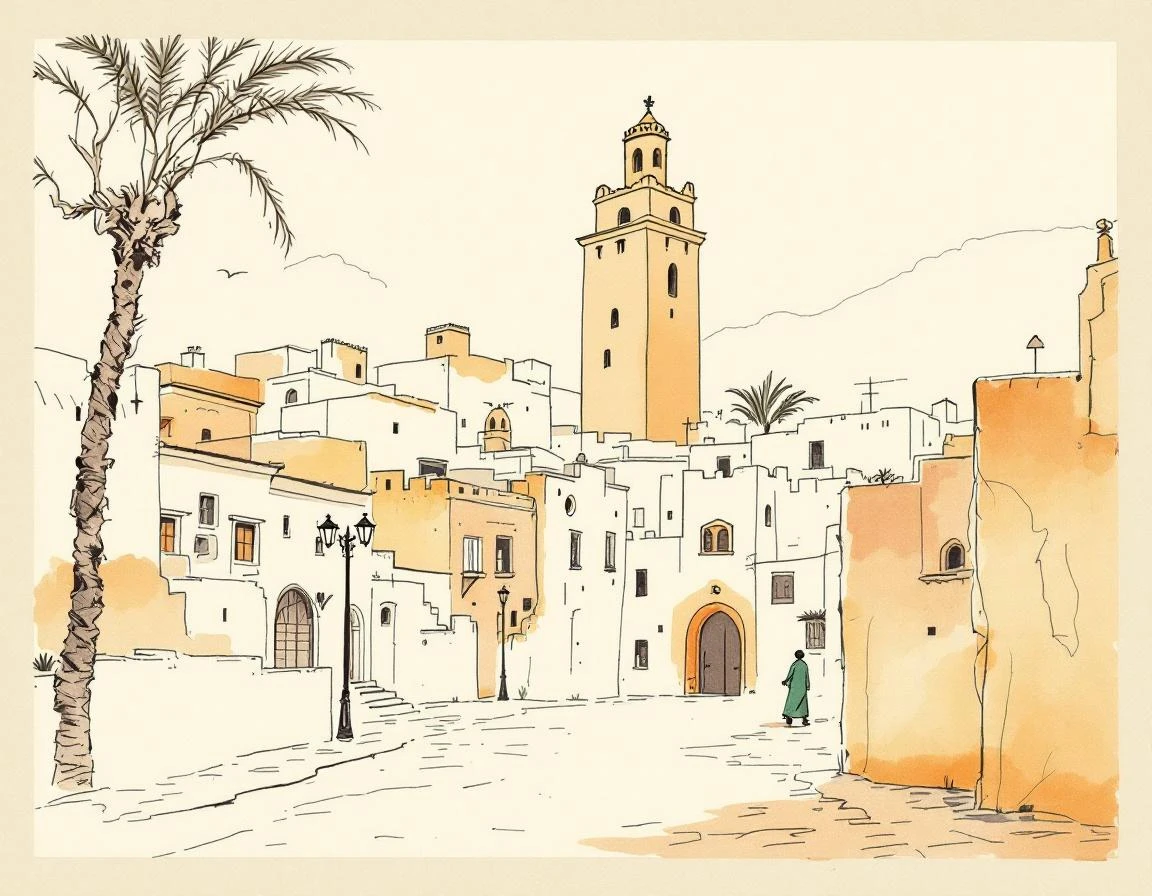
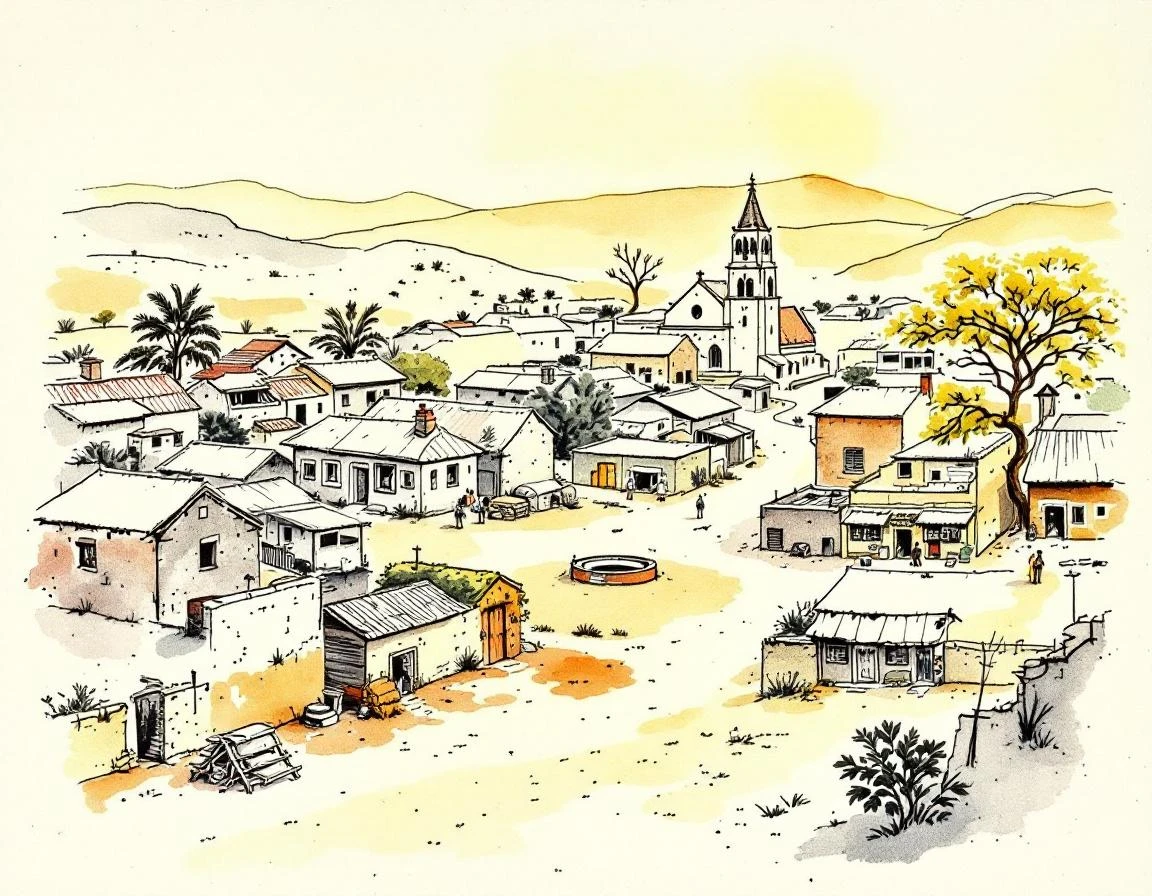
The *medina* (from Arabic *madīna*, city) is the old walled city center of North African cities, the labyrinthine Islamic urban form that predates the straight boulevards French colonial authorities imposed. Medinas have their own internal naming: the *souk* (market), the *hammam* (bathhouse), the *riad* (garden courtyard house), the *mellah* (Jewish quarter), the *casbah* (citadel). Oasis towns in the Sahara - *Ghardaïa*, *Djanet*, *Siwa*, *Zinder* - carry names that reflect Berber, Tuareg, and Arabic traditions of desert navigation. An oasis town exists because there is water there; the name usually records either the geographic feature (the spring, the well) or the clan that established the settlement. The caravan towns of the trans-Saharan trade - Timbuktu, the Fezzan oases in Libya, Siwa in Egypt - draw their names from Berber and Tuareg traditions that preceded Arabic influence in the Sahara.
Using the Generator
For medieval North African settings - the Fatimid, Almoravid, Almohad, and Marinid dynasties, the trans-Saharan gold trade, the connections to Andalusian Spain and Sub-Saharan Africa - names should draw from the Arabic-Berber conventions of the period. Fes, Tlemcen, Tunis, and Kairouan were major centers of Islamic scholarship and commerce, and their naming patterns reflect that weight. For colonial period settings (French Algeria 1830-1962, the French protectorates in Morocco and Tunisia, Italian Libya, British Egypt), naming splits along the fault line between colonial quarters and medinas: European street names in the former, Arabic in the latter, Berber in the Kabyle and Atlas regions. For contemporary settings - the Arab Spring, post-independence politics, the Amazigh cultural revival - the naming reflects the specific political situation of each country, which varies considerably. Algeria, Morocco, and Egypt handle Amazigh recognition very differently, and those differences show up in place names.
North African Town Names: A Working Naming Guide
North African town names should feel used, not arranged. Start with the ground: oases, Atlas passes, Nile towns, Mediterranean ports, Amazigh mountains, Roman ruins, and Arab medinas. Then decide what sort of place is being named, because an oasis town, kasbah, port, caravan stop, colonial rail town, or walled medina asks for a different kind of word than a capital or a ruin. The generator can give you a quick spread, but the choice still has to sound like someone could say it while giving directions, filing a complaint, selling grain, dodging patrols, or pointing at a storm line. Keep a few candidates that disagree with each other. One may sound official but brittle; another may feel like a mapmaker cleaned it up too much. That friction is useful.
Who Gets to Name the Place
Pick the naming authority before you fall in love with the syllables. Local speech borrows and preserves names in ways officials rarely predict. A tax office wants tidy spelling. A sailor wants speed. A priest, elder, guild clerk, surveyor, rebel, or company lawyer may all have a reason to push a different version. For North African town names, the useful candidate usually reveals who got to write the sign and who kept saying the older word anyway. Read the name in a sentence of dialogue. If every character would pronounce it the same way, the place may be too clean.
Language Care Before Style
Separate Arabic, Amazigh, Coptic, Ottoman, French, Spanish, Italian, Punic, and Roman layers. A Maghrebi mountain name and an Egyptian river town should not sound alike. This is where many generated names go wrong. They borrow surface sound while ignoring who owns the language, whether the place is real, and what history the word may touch. Fiction gives you room to invent, but it does not make every source available for casual decoration. If you need a real cultural reference, narrow it to a specific region and period. If you are making a secondary world, decide what parts of the naming logic you are adapting and what parts you are leaving alone.
The Work Inside the Name
The town needs work inside it. Maybe people came for a ferry, a mine, a shrine, pasture, a school, a harbor, a wall, or a road that cut through older country. Maybe they stayed because leaving cost too much. Let that practical reason roughen the name. A good result can hold an official story and a private one at the same time: the polished name on the station board, the clipped version in a market, the older name used at home, the insult outsiders keep repeating. That layered feel matters more than a rare letter combination.
The Scene Test
Before keeping a result, run it through a small scene. Put it on a weather report, in a grandmother's warning, on a shipping crate, and in the mouth of someone who wants the place forgotten. For North African town names, the winner should make one concrete promise about geography, class, danger, faith, trade, or memory. It should also leave room for a writer to disagree with it later. Town names age. They get translated badly, painted over, shortened by children, revived by activists, sold by developers, or cursed by people who left. Choose the one that can survive that kind of handling.