
Southeast Asian Town Name Generator
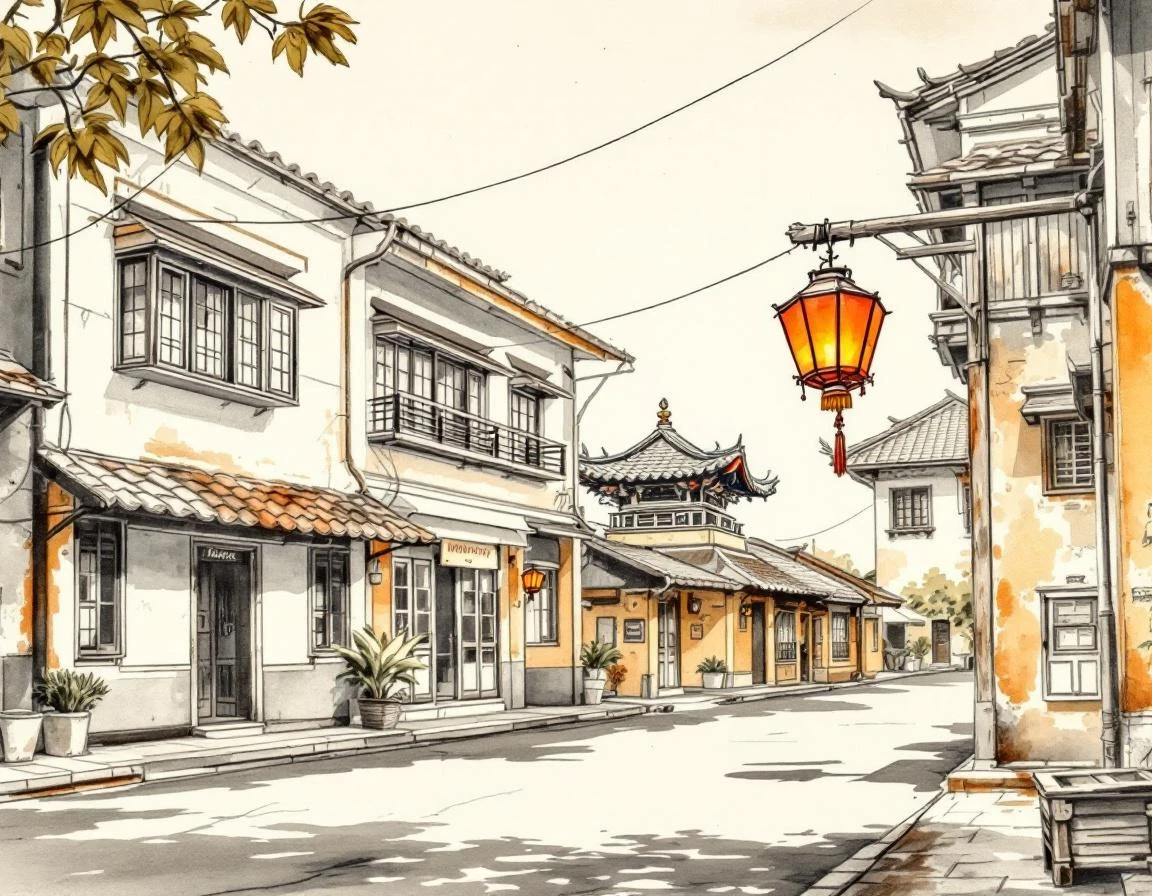
Southeast Asian place names carry centuries of layered meaning. A Javanese town name might encode the memory of a Hindu kingdom; a Vietnamese settlement name might preserve a Chinese administrative term from the Tang dynasty alongside indigenous Austroasiatic roots. This generator draws from that linguistic depth across Thailand, Vietnam, Cambodia, Laos, Myanmar, Malaysia, Indonesia, the Philippines, and Singapore. The region's naming traditions are genuinely diverse in ways that matter for fiction. Thai names often reference water, mountains, or royal epithets. Filipino barangay names frequently preserve Spanish colonial forms grafted onto older Tagalog or Visayan roots. Malay names tend toward descriptive geography - *Kuala* for river mouth, *Bukit* for hill - while Khmer names often invoke protective spirits or sacred animals. The generator respects these distinctions rather than blending them into a generic "Southeast Asian" sound. Useful for historical fiction set during the Ayutthaya period, contemporary stories in the Mekong Delta, or secondary-world settings that borrow from the archipelago's colonial and precolonial past.
Island and Mainland Distinctions
Southeast Asian toponymy divides cleanly between mainland and maritime traditions. In island Southeast Asia - Indonesia, the Philippines, parts of Malaysia - names tend to reference coastal features, maritime resources, or navigational landmarks: *Pulau* (island), *Teluk* (bay), *Tanjung* (cape). Mainland settlements more often take their names from river systems, mountain ranges, or the fertile plains that supported intensive rice cultivation. That geographic split shaped settlement patterns too, with maritime zones developing dispersed coastal communities while mainland areas concentrated around agricultural centers - a distinction still readable in the place names themselves.
Religious and Cultural Influences
Southeast Asian place names carry centuries of overlapping religious history. Sanskrit runs through countless towns in Thailand, Cambodia, Laos, and parts of Indonesia, a residue of Hindu-Buddhist influence that never fully faded. Arabic elements filtered into Malay, Tagalog, and Javanese through Islamic conversion, producing hybrid forms that sound local but carry traces of the Arabian Peninsula. Spanish missionaries renamed Philippine settlements after Catholic saints, layering European hagiography over indigenous geography. Older still are the animist names referencing spirits, sacred rivers, or local deities that predate any of these arrivals. The result is a region where the name of a town can tell you something about who arrived, when, and what they built. Thai settlements often incorporate *Muang* (city) or Buddhist terminology. Malaysian villages cluster around *Kampung*. Philippine towns pair a saint's name with a regional suffix that marks the local language underneath.
Colonial and Post-Colonial Transformations
European colonial powers left a deep mark on Southeast Asian place names. British, Dutch, French, Spanish, American, and Portuguese administrations each introduced their own naming conventions or bent existing names toward European pronunciation-hence the paired forms: Yangon and Rangoon, Jakarta and Batavia. After independence, countries took different paths. Thailand kept its traditional names largely intact. Indonesia systematically replaced Dutch-era names with Indonesian ones. Vietnam's toponymy still shows the pressure of three distinct layers: Chinese administrative naming, French colonial adaptation, and indigenous tradition. Singapore's street signs reflect something else again: a conscious acknowledgment of its Chinese, Malay, Indian, and British populations, often rendered in all four scripts. The result, across the region, is a naming record that doubles as a history of occupation, resistance, and negotiated identity.
Southeast Asian Town Names: A Working Naming Guide
Southeast Asian town names should feel used, not arranged. Start with the ground: river deltas, monsoon coasts, temple towns, ferry ports, spice routes, rice plains, and colonial street grids. Then decide what sort of place is being named, because a river market, port city, temple town, plantation village, hill settlement, or coastal trading post asks for a different kind of word than a capital or a ruin. The generator can give you a quick spread, but the choice still has to sound like someone could say it while giving directions, filing a complaint, selling rice, dodging patrols, or pointing at a storm line. Keep a few candidates that disagree with each other. One may sound official but brittle; another may feel like a mapmaker cleaned it up too much. That friction is useful.
Who Gets to Name the Place
Pick the naming authority before you fall in love with the syllables. Local speech borrows names in ways officials rarely predict. A tax office wants tidy spelling. A sailor wants speed. A monk, elder, port clerk, surveyor, rebel, colonial official, or company lawyer may all have a reason to push a different version. For Southeast Asian town names, the useful candidate usually reveals who got to write the sign and who kept saying the older word anyway. Read the name in a sentence of dialogue. If every character would pronounce it the same way, the place may be too clean.
Language Care Before Style
Thai, Khmer, Lao, Vietnamese, Burmese, Malay, Javanese, Tagalog, Sanskrit, Arabic, Chinese, French, Dutch, Spanish, British, and American layers need context. This is where many generated names go wrong. They borrow surface sound while ignoring who owns the language, whether the place is real, and what history the word may touch. Fiction gives you room to invent, but it does not make every source available for casual decoration. If you need a real cultural reference, narrow it to a specific region and period. If you are making a secondary world, decide what parts of the naming logic you are adapting and what parts you are leaving alone.
The Work Inside the Name
The town needs work inside it. Maybe people came for a ferry, a mine, a shrine, pasture, a school, a harbor, a wall, or a road that cut through older country. Maybe they stayed because leaving cost too much. Let that practical reason roughen the name. A good result can hold an official story and a private one at the same time: the polished name on the station board, the clipped version in a market, the older name used at home, the insult outsiders keep repeating. That layered feel matters more than a rare letter combination.
The Scene Test
Before keeping a result, run it through a small scene. Put it on a flood warning, in a grandmother's warning, on a ferry manifest, and in the mouth of someone who wants the place forgotten. For Southeast Asian town names, the winner should make one concrete promise about geography, class, danger, faith, trade, or memory. It should also leave room for a writer to disagree with it later. Town names age. They get translated badly, painted over, shortened by children, revived by activists, sold by developers, or cursed by people who left. Choose the one that can survive that kind of handling.