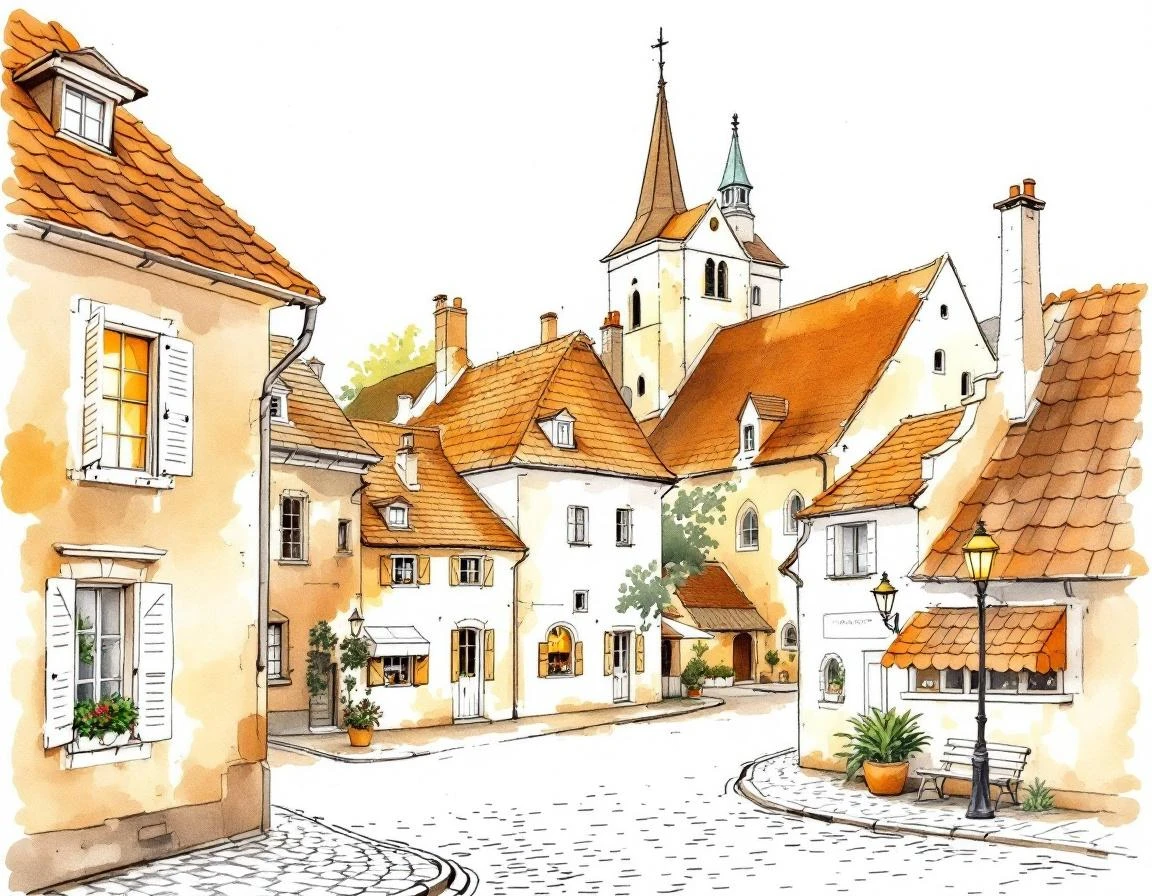

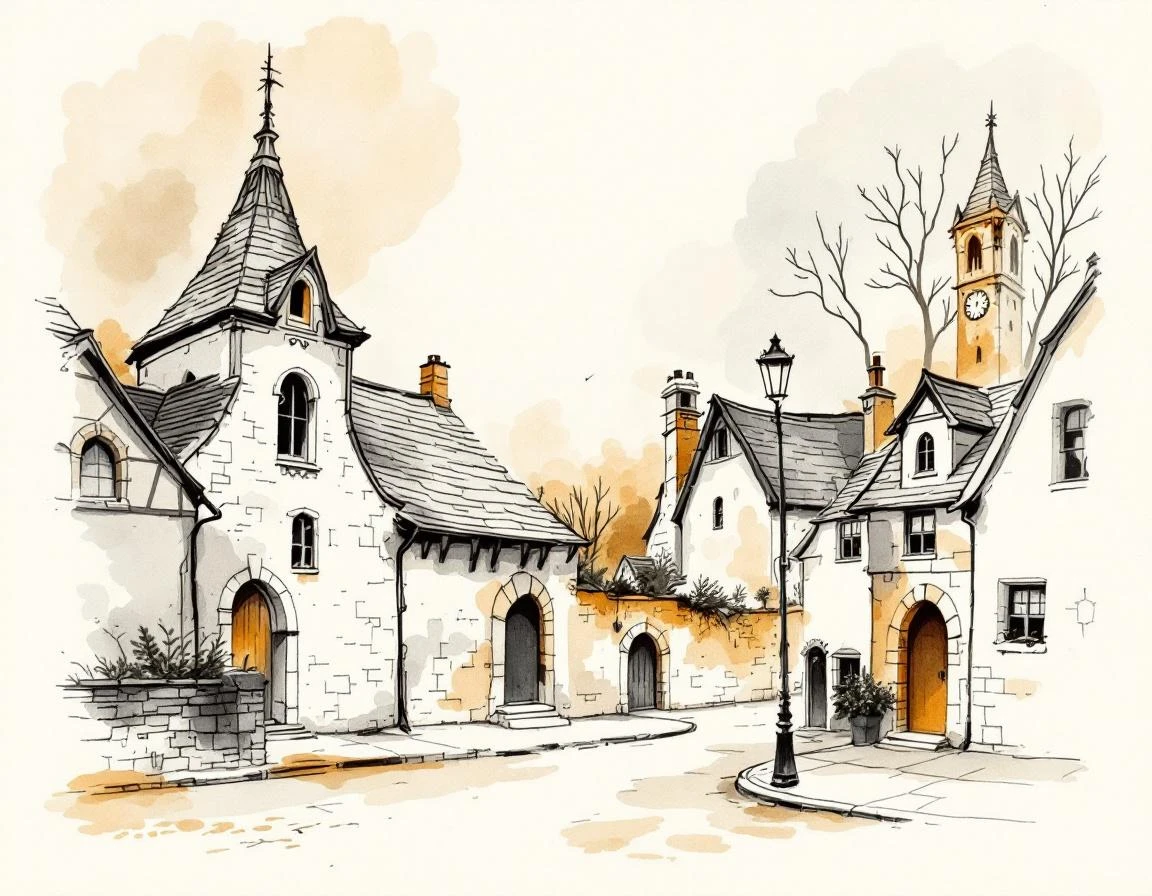
Western European Town Names: Britain, France, and the Atlantic Coast
Generate Western European town names drawn from the British, French, Irish, Welsh, Breton, and Atlantic coast traditions: the Celtic substrate, the Roman layer, Norse raids and settlement, and the medieval church names that still shape the modern map. These are not interchangeable. A Welsh name built on *aber-* (river mouth) or *llan-* (enclosure, then church) carries different phonology and history than a Norman French name ending in *-ville* or *-court*, or a Breton name preserving sounds that died out in mainland French centuries ago. The generator works from those distinctions rather than flattening them into generic "medieval European." Useful for fiction set in Arthurian Britain, the Hundred Years' War, Viking-age Normandy, or any secondary world built on the Atlantic fringe.
British and Irish Naming
British place name research is one of the most developed fields in linguistic archaeology. The names of English towns preserve the history of the Celtic, Roman, Anglo-Saxon, Viking, and Norman periods in layers that specialists can often date and identify by linguistic analysis alone. The *-chester/-caster* ending (Chester, Lancaster, Winchester, Colchester, Manchester) comes from Latin *castra*, military camp; these are the Roman settlement sites. The *-wick/-wich* ending (Norwich, Ipswich, Greenwich) is Old English for a specialised settlement, often a trading post or dairy farm. The *-by* ending (Selby, Derby, Grimsby) is Old Norse for a farm or small settlement, concentrated in the Danelaw, where Danish Vikings settled heavily. The *-ton* ending (London, Middleton, Hilton) is Old English for a farmstead. Reading a map of England is reading the waves of settlement and power. Irish place names include *Dún* (fort: Dundalk, Dunmore, Dungannon), *Ath* (ford: Athlone, Athenry), *Baile* (homestead/town: Ballina, Ballymena, Balbriggan, corrupted to *Bally-* in anglicised forms), *Ros* (promontory: Roscommon, Rosslare), and *Gleann* (glen: Glendalough, Glencar). Irish place names, often heavily anglicised in pronunciation and spelling, preserve the Gaelic description of the landscape.
French Naming Traditions
French place names carry the layered history of Gaul under Rome and the Frankish-medieval period that followed. Gallo-Roman survivals include Lyon (*Lugdunum*, "fort of Lug," a Celtic god), Paris (from *Lutetia*, the Roman name derived from the Parisii tribe), and Reims (*Durocortorum* in Latin, from a Celtic root; the city where French kings were traditionally crowned). French suffixes encode centuries of settlement patterns: *-ville* from Latin *villa* (country estate), giving Joinville, Deauville, Louisville; *-court* from Germanic *hof* (courtyard or estate), giving Elancourt and Betancourt; *-sur-mer* and *-sur-* marking position on sea or river, as in Boulogne-sur-Mer and Collioure; *-les-* meaning "of the," as in Aix-les-Bains. One persistent habit in French naming is specificity: towns append a distinguishing feature to separate themselves from others sharing the same root, so *Boulogne-sur-Mer* distinguishes itself from *Boulogne-Billancourt* near Paris. Breton place names draw on the Celtic Breton language of Brittany, descended from British Celtic emigrants who crossed to Armorica between the fifth and seventh centuries CE. The prefix *Ker-* means village (Kerberon, Kermaria); *Plou-* and *Plé-* mark a parish (Plougastel, Pléneuf); *Lan-* indicates a monastic cell (Landivisiau, Lannion). Breton naming is Celtic in structure but has diverged considerably from its Welsh and Cornish relatives over the intervening centuries.
Using the Generator
For Roman Britain settings - the Claudian conquest (43 CE), the Boudiccan revolt (60-61 CE), Hadrian's Wall (122 CE), the withdrawal in the early 5th century - names should reflect the Latin-Celtic bilingualism of the period. The *Iceni* and *Trinovantes* kept their Celtic names while Roman administrators layered Latin ones on top. For medieval British settings, the dominant linguistic layer shifts with the period. A story set in the Danelaw has Viking-inflected place names; a Norman story has French names sitting uneasily alongside the English ones they never quite displaced. For contemporary settings using real or near-real British, Irish, or French locations, the existing naming is already the richest possible ground. Every English county contains enough naming archaeology to supply an entire novel's worth of texture.
Western European Town Names: A Working Naming Guide
Western European town names should feel used, not arranged. Start with Atlantic ports, Norman villages, Rhine markets, cathedral towns, canal cities, slate valleys, and hedgerow parishes. Then decide what sort of place is being named, because a market town, cathedral city, port, spa town, canal town, mining borough, or valley village asks for a different kind of word than a capital or a ruin. The generator can give you a quick spread, but the choice still has to sound like someone could say it while giving directions, filing a complaint, paying a bridge toll, reading a parish notice, or pointing at a storm line. Keep a few candidates that disagree with each other. One may sound old enough to have enemies; another may feel like a mapmaker cleaned it up too much. That friction is useful.
Who Gets to Name the Place
Pick the naming authority before you fall in love with the syllables. Local speakers shorten names in ways officials rarely predict. A tax office wants tidy spelling. A sailor wants speed. A priest, elder, guild clerk, surveyor, rebel, harbor master, or company lawyer may all have a reason to push a different version. For Western European town names, the useful candidate usually reveals who got to write the sign and who kept saying the older word anyway. Read the name in a sentence of dialogue. If every character would pronounce it the same way, the place may be too clean.
Language Care Before Style
French, Dutch, German, English, Irish, Breton, Welsh, Basque, Latin church, and local dialect layers differ. Pick a lane. This is where many generated names go wrong. They borrow surface sound while ignoring who owns the language, whether the place is real, and what history the word may touch. Fiction gives you room to invent, but it does not make every source available for casual decoration. If you need a real cultural reference, narrow it to a specific region and period. If you are making a secondary world, decide what parts of the naming logic you are adapting and what parts you are leaving alone.
The Work Inside the Name
The town needs work inside it. Maybe people came for a bridge, market charter, abbey, port, quarry, canal, toll road, or hedgerow parish that made the place worth marking. Maybe they stayed because leaving cost too much. Let that practical reason roughen the name. A good result can hold an official story and a private one at the same time: the polished name on the station board, the clipped version in a market, the older name used at home, the insult outsiders keep repeating. That layered feel matters more than a rare letter combination.
The Scene Test
Before keeping a result, run it through a small scene. Put it on a ferry notice, in a grandmother's warning, on a parish register, and in the mouth of someone who wants the place forgotten. For Western European town names, the winner should make one concrete promise about geography, class, danger, faith, trade, language, or memory. It should also leave room for a writer to disagree with it later. Town names age. They get translated badly, painted over, shortened by children, revived by activists, sold by developers, or cursed by people who left. Choose the one that can survive that kind of handling.