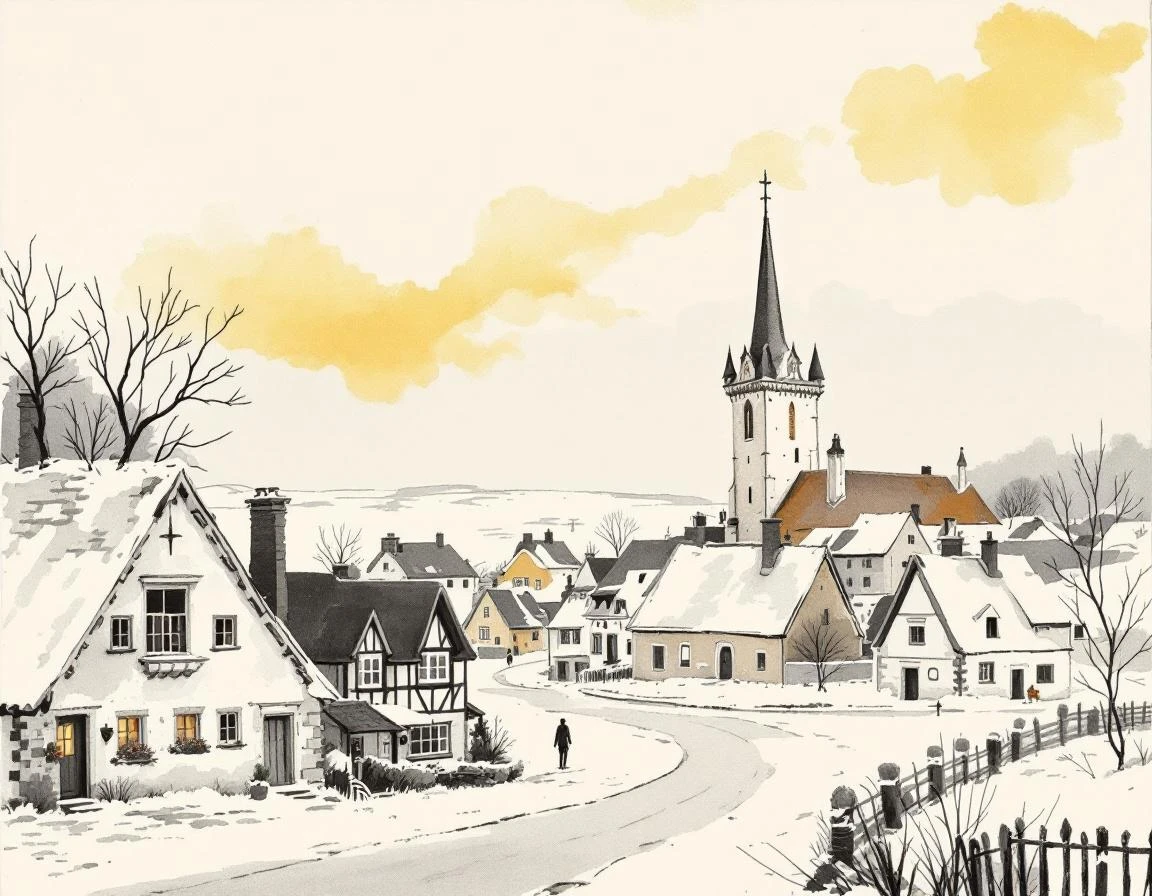

Northern European Town Names: Scandinavian and Nordic Settlements
Generate Northern European town names from the Norse, Swedish, Norwegian, Danish, Finnish, and Baltic naming traditions: fjord towns, Viking-age settlements, Hanseatic trading ports.
Scandinavian Naming Traditions
Scandinavian place names are among the most systematically studied in Europe because the Old Norse sources, including sagas, runes, and land registers, preserve a detailed record of how the Viking-age and medieval landscape was named. The suffixes are consistent: *-by* (farm or settlement: Derby, Selby in England; Kolby, Sønderby in Denmark), *-vik* (bay or inlet: Reykjavík, Narvik, Greenwich in England), *-borg* (fortress: Helborg, Christiansborg, Hjortebjerg), *-fjord* (fjord: Oslofjord, Sognefjord), and *-holm* (island: Stockholm, "pile island," named for the log pilings at the original settlement). Stockholm's name encapsulates the Norse naming tradition: *stokk* (log) + *holm* (island), a description of the physical feature that made the location worth settling. Oslo (*Ásló*, possibly "meadow at the river mouth"), Copenhagen (*Kjøbenhavn*, "merchants' harbor"), Gothenburg (*Göteborg*, "Göta people's fortress"). These are ordinary descriptive names for landscape features or the practical functions of early settlements, not commemorations or inventions. Finnish place names have a distinct non-Indo-European quality, since Finnish is a Uralic language related to Estonian and Hungarian. Helsinki was originally *Helsingfors* in Swedish, named for the Helsinge parish, with *fors* meaning "rapids." Tampere derives from the Swedish *Tammerfors*, oak rapids. Turku is *Åbo* in Swedish, "place by the river." The Finnish-Swedish bilingual naming reflects Swedish's long role as Finland's administrative language, from the colonial period through 1809, then Russian administration until independence in 1917.
Viking Age and Norse Settlement
The Viking age (roughly 793-1066 CE) produced a wave of Scandinavian settlements across the North Atlantic and in territories that became England, Ireland, Scotland, Normandy, and Russia. The Norse place-name legacy in England concentrates in the Danelaw (Yorkshire, Lincolnshire, the East Midlands): endings like *-by*, *-thorpe* (outlying farm), *-thwaite* (clearing), *-toft* (homestead), and *-kirk* (church) are Danish or Norwegian Norse, not Old English. The Norse colonies named themselves with unusual candor about what they were seeing, or unusual dishonesty. Iceland was settled from Norway in the 870s; its first name was *Snæland* (snowland), given by earlier visitors, before Flóki Vilgerðarson climbed a peak and saw a fjord choked with drift ice and renamed it accordingly. Greenland was Erik the Red's deliberate misdirection - he wanted settlers, so he called it "the green land." Vinland (North America, c. 1000 CE) remains contested: the *vin* may refer to wild grapes or simply to open meadows, and archaeologists have not settled the question. The Hanseatic League (13th-17th centuries) built a trading network across Northern Europe that left its own naming residue. Lübeck, Hamburg, Rostock, Danzig (now Gdańsk), Riga, Reval (now Tallinn): German-inflected names strung along the Baltic coast, reflecting how thoroughly German merchant culture dominated the League's ports.
Using the Generator
For Viking-age historical settings - the Norse exploration of the North Atlantic, the settlement of Iceland and Greenland, the raids on Britain and the continent, the Varangian trade routes through Russia - names should draw from Old Norse, which is well-documented and consistent enough to work from directly. For Norse mythology settings (the Nine Realms, the Eddic gods, the frost giants of Jotunheim), names come from the Eddic tradition: Asgard, Midgard, Jotunheim, Vanaheim, Alfheim, Niflheim, Muspelheim, Svartalfheim, Helheim. These world-names follow the same *-heim* (home, world) pattern as ordinary Norse place names. For contemporary Scandinavian settings - the Nordic welfare states, Sweden's consensus culture, Norway's oil economy, Denmark's design tradition, Finland's fraught relationship with Russia - use contemporary Scandinavian forms. Each country has its own naming conventions, and they are not interchangeable.
Northern European Town Names: A Working Naming Guide
Northern European town names should feel used, not arranged. Start with fjords, Baltic ports, peatlands, fishing harbors, royal market towns, winter roads, and saga farms. Then decide what sort of place is being named, because a harbor town, fishing village, royal borough, mining town, island parish, thing site, or winter camp asks for a different kind of word than a capital or a ruin. The generator can give you a quick spread, but the choice still has to sound like someone could say it while giving directions, filing a complaint, selling fish, reading a church register, or pointing at weather over the fjord. Keep a few candidates that disagree with each other. One may sound tired from use; another may feel like a mapmaker cleaned it up too much. That friction is useful.
Who Gets to Name the Place
Pick the naming authority before you fall in love with the syllables. Local speakers lose and preserve names in ways officials rarely predict. A tax office wants tidy spelling. A sailor wants speed. A priest, elder, guild clerk, surveyor, fisher, or company lawyer may all have a reason to push a different version. For Northern European town names, the useful candidate usually reveals who got to write the sign and who kept saying the older word anyway. Read the name in a sentence of dialogue. If every character would pronounce it the same way, the place may be too clean.
Language Care Before Style
Norse, Danish, Swedish, Finnish, Sámi, Baltic German, and modern national languages are separate. Do not make every northern name sound like a raid. This is where many generated names go wrong. They borrow surface sound while ignoring who owns the language, whether the place is real, and what history the word may touch. Fiction gives you room to invent, but it does not make every source available for casual decoration. If you need a real cultural reference, narrow it to a specific region and period. If you are making a secondary world, decide what parts of the naming logic you are adapting and what parts you are leaving alone.
The Work Inside the Name
The town needs work inside it. Maybe people came for a ferry, fishery, mine, harbor, thing site, winter road, peat cutting, or church landing that made the shore worth naming. Maybe they stayed because leaving cost too much. Let that practical reason roughen the name. A good result can hold an official story and a private one at the same time: the polished name on the station board, the clipped version in a market, the older name used at home, the insult outsiders keep repeating. That layered feel matters more than a rare letter combination.
The Scene Test
Before keeping a result, run it through a small scene. Put it on a ferry notice, in a grandmother's warning, on a fish crate, and in the mouth of someone who wants the place forgotten. For Northern European town names, the winner should make one concrete promise about water, weather, trade, language, faith, danger, or memory. It should also leave room for a writer to disagree with it later. Town names age. They get translated badly, painted over, shortened by children, revived by activists, sold by developers, or cursed by people who left. Choose the one that can survive that kind of handling.