
Southern European Town Names: Mediterranean Places from Spain to Greece
Generate Southern European town names from the Romance language traditions: Spanish, Italian, Portuguese, French, and Greek. These are Mediterranean places that have been continuously inhabited for millennia, and the naming layers show it.
Mediterranean Naming Depth
Southern European place names carry some of the deepest naming archaeology in the Western world. Cities in the Mediterranean basin have often been occupied continuously for three thousand years or more, with names that passed through Greek, Latin, Arabic, and successive Romance language forms while maintaining some thread of connection to the original. Spanish city names reflect the country's layered history: the Roman stratum (Caesar Augusta → Zaragoza; Emerita Augusta → Mérida; Hispalis → Sevilla), the Visigothic period (Toledo from *Toletum*), and the Moorish period (711-1492 CE, during which Arabic place names were extensively applied). *Gibraltar* derives from Arabic *Jabal al-Ṭāriq*, "mountain of Tariq," named for the Berber commander Tariq ibn Ziyad who led the Muslim crossing in 711. *Guadalquivir* comes from *al-wadi al-kabir*, "the great river." *Alcázar* from *al-qaṣr*, "the palace" or "the castle." The Reconquista produced a wave of saint-based renaming alongside retained Arabic names. Andalusia was Moorish territory, and its place names remain heavily Arabic in character. Italian city names: Rome (*Roma*, etymology disputed, possibly pre-Latin, possibly from the Tiber's ancient name *Rumon*), Venice (*Venezia*, from the Veneti, the pre-Roman people of the region), Florence (*Firenze* from Latin *Florentia*, possibly named for its flowering banks), Milan (*Milano* from Latin *Mediolanum*, "middle plain"). Naples is *Napoli*, from Greek *Neápolis*, "new city," dating to its Greek colonial period around 600 BCE.
Romance Language Naming
The Romance languages, including Italian, Spanish, Portuguese, French, Romanian, Catalan, Galician, and Occitan, all descend from Latin, and their place-naming conventions carry Latin structural patterns into the modern tongues. The *San/Santa/Sant* (Saint) prefix creates the dominant naming pattern for medieval settlements: San Gimignano, Santa Fe, São Paulo, Saint-Germain. Saint-based naming reflects the Catholic Church's medieval role as the primary naming authority; new settlements were placed under the protection of a patron saint. Greek place names in the Mediterranean reflect both ancient colonization and the Byzantine and modern Greek tradition. *Magna Graecia*, the Greek colonies of southern Italy and Sicily, named dozens of cities that survive in modified form: *Neápolis* (Naples), *Sybaris* (now Sibari), *Kroton* (now Crotone), *Taras* (now Taranto). These names predate the Roman period by centuries. The Portuguese maritime tradition scattered names across a global network. Río de Janeiro means "River of January," named on January 1, 1502, when Portuguese explorers entered Guanabara Bay and mistook it for a river mouth. Macau comes from Portuguese *Macau*, itself borrowed from Cantonese *Mou3 gong1*, meaning "Harbor of A-Ma," a local temple. Portuguese place names throughout the colonial network tend to record the date of discovery, the saint's day, or a physical feature observed on arrival.
Using the Generator
For ancient Greek settings - the city-states of classical Athens and Sparta, the Alexandrian expansion, the Hellenistic period - Greek place names ground the story in its specific linguistic tradition. Greek place names tend to be descriptive: *Akropolis* means "high city," *Agora* means "gathering place," *Epidauros* named a healing sanctuary. For Roman settings - the Imperial capital, the provincial cities, Romanized Gaul and Spain - Latin place names and administrative vocabulary provide the naming texture. The Romance languages are, in a literal sense, Latin as spoken by the populations of former Roman provinces. For medieval Mediterranean settings - the Crusades, the Italian city-states, the Spanish Reconquista, the Byzantine Empire - naming reflects the language politics of the specific period.
Southern European Town Names: A Working Naming Guide
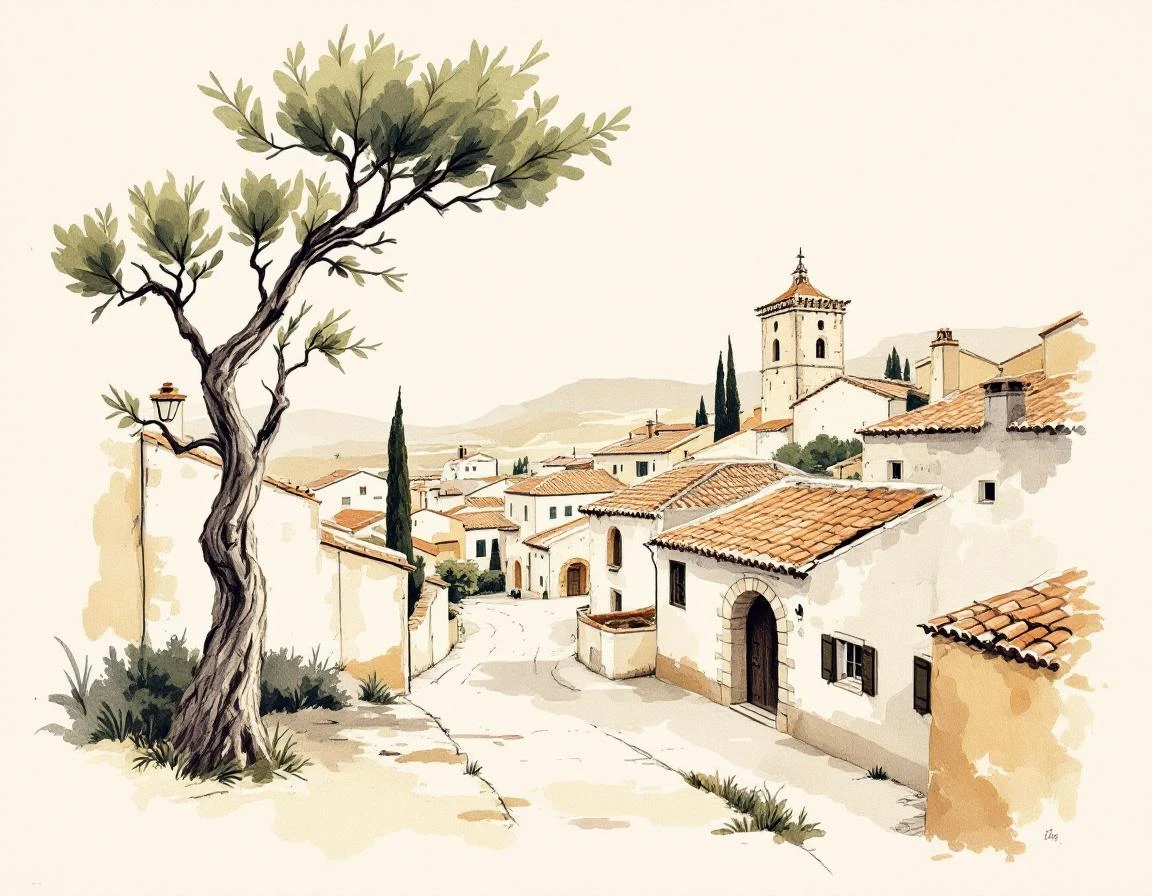
Southern European town names should feel used, not arranged. Start with Mediterranean ports, hill towns, olive terraces, Roman roads, colonial plazas, mining districts, and island harbors. Then decide what sort of place is being named, because a hill town, port, monastery town, market village, plaza town, mining city, or island capital asks for a different kind of word than a capital or a ruin. The generator can give you a quick spread, but the choice still has to sound like someone could say it while giving directions, filing a complaint, selling olives, dodging a levy, or pointing at a storm line. Keep a few candidates that disagree with each other. One may sound official but brittle; another may feel like a mapmaker cleaned it up too much. That friction is useful.
Who Gets to Name the Place
Pick the naming authority before you fall in love with the syllables. Local speakers borrow and preserve names in ways officials rarely predict. A tax office wants tidy spelling. A sailor wants speed. A priest, elder, guild clerk, surveyor, rebel, harbor master, or notary may all have a reason to push a different version. For Southern European town names, the useful candidate usually reveals who got to write the sign and who kept saying the older word anyway. Read the name in a sentence of dialogue. If every character would pronounce it the same way, the place may be too clean.
Language Care Before Style
Italian, Spanish, Portuguese, Greek, Catalan, Occitan, Basque, Arabic, Latin, Jewish, and saint-name layers need geography. This is where many generated names go wrong. They borrow surface sound while ignoring who owns the language, whether the place is real, and what history the word may touch. Fiction gives you room to invent, but it does not make every source available for casual decoration. If you need a real cultural reference, narrow it to a specific region and period. If you are making a secondary world, decide what parts of the naming logic you are adapting and what parts you are leaving alone.
The Work Inside the Name
The town needs work inside it. Maybe people came for a harbor, olive press, saint shrine, Roman road, plaza, hill fort, ferry, or mine that made the place worth naming. Maybe they stayed because leaving cost too much. Let that practical reason roughen the name. A good result can hold an official story and a private one at the same time: the polished name on the station board, the clipped version in a market, the older name used at home, the insult outsiders keep repeating. That layered feel matters more than a rare letter combination.
The Scene Test
Before keeping a result, run it through a small scene. Put it on a ferry notice, in a grandmother's warning, on a parish register, and in the mouth of someone who wants the place forgotten. For Southern European town names, the winner should make one concrete promise about geography, class, danger, faith, trade, language, or memory. It should also leave room for a writer to disagree with it later. Town names age. They get translated badly, painted over, shortened by children, revived by activists, sold by developers, or cursed by people who left. Choose the one that can survive that kind of handling.