
Ghost Town Names: Abandoned Settlements for Fiction and Worldbuilding
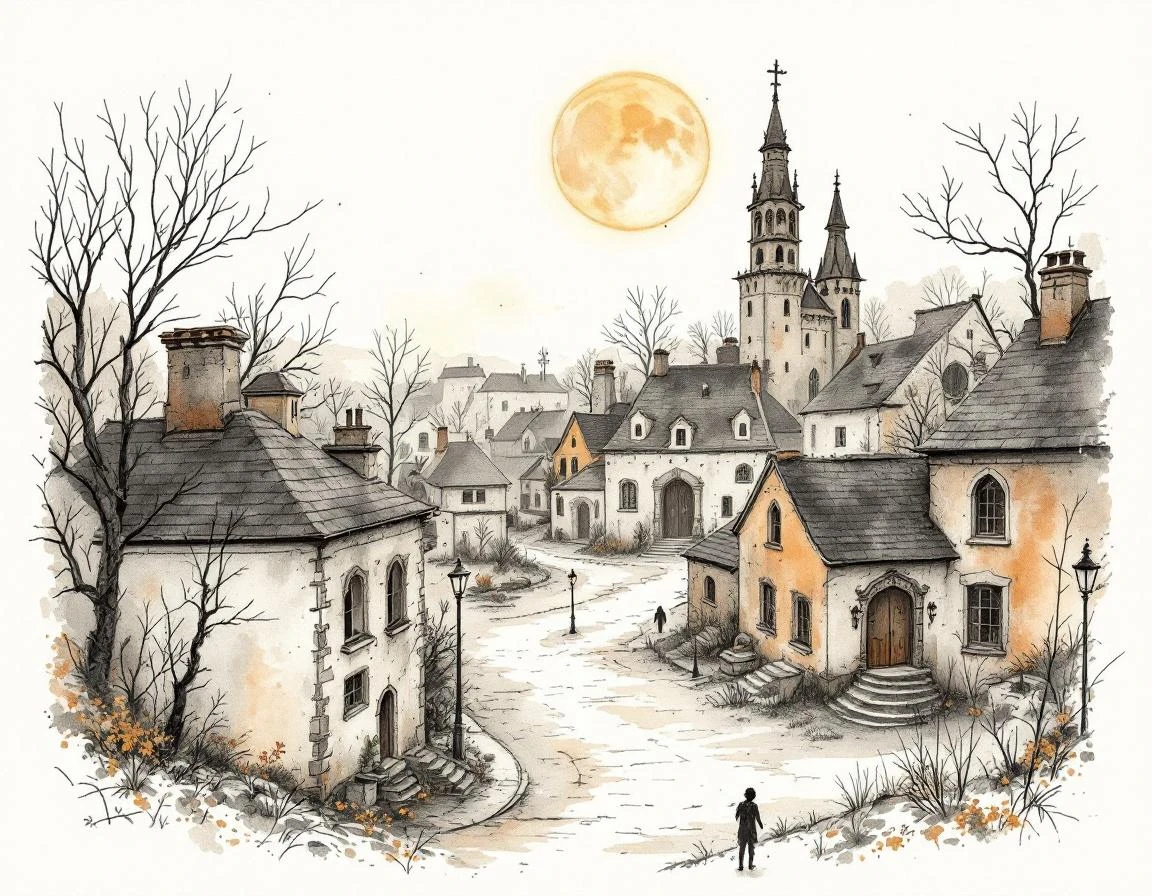
Generate ghost town names for fiction, horror, westerns, and post-apocalyptic settings. The best names belong to abandoned settlements that still carry the shape of what they used to be and the question of why everyone left.
What Makes a Ghost Town
Ghost towns happen when the reason for a town's existence disappears faster than the town itself. Mining ghost towns are the most common American type: a silver or gold strike brings thousands of people, a grid of streets gets laid out, names are given to saloons and hotels and general stores, and then the vein runs out. Within a decade, the population drops from 5,000 to fifty to zero and the buildings begin their slow return to landscape. The American West is full of ghost towns because settlement was driven by extraction rather than agriculture or trade. Bodie, California peaked at 10,000 people in 1879 and is now a state historic park with 200 buildings in arrested decay - the park uses that exact phrase to describe its preservation policy, which is exactly right for the ghost town aesthetic. The buildings are maintained in the condition of their abandonment: no restoration, no collapse allowed. Other causes: railroad rerouting (if the line doesn't come through, the town has no reason to exist; many towns platted in anticipation of the railroad and never served by it simply ceased), flooding for reservoir construction (Enfield, Massachusetts was intentionally submerged to create the Quabbin Reservoir in the 1930s, along with three neighboring towns), nuclear contamination (Pripyat, Ukraine, near Chernobyl: a city of 49,000 emptied in 36 hours in 1986 and never resettled).
Ghost Town Naming Conventions
Ghost town names are almost always optimistic; they were coined at founding, when the future felt inevitable. Calico, Silverton, Goldfield, Bodie, Tombstone: names that promised prosperity or permanence. That the name outlasts both the people and the prosperity is part of what makes ghost towns so narratively charged. Personal-name ghost towns carry a particular kind of irony. Jerome, Arizona was named for Eugene Jerome, a New York financier who never lived there; it became a ghost town, then a tourist destination. Rhyolite, Nevada, named for the volcanic rock underfoot, is now known more for its preserved ruins than anything its founders intended. The "almost-ghost-town" is its own category, and arguably the richer one for fiction: a settlement that is 90% gone but sustains one functioning business, nearly always a bar, or a handful of permanent residents who stayed for reasons that become the story. These places often have names that have quietly turned self-aware.
Using the Generator
For Western settings, ghost town names work best when they carry the optimistic naming conventions of boom-era towns - the irony writes itself. A gold rush settlement called "Golden Prospect" or "Strike City" already contains its own eulogy. For horror settings, the abandoned town is a classic environment. The Overlook Hotel is a resort ghost town in the ski-industry sense (closed for winter, then never reopened). Derry in Stephen King's *It* is a ghost town in the demographic sense: the population keeps declining because something is eating the children. Horror ghost towns tend to have names that sound entirely normal until the story recontextualizes them. For post-apocalyptic settings, every surviving settlement in a formerly developed world is ringed by ghost towns - the infrastructure of the old world frozen mid-sentence. The names carry the old world forward into the new one, meaning everything to survivors who remember them and nothing to those who don't.
Ghost Town Names: A Working Naming Guide
Ghost town names should feel used, not arranged. Start with abandoned mines, empty streets, tomb fields, flooded districts, bunker gates, plague roads, and reclaimed farms. Then decide what sort of place is being named, because a ghost town, ruin, burial city, survivor enclave, quarantine zone, failed colony, or drowned settlement asks for a different kind of word than a capital or a ruin. The generator can give you a quick spread, but the choice still has to sound like someone could say it while giving directions, reading an old deed, dodging patrols, ignoring a trespass sign, or pointing at a storm line. Keep a few candidates that disagree with each other. One may sound too hopeful to survive; another may feel like a mapmaker cleaned it up too much. That friction is useful.
Who Gets to Name the Place
Pick the naming authority before you fall in love with the syllables. Former locals, caretakers, and scavengers carry names in ways officials rarely predict. A tax office wants tidy spelling. A prospector wants luck. A priest, elder, surveyor, rail clerk, survivor, or company lawyer may all have a reason to push a different version. For ghost town names, the useful candidate usually reveals who got to write the sign and who kept saying the older word anyway. Read the name in a sentence of dialogue. If every character would pronounce it the same way, the place may be too clean.
Language Care Before Style
Do not name only for mood. Ask who came, what they wanted, what went wrong, and who still uses the old word. This is where many generated names go wrong. They borrow surface sound while ignoring who owns the language, whether the place is real, and what history the word may touch. Fiction gives you room to invent, but it does not make every source available for casual decoration. If you need a real cultural reference, narrow it to a specific region and period. If you are making a secondary world, decide what parts of the naming logic you are adapting and what parts you are leaving alone.
The Work Inside the Name
The town needs work inside it. Maybe people came for a mine, rail spur, mill, reservoir, bunker, ferry, shrine, or road that promised more than it could keep. Maybe they stayed because leaving cost too much. Let that practical reason roughen the name. A good result can hold an official story and a private one at the same time: the proud name on the old station board, the clipped version in a warning, the older name used at home, the insult outsiders keep repeating. That layered feel matters more than a rare letter combination.
The Scene Test
Before keeping a result, run it through a small scene. Put it on a deed, in a grandmother's warning, on a sheriff's notice, and in the mouth of someone who wants the place forgotten. For ghost town names, the winner should make one concrete promise about geography, loss, danger, faith, trade, failure, or memory. It should also leave room for a writer to disagree with it later. Town names age. They get translated badly, painted over, shortened by children, revived by claimants, sold by developers, or cursed by people who left. Choose the one that can survive that kind of handling.