
Gnome Name Generator - Names for the Inventor-Tinkerers of Fantasy Tradition
Generate gnome names from across the tradition - Paracelsian earth spirits, Tolkien's small-folk who sit just adjacent to hobbits, and the D&D artificer-gnome - for fantasy fiction and tabletop campaigns that treat small seriously.
Gnomes: From Earth Spirits to Inventor-Sages
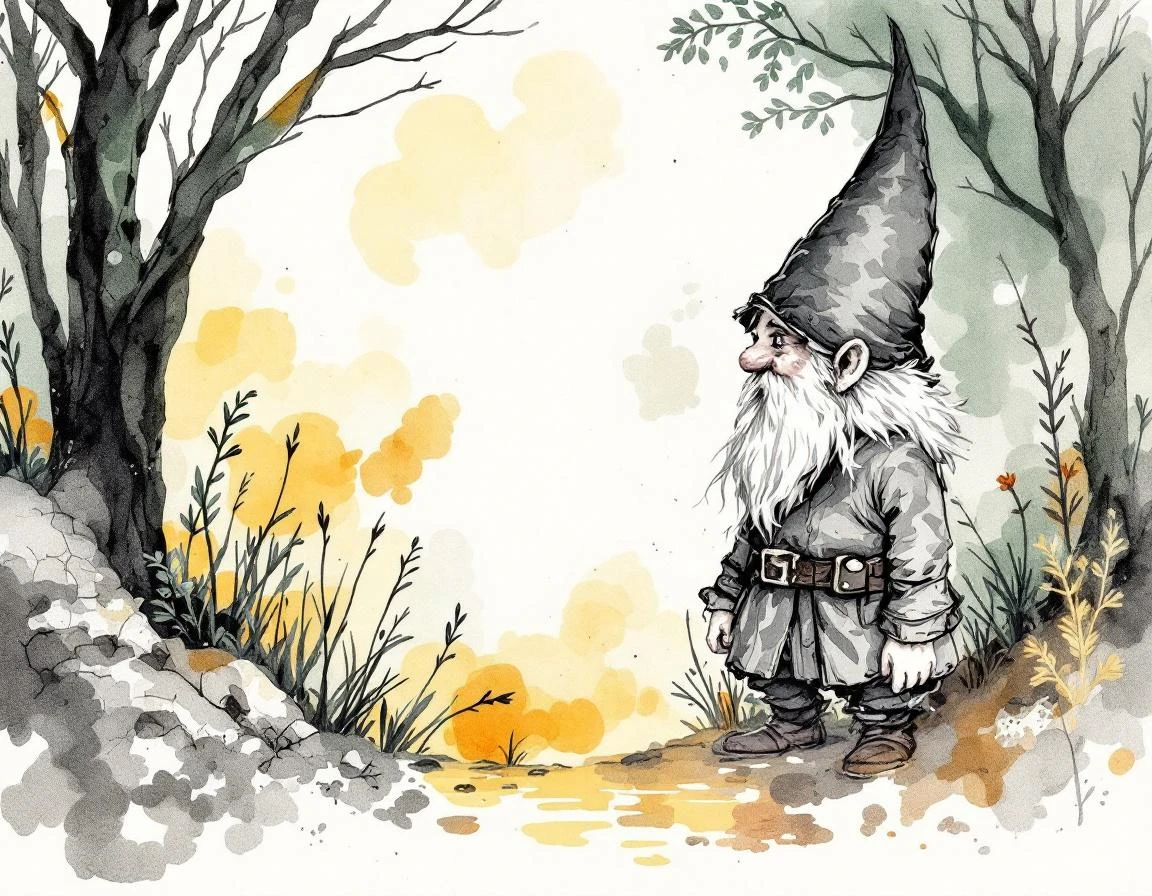
The gnome has one of fantasy's more interesting origin stories. Paracelsus, the Renaissance alchemist, coined "gnomus" to describe elemental earth spirits in his system of elemental beings - creatures who moved through solid earth the way fish move through water. These were nothing like the garden-ornament gnomes of Victorian imagination, and nothing like the playful inventor-gnomes of D&D tradition either. Tolkien briefly used "gnome" for his Noldor Elves in early drafts - the deep-elves who sought forbidden knowledge - before abandoning it for Elvish terminology. That phase left a trace in the gnome's persistent association with wisdom, dangerous curiosity, and the pursuit of knowledge that probably should have stayed buried. D&D's gnomes synthesized the earth-spirit (underground dwelling, stone and soil) with the curious-inventor archetype into something genuinely new: a small humanoid race defined by illusion magic, engineering instinct, and a relationship to tinkering that borders on devotion. Their naming tradition is one of the more distinctive systems in the game, encoding clan, family, nickname, and personal name into a single sprawling architecture that most gnomes never actually use in full.
Gnomish Naming: The Multi-Part Tradition
D&D gnomes carry an unusually elaborate naming structure: personal name, clan name, a nickname bestowed by family, and whatever additional epithets accumulate over a lifetime. The full name surfaces at ceremonies; the nickname - often a physical detail or a reference to some memorable incident - is what everyone actually uses. Personal names in D&D tradition tend toward short, bright-sounding constructions: Alston, Bimpnottin, Breena, Caramip, Carlin, Dimble, Ellyjobell, Erky, Fonkin, Frug, Gerbo, Gimble, Glim, Jebeddo, Kellen, Namfoodle, Orryn, Roondar, Seebo, Sindri, Warryn, Wrenn, Zook. The phonological profile leans on light consonants (soft g, b, l, m) and short vowels - names that feel quick rather than weighted. Outside D&D, gnome names can draw from the earth-element origins Paracelsus described in his *Liber de Nymphis* or from the Northern European folk traditions that gave us small, wise, underground-dwelling beings: the Scandinavian *nisse*, the Swedish *tomte*, the German *kobold*. Each carries distinct cultural associations that a name can quietly invoke.
Gnomes in Fiction: The Intelligence-Quirk Archetype
Gnomes in fiction occupy a strange niche: associated with exceptional intelligence *and* exceptional eccentricity, in roughly equal measure. The gnome inventor with brilliant ideas and chaotic execution; the gnome sage who knows something about everything and will tell you all of it at length; the gnome trickster whose illusions work precisely because they understand how attention fails - these archetypes appear consistently across the tradition, and the consistency is telling. The most interesting gnome characters are those where the intelligence and the eccentricity are genuinely linked, more than adjacent traits stacked for comic effect. Terry Pratchett's gnome-adjacent figures in the *Bromeliad* trilogy (Discworld has nomes rather than gnomes) explore what happens when small creatures develop philosophical frameworks entirely unsuited to their actual situation. The nomes have religion and cosmology built for a world that doesn't work the way they believe it does. That gap - between the sophistication of the system and the wrongness of its premises - is funnier and stranger than the usual "small funny person" shorthand. It's also more honest about what eccentricity often is: not randomness, but a very coherent logic applied to the wrong model. The best gnome names carry some trace of this combination. A name that reads as ordinary until one element snags your attention. A long formal name paired with an absurd nickname that stuck. A very grave name for a character who immediately undermines any expectation of solemnity.
Using the Generator for Your Gnome Character
When generating gnome names, the multiple-name structure of D&D tradition is worth borrowing even if you're not playing D&D. Give your gnome a proper name, a family name, and a nickname - the nickname being what everyone actually uses. The gap between formal name and nickname often carries character: a gnome named Nimblewhistle Coppercog Fizzlewick who everyone calls "Sparks" has already told you something. Consider the character's specialty. An artificer's name might draw on mechanical imagery. An illusionist's name might have something slightly off about it, a syllable that doesn't quite land. A sage's name might run unusually long and precise, because someone who has spent their life cataloguing things tends to take naming seriously. For tabletop play, the nickname is the practical name, so it should be short, distinctive, and carry a small story. "Sparks" suggests an adventurous lab incident. "Thrice" implies a specific event that happened exactly three times. "Wrong-Hat" needs no explanation. Let the nickname be the first sentence of this gnome's backstory.
Whimsy Is Optional
Gnome names can go several ways. Paracelsus used gnomes as earth elementals; later folklore and games made them inventors, burrowers, illusionists, gardeners, bankers, and joke engines. Choose the lane. Earthy names can be compact and mineral. Tinker names may include workshop nicknames. Forest names can be quiet and moss-close.
Workshop Pressure
The name should know whether this gnome belongs to earth, tools, tunnels, gardens, or banks. Whimsy is optional.
Final Naming Pressure
A final check should put the name into a sentence where the creature or character changes the room. If the name only works as a label, keep searching. If it changes how the scene feels, even before anyone explains the lore, it belongs on the shortlist.
Workshop Pressure
The name should know whether this gnome belongs to earth, tools, tunnels, gardens, or banks. Whimsy is optional.
Final Naming Pressure
One last gnome check: give the name a trade or obsession. A tunnel surveyor, mushroom accountant, clockwork arsonist, and earth elemental scholar should not share the same whimsy. The right name can be funny, but it should also know what the character is good at.
Gnome Usage Test
Use this note to test the name in a real scene, where local speech and story pressure matter more than decoration.
Gnome Names with Workshop Precision
Gnome names can be whimsical, but they need an internal craft logic. A burrow botanist, clockmaker, illusionist, gem appraiser, tunnel cartographer, and village prankster all deserve different sound textures. Family names may preserve inventions, mushroom beds, riverbanks, guild mishaps, or a famously stubborn ancestor. Choose the detail that makes the name useful rather than merely cute.
Small Scale, Exact Memory
Test the name in a workshop note, a family argument, and a spell that requires concentration. If it is too frilly to survive practical use, ground it with a tool, mineral, root, hinge, lens, or local hill. Gnome naming works when playfulness has engineering under it and every odd syllable feels owned by the community.