
Basilisk Name Generator - Names for the King of Serpents
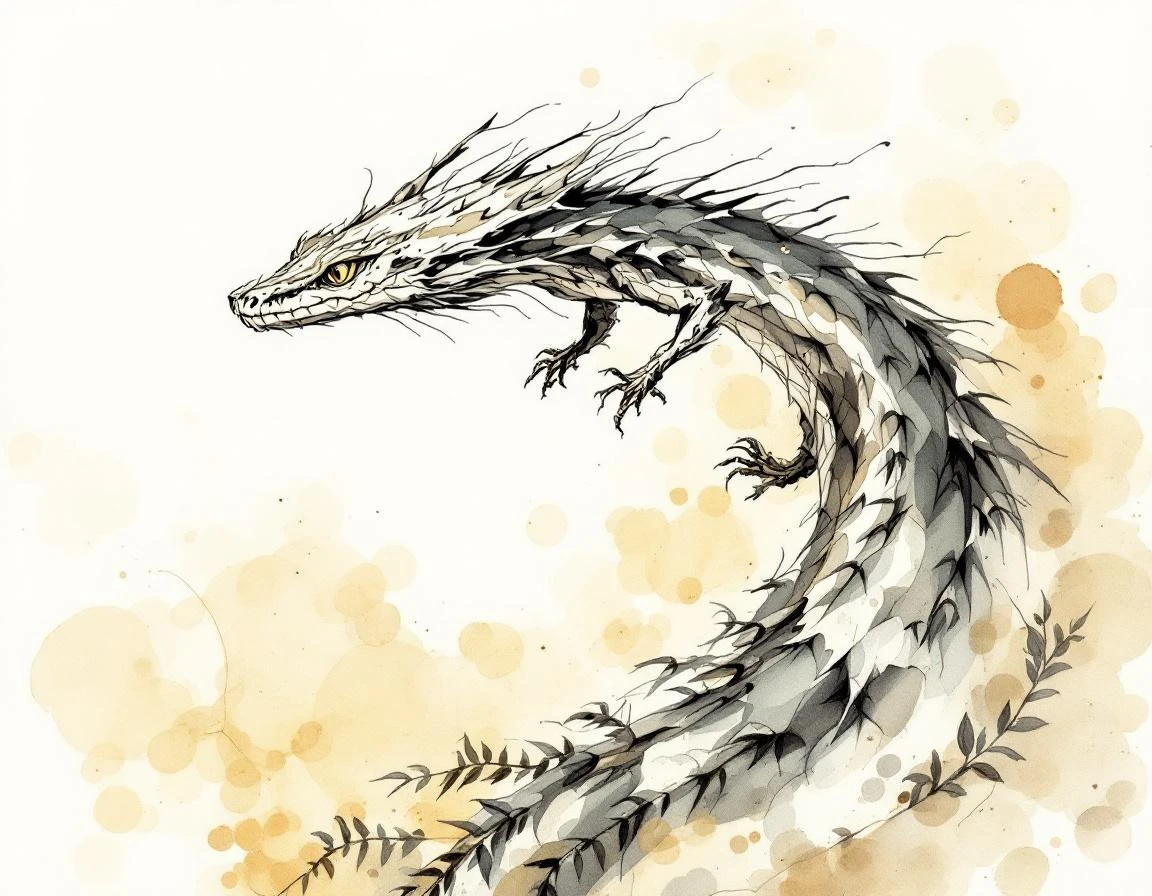
Basilisk names for fiction, tabletop campaigns, and worldbuilding. The basilisk appears in Pliny's *Natural History* as a creature whose gaze kills outright, whose breath withers crops, and whose very passage cracks stone. Medieval bestiaries amplified this: the creature became a crowned serpent, rex serpentium, death made ambulatory. The generator draws on that lineage. Names pull from classical Greek roots (*basileus*, king; *lithos*, stone), from the Latin of Isidore of Seville's *Etymologiae*, and from the hissing sibilant patterns that recur across European serpent-lore. The result is names that sound like something you would not say aloud twice.
The Basilisk in History and Mythology
The basilisk (from the Greek *basilískos*, meaning "little king" or "king of the serpents") has a longer literary history than almost any other fantasy monster. Pliny the Elder describes it in *Naturalis Historia* as a small serpent with a white crown-shaped marking on its head; its breath and gaze are lethal. Medieval bestiaries amplified these properties - a creature that could kill at a distance, whose reflection could be turned against it, whose only natural enemy was the weasel. Shakespeare uses basilisk eyes as a metaphor for fatal beauty in multiple plays. Medieval heraldry used the basilisk, sometimes merged with the cockatrice, as a symbol of deadly regality and plague. The image of a creature whose gaze petrifies or kills encoded anxieties about sovereignty itself: the king's gaze that could grant life or destroy it. J.K. Rowling's Salazar Slytherin's monster in *Harry Potter and the Chamber of Secrets* is perhaps the most famous modern basilisk, preserving the lethal gaze while adding the Parseltongue dimension that roots it in the Slytherin lineage. It's a good example of how the basilisk's core mythology transplants into entirely new fictional architectures without losing what made it frightening in the first place.
Naming the King of Serpents
Basilisk names in fiction tend to draw from a few distinct sources: classical Latin and Greek (leaning into the "little king" etymology), serpentine imagery (sibilants, long vowels, sinuous sounds), and the language of death and petrification (stone, gaze, venom, silence). The best basilisk names feel simultaneously regal and dangerous - they shouldn't sound cute or accidentally comic. Greek and Latin roots that work well here: *petra/petros* (stone), *vipera* (viper), *serpentis* (serpent), *regnum* (reign/kingdom), *mortem* (death), *oculo* (eye), *toxicum* (poison), *lapidem* (stone, as in petrification). Compounding these gives you names like Petravox (stone voice), Ocularis (of the gaze), Regimortem (king of death). For names that feel more organically creature-like rather than formally Latinate, think about phonological texture: basilisk names benefit from soft sibilants (*s*, *sh*, *ss*), hard stops at the end of syllables (*k*, *x*, *t*), and sounds that could plausibly be hissed rather than spoken. A name that suits a creature with a forked tongue is doing its job.
The Basilisk as Fantasy Character Rather Than Monster
Most fantasy treats the basilisk as a pure monster: a deadly encounter, a tactical problem, an obstacle. But the mythology supports something stranger. A creature called "king of serpents" has a political dimension - it rules, or is supposed to rule, other serpents. An ancient basilisk found in the ruins of a lost civilization might be the last of a royal line, its killing gaze an evolutionary adaptation that outlasted everyone it was meant to protect. A basilisk character who is aware of their own dangerousness - who cannot look at another creature without killing or petrifying it - is a figure of genuine isolation. They see the world in reflections, in shadows, in the careful turning-away that becomes habit. This is where the archetype earns its tragic potential, which the generic "deadly monster" framing throws away. For tabletop campaigns, a basilisk as an NPC rather than a combat encounter opens up memorable problems: the party communicating through mirrored surfaces, the logistics of delivering food and water to something that cannot safely be looked at, the slow question of whether the curse can be broken - and whether they want it to be.
Using the Generator for Your Basilisk
When generating basilisk names, think about which aspect of the archetype your character most embodies. If it's the regal dimension - the king of serpents ruling over a domain - the name should carry authority and weight. If it's the tragic dimension, the creature that destroys what it looks upon, the name might carry a subtle sadness, something that sounds almost beautiful before the danger registers. Consider age and origin. An ancient basilisk descended from the original mythological bloodline wants an older, more archaic-sounding name, something that predates the civilizations that fear it. A younger basilisk, one that emerged from magical accident or divine curse rather than natural lineage, might have a name that reflects its more recent origins. The gender of basilisks varies by tradition. Early sources tend to present the basilisk as a single male creature, the "king," while later traditions allow for queens and lineages. It's worth deciding this for your specific creature, since the choice affects which naming conventions feel most appropriate.
The Little King with the Killing Eye
Basilisk names need a royal poison in them. The older word carries the sense of a little king, which is why crown imagery clings to the creature even when it is small. Do not lean only on snake sounds. The basilisk kills by gaze or breath in many traditions, so names can suggest forbidden looking, stone, venom, and courtly dread. A quarry worker will name it differently from a court bestiary.
Gaze Pressure
The name should make people lower their eyes. Snake noise helps less than a cold, royal stop in the sound.
Naming Detail That Matters
A basilisk name also needs a human protocol around it. Does the quarry crew spit after saying it, or use a substitute word near nesting ground? Does a court alchemist preserve the formal name while stablehands use a cruel nickname for the thing that petrified a mule? Those practical habits make the monster feel present before the reader sees it. Choose the name that changes how people look at the floor.
Basilisk Pressure
Use this Basilisk note as a scene test, not as decoration. The name should change how the character, creature, or local rumor behaves on the page.