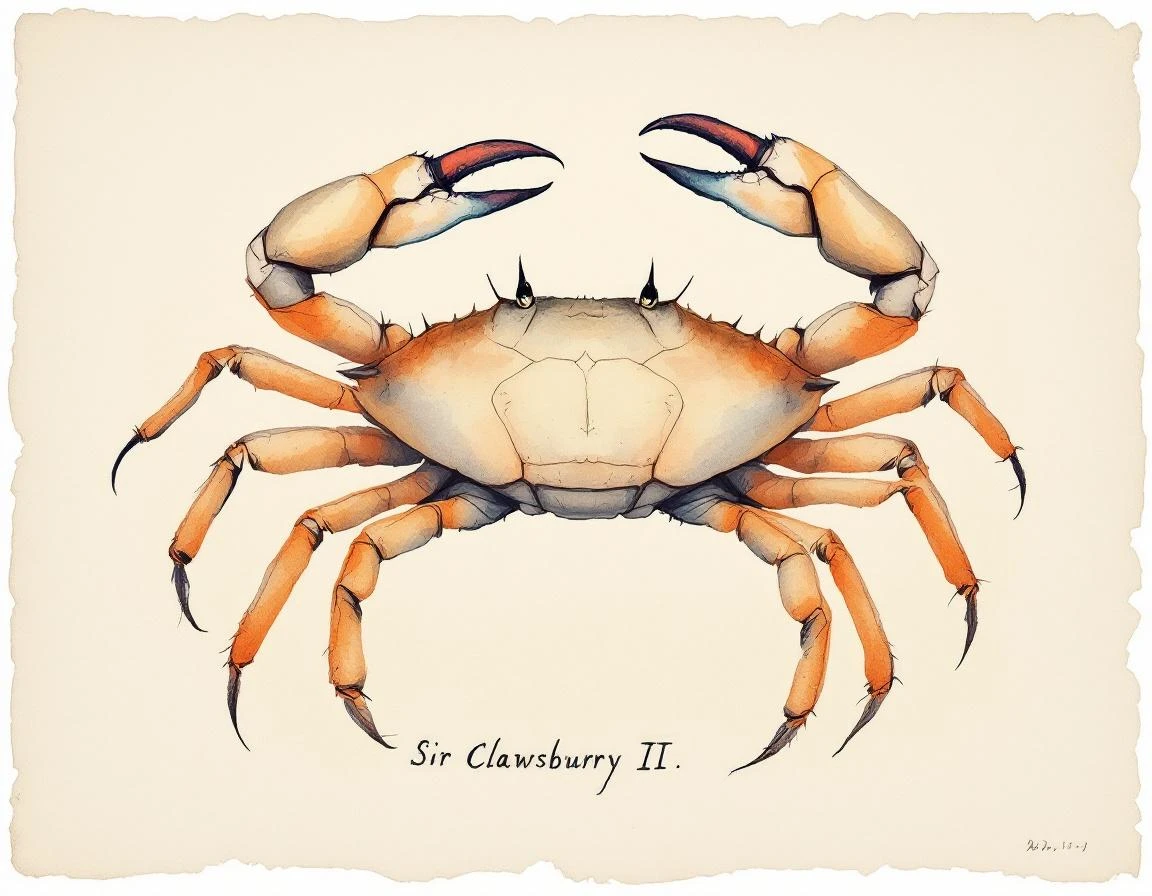

Crab Name Generator for Shoreline Pets, Tidepool Guides, and Armored Companions
Crab names should feel a little sideways. That is the charm. Crabs move with a logic that seems indirect until you watch them long enough. They guard shells, sift sand, vanish into holes, raise claws like punctuation, and carry an entire shoreline mood on small armored bodies. A crab companion can be comic, stubborn, clever, suspicious, royal, enchanted, or weirdly brave. This generator helps name crabs for coastal fantasy, pirate crews, merfolk courts, aquarium stories, children's adventures, science fiction tide worlds, and tabletop companions. It draws on shell, tide, claw, salt, harbor, reef, and scavenger imagery without trapping every result in a joke. Use it when the crab needs a name that can survive repeated dialogue and still feel tied to its shore.
Naming from shell, claw, and tide
Crabs offer unusually strong physical naming cues. Shells can be mottled, red, blue, porcelain pale, rust brown, or dark as wet stone. Claws can be oversized, delicate, serrated, ceremonial, or mismatched. Movement can suggest caution, comedy, stealth, or sudden violence. A name like Clack suits a small comic companion. Brinecap, Pincer Vale, Redhook, or Old Carapace belongs to a different register. Start with the crab's body and habitat. A hermit crab has a borrowed-home theme built in. A ghost crab wants speed and sand. A fiddler crab practically asks for rhythm and display. A giant reef crab can take a name with mythic weight. The generator works best when you name the exact crab type or at least the shore it comes from.
Using sideways movement as character
The sideways walk is more than a visual gag. It can become personality. A crab companion may never approach a problem directly. It may hide the important object under a shell, solve trouble by circling it, or refuse to move straight toward danger even when everyone else charges in. Names can reflect that indirect intelligence without making the crab ridiculous. For a clever companion, try names that imply angles, routes, locks, or small strategies. For a comic crab, sharper sound can help: Snip, Clatter, Knob, Scuttle. For a dignified crab, use coastal weight: Tidemarshal, Shellmere, Brack, or Cobalt Claw. The name should tell the reader how seriously the story takes the crab, because a comic name in a solemn scene changes the scene immediately.
Folklore, sailors, and sea courts
Crabs appear in coastal folklore less often than more glamorous sea creatures, but that can be an advantage. They belong to thresholds: wet and dry, land and sea, tide in and tide out. In a merfolk court, a crab might be a herald, jailer, messenger, treasurer, or scavenger who knows what washes up after every storm. On a pirate ship, a crab companion may be mascot, omen, or tiny thief. Use the generator to decide which tradition surrounds the crab. A harbor town may name crabs like old sailors. A reef kingdom may use titles based on shell color and service. A witch living in a salt marsh may name a crab after the moon tide or a drowned bell. The name gains force when it comes from a community rather than the animal's shape alone.
Hermit crabs and borrowed homes
Hermit crabs bring a different naming pattern because the shell is part of the story. The creature's visible identity changes whenever it changes homes. That makes it useful for themes of disguise, survival, class, inheritance, and finding shelter. A hermit crab companion might be named after the shell it prefers, the home it lost, or the habit of carrying safety on its back. Names like Buttonhouse, Spiral, Whelk, Borrow, Nook, or Pilgrim can work for gentle stories. A darker tale might choose names tied to theft, salvage, or abandoned ruins. If the crab swaps shells during the plot, the name can stay constant as a sign of selfhood, or change as part of the arc. Either choice can be meaningful if the story notices it.
Making crab names work aloud
Crab names often invite hard consonants: cl, cr, sk, sn, br, and ck. Those sounds can be satisfying, but too many of them in one name become noisy. Read the name aloud before keeping it. It should be easy to call across a dock, mutter during a spell, or write on a ship's manifest. If the crab is a recurring companion, readers will meet the name often. Sort generated names by tone. Short clipped names suit active scenes. Briny surnames or titles suit older, stranger crabs. Softer names can make a crab unexpectedly dear. The best name does more than label the creature. It tells you whether the crab is a joke, a witness, a guard, a friend, or the only one who knows what the tide took away.
Choosing names for pirates, merfolk, and shore towns
A crab on a pirate deck needs different naming logic than a crab in a merfolk archive. Pirate stories can handle nicknames, insults, and practical names shouted during storms: Buckleclaw, Red Peg, Scuttle, Knifepoint. Merfolk settings may prefer titles tied to court service, reef law, or shell color. A shore-town children's story can go gentler, using names that sound like tidepool discoveries rather than threats. Give the generator the social world around the crab. Who named it? A child with a bucket, a sailor after three bad omens, a sea witch, a reef queen, or a lonely lighthouse keeper? That point of view matters. The crab's name can tell the reader whether the creature is treasured, feared, tolerated, employed, or blamed for every missing button in the harbor.
Letting the crab earn the name
A crab name lands harder when the story proves it. If the crab is called Lockpick, let it open something no one else can. If it is called Widow Shell, let the harbor lower its voice when the name is said. If it is called Biscuit, let the softness be part of the joke or the affection. Names work best when behavior catches up to them in front of the reader, claw by claw, scene by scene. The crab should earn its name the way it earns its shell, slowly and visibly, in trouble. If the name suggests a secret, give the crab a chance to keep it well hidden.
Crab Names Craft Guide for Role, Behavior, Tone, and Story Use
Crab names work best when the name grows from the specific companion on the page, rather than from a thin pet-name list. This generator is meant for a crustacean companion: a sideways thinker with armor, claws, tidepool habits, and comic or ceremonial potential. The name should tell the reader how the animal or companion moves through a scene, who named it, and what kind of relationship it has with the characters around it.
Start with Behavior in the Scene
Before choosing a name, picture the companion doing something concrete. Is it guarding a door, stealing food, scouting ahead, refusing a command, comforting a child, or warning the party before anyone else notices danger? Behavior keeps the name from floating free. For crab names, the best candidates usually point toward a habit the story can prove later.
Use Sound as a Handling Cue
Sound tells the reader how close the bond feels. For this page, listen for clacks, snaps, briny syllables, shell sounds, and names that can scuttle through dialogue. A name shouted across a field has different needs than one whispered in a sickroom or written on a brass tag. Test the rhythm in dialogue, especially if the companion appears often. The most useful names can become nicknames without losing their original flavor.
Match the Genre Register
Crab Names can fit pirate decks, merfolk courts, aquarium tales, shoreline villages, and reef fantasy. The register changes the name fast. A comic adventure can tolerate brighter, quicker choices. A solemn fantasy may need a name with older texture. A modern setting often benefits from names that sound owned by real people rather than invented for lore. Decide whether the companion is beloved pet, working animal, omen, familiar, mount, scout, mascot, or equal partner before locking in the final sound.
Respect Species, Culture, and Point of View
Do not let every crab name become the same claw joke. Shell, tide, scavenging, patience, and borrowed homes give better variety. Also ask who gives the name. A child, sailor, witch, scientist, farmer, soldier, priest, shop clerk, or lonely traveler will choose differently. Names become more convincing when they reveal the namer's world as well as the companion's body. If the name borrows from a real language or cultural tradition, give it a reason inside the setting and avoid using that culture as decorative shorthand.
Turn the Shortlist into Story Material
Put three generated options into three scenes: an introduction, a moment of trouble, and a moment of affection or loss. If the name only works in the introduction, it is probably a label rather than a story tool. Keep the crab name that gives you future uses: a command, a joke, a warning, a title, a rumor, or a memory another character repeats after the companion has changed the course of the plot.
Who Named the Companion Matters
For a crab, the source of the name changes the whole emotional reading. It might come from the tidepool child, sailor, reef court, lighthouse keeper, or sea witch who notices its habits. A practical worker may choose a short call that cuts through noise. A child may choose softness, rhyme, or a private joke. A court or archive may preserve titles and lineage. A rescuer may keep the old name out of respect, while a new owner may rename the companion to mark safety after a bad past. That choice tells the reader who had power when the name was given.
Check the Name across Repeated Use
Because companion names repeat so often, test the crab choice in ordinary beats as well as dramatic ones. It should work on a tag, in a command, inside a scolding, as a fond nickname, and in a sentence where another character does not understand the bond yet. If the story has sequels, related animals, litters, herds, packs, or familiars, keep notes on the naming logic now. The useful final choice gives you a family of possible names without making every future companion sound copied from the first.