
Sphinx Name Generator - Names for the Riddle-Keepers of Greek and Egyptian Myth
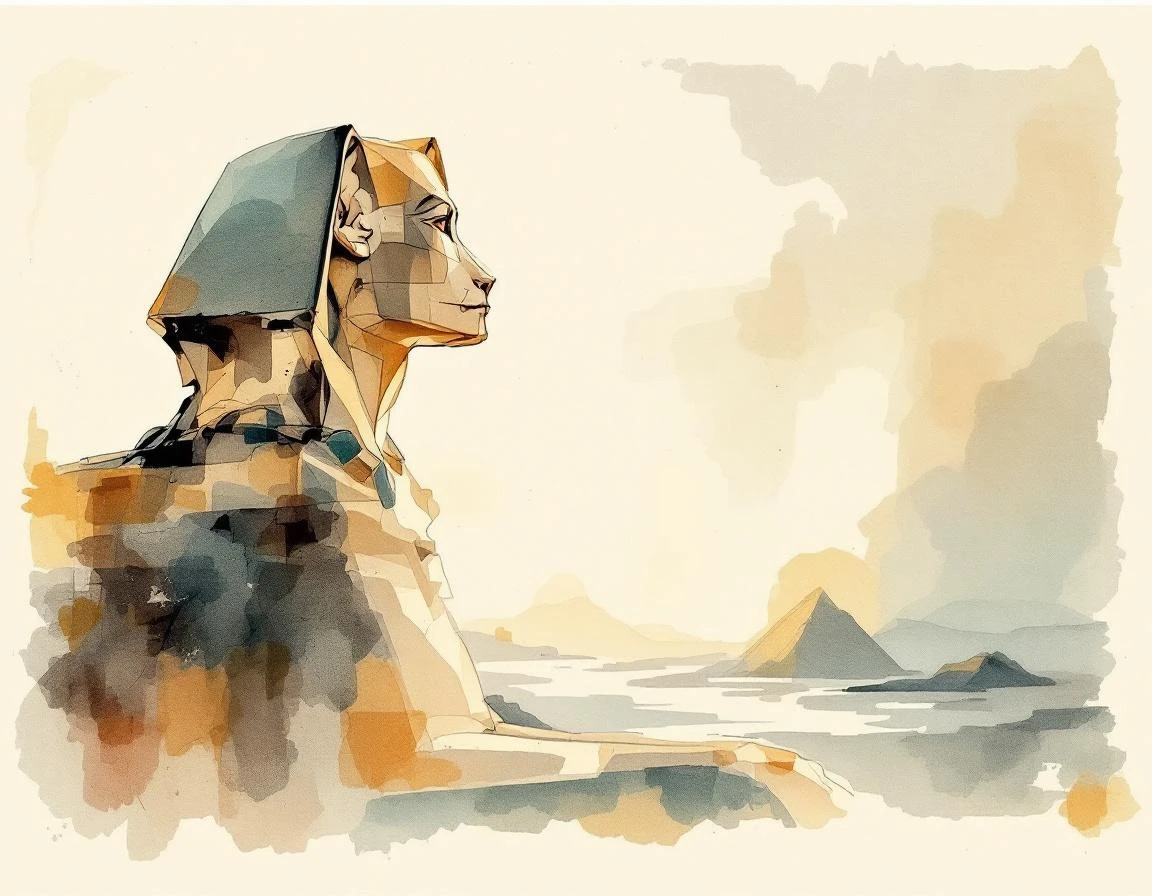
Generate sphinx names drawn from Greek mythology's Oedipal guardian and Egyptian royal iconography, for dark fantasy, myth-adjacent fiction, and stories where the gatekeeper's question is the point. The Greek sphinx is a single figure: the unnamed daughter of Typhon and Echidna who sat outside Thebes and killed every traveler who could not answer her. Oedipus answered, and she threw herself from the cliff. Egyptian sphinxes are a category - lion-bodied guardians of thresholds, most famously the Great Sphinx at Giza, which likely depicts Khafre and dates to around 2500 BCE. The two traditions share almost nothing except the body plan. Your sphinx's name should reflect which lineage she belongs to. Greek names for sphinxes pull from the same pool as other chthonic figures: compound forms built from roots meaning night, ruin, riddle, or threshold. Phix, the oldest recorded name for the Theban sphinx, is probably pre-Greek. Later sources give her epithets rather than names - the Strangler, the Winged One. If you want a Greek sphinx with a proper name, you are essentially inventing one, which is what this generator does. Egyptian naming conventions are more constrained. Royal sphinxes often carried the pharaoh's throne name or a cultic epithet: *Horemakhet* (Horus on the Horizon) for the Great Sphinx, *Nebhepetre* for Mentuhotep II's memorial sphinxes. A sphinx name in an Egyptian-adjacent setting should feel like a title as much as a personal name - something that describes a function or a divine alignment rather than an individual. The generator also covers composite traditions: the androsphinx (human-headed, male), the criosphinx (ram-headed, associated with Amun), and the hieracosphinx (falcon-headed, associated with Horus). Each has a different cultic weight. An androsphinx guarding a library reads differently than a criosphinx at a temple gate. For fiction, the sphinx works best when her name carries the same quality as her riddle - something that sounds like it has an answer, but the answer keeps shifting. Borges wrote about this obliquely in *Ficciones*. Le Guin did it more directly in *The Tombs of Atuan*, where the threshold guardian's power is inseparable from the threshold itself. The name you choose should feel like it belongs to something that has been waiting in one place for a very long time.
Sphinxes in Greek and Egyptian Tradition
The sphinx appears in two distinct mythological traditions with very different characters. The Greek sphinx - specifically the Sphinx of Thebes - is a singular, monstrous being sent by Hera to punish the Thebans: a lion-bodied, wing-bearing creature with a woman's head who terrorizes the region by eating everyone who cannot answer her riddle ("What walks on four legs in the morning, two in the afternoon, and three in the evening?"). When Oedipus answers correctly (man), the Sphinx throws herself from her rock and dies. Her role is a test that destroys the failing and rewards the successful, and is itself destroyed by success. Egyptian sphinxes (which may or may not be related etymologically or mythologically to the Greek sphinx) are royal guardians: massive stone figures with the body of a lion and the head of a pharaoh, or occasionally a ram for sphinxes associated with Amun, that guard temple complexes and royal tombs. The Great Sphinx of Giza is the most famous, probably depicting Pharaoh Khafra. Egyptian sphinxes are not riddle-givers but physical guardians. Their symbolic function is royal power and solar divinity, not intellectual challenge. For writers, the Greek and Egyptian sphinx offer two very different character templates that share a physical form but differ completely in function and agency.
Sphinx Naming: Riddles, Royalty, and Solar Power
The Theban Sphinx has no personal name in classical Greek sources - she is simply "the Sphinx" (from *sphingein*, "to bind/squeeze"), named for what she does rather than who she is. This anonymity is deliberate: the riddle-keeper needs no personal name because she *is* the riddle, and once the riddle is answered, she ceases to exist. For fictional sphinxes who need individual names, the tradition they inhabit should drive the choice. A Greek-tradition riddle-sphinx wants a name with the intellectual and slightly threatening quality of something that exists to test others: Greek roots for wisdom, riddle, binding, or the specific texture of the challenge. Egyptian-tradition sphinx names draw on the pharaonic naming system: royal epithets, solar associations (Ra, Khepri, Atum - the three aspects of the sun), divine associations (Horus, Amun), and whatever quality the sphinx embodies as royal guardian. A sphinx who watches over a specific tomb might incorporate that pharaoh's name or epithets directly. For D&D sphinxes, where the creature type splits into gynosphinx, androsphinx, and hierosphinx with different riddle-giving and magical capacities, names that feel genuinely ancient hold up better than invented ones. The weight comes from accumulated association, not from sounding exotic.
The Sphinx's Riddle as Character
The most interesting thing about the sphinx as a character is that her riddle *is* the character. The Theban sphinx's riddle - "what walks on four legs in the morning, two in the afternoon, and three in the evening?" - is a riddle about human life, about what it means to move through time as a person. She is asking humans to prove they know what they are. The answer "man" is the sphinx recognizing that the human in front of her has fully claimed their humanity, which is why her destruction follows immediately; her purpose was to ask the question, and the answering ends it. For fictional sphinx characters with individual personalities and relationships, the nature of the riddling is the characterization. Does this sphinx ask the same riddle to everyone? Does it vary the riddle based on who is standing in front of it? Does it have a riddle it has never seen anyone answer, one it is still waiting for the right person to arrive for? The riddle says everything about what the sphinx is looking for, and what it means to reward or punish with its gatekeeping. A sphinx who has grown weary of waiting for someone who can answer its best riddle is a specific kind of character - ancient, patient, quietly disappointed by a thousand years of wrong answers. Its name should carry that weight.
Using the Generator for Your Sphinx Character
When generating sphinx names, decide first which tradition you're working in, and whether this sphinx has individual identity beyond her riddle-function. A sphinx who is purely a riddle-mechanism - the Theban Sphinx model - barely needs a personal name. She *is* the riddle. A sphinx with centuries of accumulated experience, opinions about the answers she's received, and a relationship to the place she guards needs a name with individual weight. Consider what this sphinx guards and what riddle she uses to guard it. The guarded thing shapes the riddle: a sphinx at the entrance to a library of forbidden knowledge asks about knowledge itself; one at the door of a tomb asks about death; one at the bridge over a chasm asks about passage and risk. The riddle is the sphinx's philosophy about the thing she protects. For tabletop RPG encounters, the best riddle is crafted for the specific party at the specific moment - an answer that connects to something these players have been turning over. A sphinx who asks this group this riddle, rather than reciting the same question to everyone who passes, is a sphinx who has been watching. That kind of sphinx has a name worth earning.