
Central American Town Names: Places from Guatemala to Panama
Generate Central American town names from the Maya, Nahuatl, and Spanish colonial traditions: highland Maya communities, colonial grid cities, and Caribbean coast port towns.
Central American Naming Heritage
Central American place names layer three main traditions: Indigenous languages (Maya in Guatemala, Honduras, and southern Mexico; Nahuatl in Honduras, El Salvador, and Nicaragua; Miskito on the Caribbean coast; Bribri and Cabécar in Costa Rica; Ngäbe-Buglé in Panama), Spanish colonial naming (saints' names, administrative terminology), and combined forms where the two conventions merged. Guatemala's highland Maya communities have place names in Kaqchikel, K'iche', Q'anjob'al, and other Maya languages. Chimaltenango comes from Nahuatl *chimaltetl* (shield-stone) plus *tenango* (place of); Quetzaltenango means quetzal-bird city in Nahuatl, though K'iche' speakers call it *Xela*. The colonial habit of prefixing Spanish saints' names to existing Indigenous place names - San, Santa, Santo - produced the majority of Central American toponyms: San José, San Salvador, Santa Ana, Santo Tomás. The Honduran Caribbean coast (La Mosquitia) and the Nicaraguan and Costa Rican Miskito Coast draw on Miskito, Sumo-Mayangna, and Garifuna traditions. These names are distinct from both the highland Maya and the Spanish colonial patterns, and they carry a different history: communities that resisted colonization on their own terms.
Colonial Grid Cities
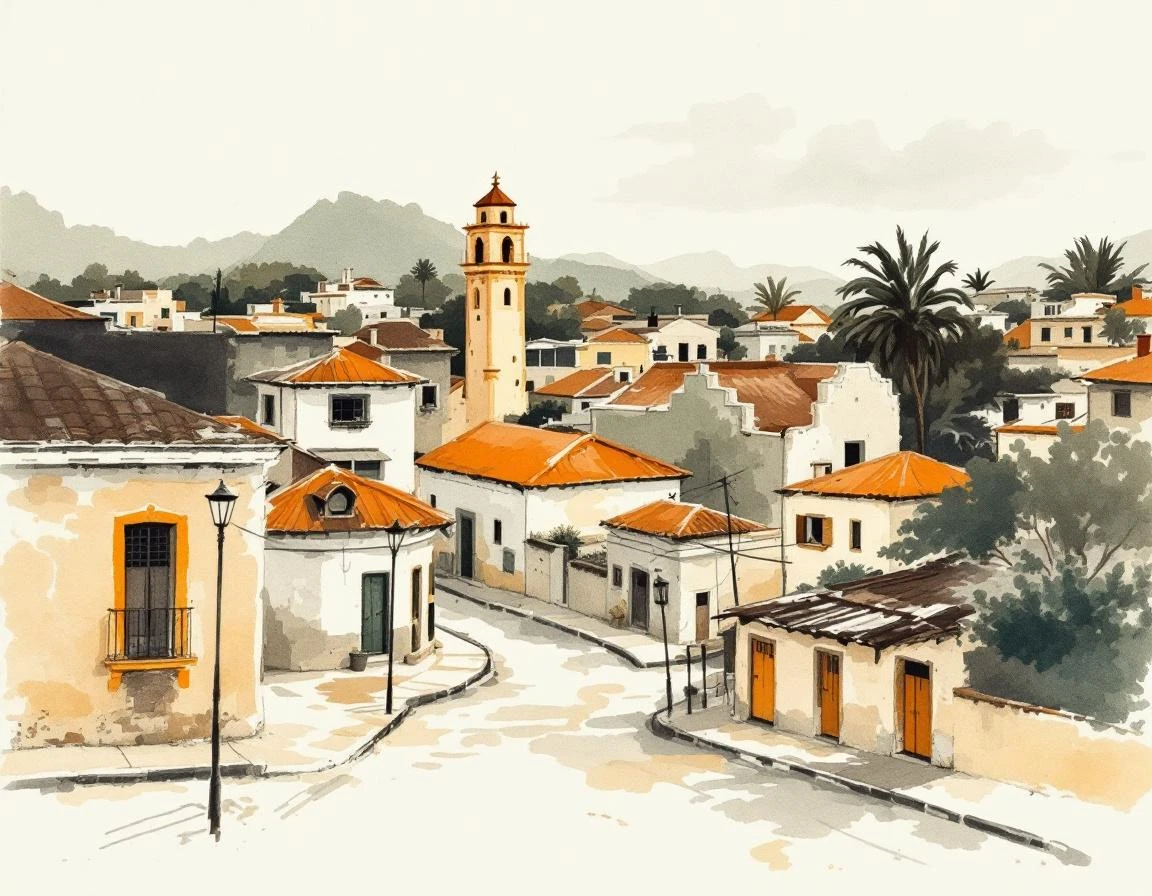
Spanish colonial cities in Central America follow the grid pattern derived from the 1573 Laws of the Indies: the central plaza (*plaza mayor*) flanked by the cathedral, the government building (*ayuntamiento/alcaldía*), and usually a church or convent on the remaining sides. Streets extend outward in a grid from this center. The colonial city takes its name from its patron saint, and the internal geography - barrios, streets, squares - draws from saints' names or descriptive Spanish terms. The colonial experience in Central America differed from Mexico or South America in scale and aftermath: smaller cities, a more direct handoff from Spanish rule to local elite control at independence (1821-1838 for the various republics), and a 19th-20th century shaped by banana company economics and repeated U.S. intervention. The "banana republic" - a term coined to describe states dominated by the United Fruit Company and similar enterprises - left its own geographic mark: company towns (*pueblos de la compañía*) built along the Caribbean coast to serve the plantations, with naming conventions that had little in common with the colonial highland cities inland.
Using the Generator
For Maya historical settings - the Classic period (250-900 CE) when Tikal, Copán, Palenque, and Calakmul were functioning city-states - names should come from Maya and Nahuatl sources. Maya city names are often known only through their archaeological labels: Tikal derives from a Yucatec Maya word of disputed meaning, while the city's ancient name was *Yax Mutal*. The Postclassic highland kingdoms and the zones of Aztec tributary contact each have their own naming conventions worth researching separately. For colonial period settings - the conquest, the encomienda system, the missionaries, the Guatemalan highland communities holding onto their traditions under colonial Christianity - naming follows the saint-plus-Indigenous pattern that still marks most towns in the region today. For contemporary Central American settings, naming reflects specific community and regional identities rather than any single national pattern. Post-civil war Guatemala, El Salvador, and Nicaragua each have distinct local geographies. Garifuna and Miskito coastal communities along the Caribbean littoral use names drawn from entirely different linguistic traditions than the Spanish-dominant interior.
Central American Town Names: A Working Naming Guide
Central American town names should feel used, not arranged. Start with highland markets, volcanic roads, colonial plazas, Caribbean ports, mission records, banana company lines, and Maya communities. Then decide what sort of place is being named, because a highland town, coastal village, plaza city, company settlement, mission town, river port, or reclaimed municipality asks for a different kind of word than a capital or a ruin. The generator can give you a quick spread, but the choice still has to sound like someone could say it while giving directions, filing a complaint, selling maize, reading a parish record, or pointing at weather over a volcano. Keep a few candidates that disagree with each other. One may sound official but brittle; another may feel like a surveyor cleaned it up too much. That friction is useful.
Who Gets to Name the Place
Pick the naming authority before you fall in love with the syllables. Local speakers borrow, preserve, and shorten names in ways officials rarely predict. A tax office wants tidy spelling. A boatman wants speed. A priest, elder, guild clerk, surveyor, company lawyer, or community organizer may all have a reason to push a different version. For Central American town names, the useful candidate usually reveals who got to write the sign and who kept saying the older word anyway. Read the name in a sentence of dialogue. If every character would pronounce it the same way, the place may be too clean.
Language Care Before Style
Maya, Nahuatl, Miskito, Bribri, Cabécar, Ngäbe-Buglé, Garifuna, Spanish, and saint-name layers need place and period. This is where many generated names go wrong. They borrow surface sound while ignoring who owns the language, whether the place is real, and what history the word may touch. Fiction gives you room to invent, but it does not make every source available for casual decoration. If you need a real cultural reference, narrow it to a specific region and period. If you are making a secondary world, decide what parts of the naming logic you are adapting and what parts you are leaving alone.
The Work Inside the Name
The town needs work inside it. Maybe people came for a highland market, cacao road, mission, river crossing, Caribbean dock, banana line, volcano trail, or plaza that cut through older country. Maybe they stayed because leaving cost too much. Let that practical reason roughen the name. A good result can hold an official story and a private one at the same time: the polished name on the station board, the clipped version in a market, the older name used at home, the insult outsiders keep repeating. That layered feel matters more than a rare letter combination.
The Scene Test
Before keeping a result, run it through a small scene. Put it on a bus timetable, in a grandmother's warning, on a shipping crate, and in the mouth of someone who wants the place forgotten. For Central American town names, the winner should make one concrete promise about geography, language, danger, faith, trade, company history, or memory. It should also leave room for a writer to disagree with it later. Town names age. They get translated badly, painted over, shortened by children, revived by activists, sold by developers, or cursed by people who left. Choose the one that can survive that kind of handling.