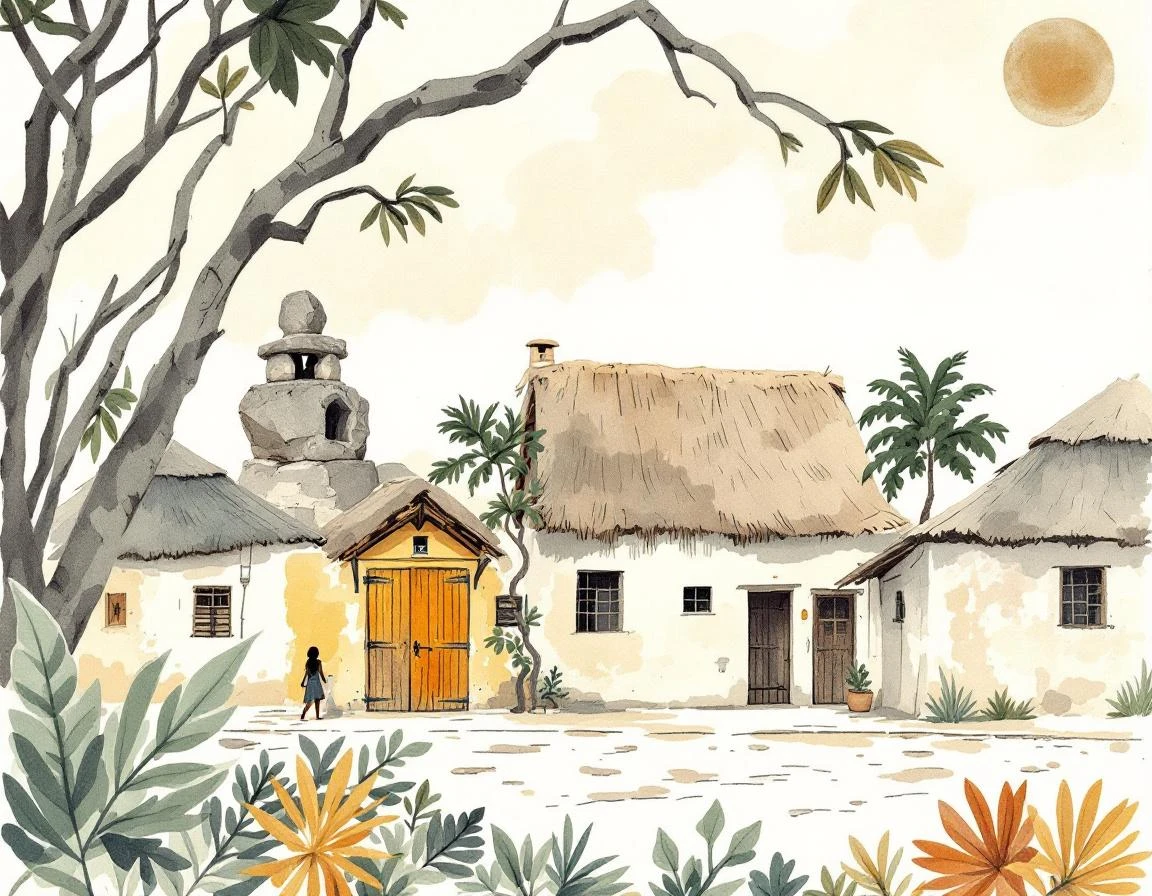

Indigenous South American Settlement Naming Traditions
Indigenous communities across South America named places out of practical necessity and spiritual obligation, not as a unified system but through hundreds of distinct traditions shaped by the ecosystems they inhabited. A Quechua community in the Andes named peaks and passes for what happened there, what grew there, or what the mountain demanded. A Tupí-speaking people near the Atlantic forest named rivers for their sound or their fish. The logic was local, accumulated over generations, and largely untranslatable into the bureaucratic placename conventions that colonial administrators later imposed. What survives in modern maps is fragmentary. Some names passed through Spanish or Portuguese transcription so distorted that their original meaning is unrecoverable. Others persisted intact because colonial settlers found them useful, particularly for rivers and mountains that resisted renaming. The Amazon itself derives from a Tupí root, though which one, and what it originally described, remains contested among linguists.
Andean Cosmological Geography
Indigenous Andean cultures, including Quechua and Aymara speakers, built place-naming systems around a precise cosmological geography rather than simple description. The *huaca*, a site understood to hold spiritual force, shaped Andean toponymy directly: settlements took their names from proximity to a significant huaca, not from the landscape's physical features alone. Altitude and direction mattered too, reflecting the vertical ecological bands, from coastal desert to high puna, that structured how communities farmed, herded, and traded across the mountains. Inca imperial administration added another layer. A settlement's name could mark its position within the *suyu* system, identifying it as a node in a hierarchy that stretched from Cusco outward. Terms like *ayllu* (a kinship and land-holding unit) and *marka* (a community or territorial marker) appear throughout the region's place names, embedded so deeply that colonial renaming left them intact more often than not. Quechua and Aymara communities today still use these naming concepts alongside the administrative categories imposed since the sixteenth century. The result is a toponymic record with several layers: pre-Inca foundations, Inca imperial overlays, Spanish colonial impositions, and contemporary designations sometimes all present in a single place name. Locations inhabited for several thousand years carry that history in their names without ceremony, the way old stonework simply stays in the wall.
Amazonian Ecological Registers
Amazonian groups built place-naming systems around the specific textures of rainforest life: which plants grew where, where animals concentrated, where the soil turned from red clay to black earth. River position structured most of these systems, since rivers were the actual roads. A settlement's name often recorded where it sat relative to a confluence, a seasonal flood line, or a stretch of navigable water. Soil quality shows up repeatedly in Amazonian toponyms, which makes sense given how sharply fertility varies across the basin. The *terra preta* zones that supported dense pre-Columbian populations were known, named, and remembered. Sacred sites connected to origin narratives or transformation events carried names that functioned as compressed theological statements rather than simple labels. The linguistic situation in Amazonia is unlike anywhere else on earth: hundreds of distinct languages from dozens of unrelated families, which produced genuinely different naming vocabularies across the basin. What persists across that diversity is the underlying logic: ecological precision, river orientation, attention to soil and season. Contemporary communities are still making new names, adjusting to resettled locations, degraded forest, and altered river courses. That the tradition continues under the pressure of deforestation and extraction is worth noting plainly, without dressing it up as resilience or triumph. People are naming where they live. They have always done that.
Southern Cone Adaptations
Indigenous groups of the Southern Cone, including Mapuche, Tehuelche, and others, built naming conventions around the specific pressures of the region: where shelter could be found, where water ran, how the wind moved. Patagonian place names often encode these survival priorities directly, functioning less as labels than as memory systems for people moving through a demanding landscape. Seasonal rhythms show up throughout the traditional toponymy, which makes sense for groups whose migrations followed the region's sharp seasonal swings. Names also recorded defensive realities: lookout positions and naturally fortified ground in areas where conflict between groups was common. Flora and fauna appear constantly, effectively mapping where food and materials could be found across large territories. The Mapuche developed this into something unusually sophisticated. Their territorial naming systems supported a political coherence that held off both Inca expansion and Spanish colonization for centuries, a record few peoples in the Americas can match. That history gives contemporary Mapuche land claims a particular texture: when communities insist on traditional place names today, they are not only asserting cultural continuity but invoking a territorial logic that predates the states now contesting their sovereignty.
Colonial Transformations
Spanish and Portuguese colonial authorities renamed places after Catholic saints, European monarchs, and Iberian geography. The *reducción* system, which forcibly concentrated dispersed populations into administrative grid towns, replaced Indigenous settlements with Spanish-named ones. Indigenous names that survived official use were phonologically bent toward European mouths, semantically mistranslated, or quietly reassigned to different geographic features than those they originally described. Some regions developed syncretic patterns, grafting Indigenous roots onto Catholic terminology. After independence, the new republics occasionally borrowed Indigenous names as national symbols while continuing to suppress Indigenous languages in practice. Even so, communities kept their place names alive in oral tradition. Many of those names are now gaining official recognition through land-rights and cultural revitalization movements, which means contemporary maps often carry two or more layers of naming: colonial, national, and Indigenous, each reflecting a different moment of disruption or recovery.
Indigenous South American Settlement Naming Traditions: A Working Naming Guide
Indigenous South American settlement naming traditions require people, language, ecosystem, and permission before style. Start with Andean terraces, Amazon tributaries, Guaraní lands, Mapuche territories, missions, rubber roads, and highland markets. Then decide what sort of place is being named, because an ayllu village, forest community, mission town, river port, or reclaimed municipality asks for a different kind of care than a generic fantasy town. Use generated candidates only for invented settings after deciding what logic you are adapting. For real places or living communities, research and permission come first. The useful choice should sound like someone could say it while giving directions, reading a land claim, naming a river bend, discussing a market road, or pointing at weather over a pass. Keep candidates that disagree with each other. One may sound older than the map; another may feel like a surveyor flattened it. That tension is part of the record.
Who Gets to Name the Place
Pick the naming authority before you fall in love with the syllables. Communities, Elders, language workers, ayllu authorities, and land defenders carry knowledge that official maps often miss. A survey office wants tidy spelling. A mission record wants one version frozen in time. A mining map, rubber road, river chart, or municipal sign may preserve a different version. For Indigenous South American place names, the useful candidate usually reveals who got to write the sign and who kept saying the older word anyway. Read the name in a sentence of dialogue. If every character would pronounce it the same way, the place may be too clean.
Language Care Before Style
Keep Quechua, Aymara, Guaraní, Mapudungun, Tupí, Spanish, and Portuguese layers apart. Each one points to a different history of land and power. This is where many generated names go wrong. They borrow surface sound while ignoring who owns the language, whether the place is real, and what history the word may touch. Fiction gives you room to invent, but it does not make every source available for casual decoration. If you need a real cultural reference, narrow it to a specific region and period. If you are making a secondary world, decide what parts of the naming logic you are adapting and what parts you are leaving alone.
The Work Inside the Name
The place needs work inside it. Maybe the name carries a terrace, river confluence, forest path, mission, market, rubber road, mining road, or reclaimed municipality. Maybe people stayed because leaving was made impossible. Let that practical and historical pressure shape the name. A good result can hold an official story and a private one at the same time: the polished name on the map, the clipped version in town, the older word used at home, the form a community is restoring. That layered feel matters more than a rare letter combination.
The Scene Test
Before keeping a result, run it through a small scene. Put it on a restored sign, in an Elder's correction, on a river chart, and in the mouth of someone protecting an older word. For Indigenous South American place-name ideas, the winner should make one concrete promise about land, water, language, people, history, or memory. It should also leave room for a writer to step back where the story has not earned a real-world reference. Place names age. They get mistranscribed, painted over, shortened by officials, revived by communities, or protected through land claims. Choose the one that can survive that kind of handling.