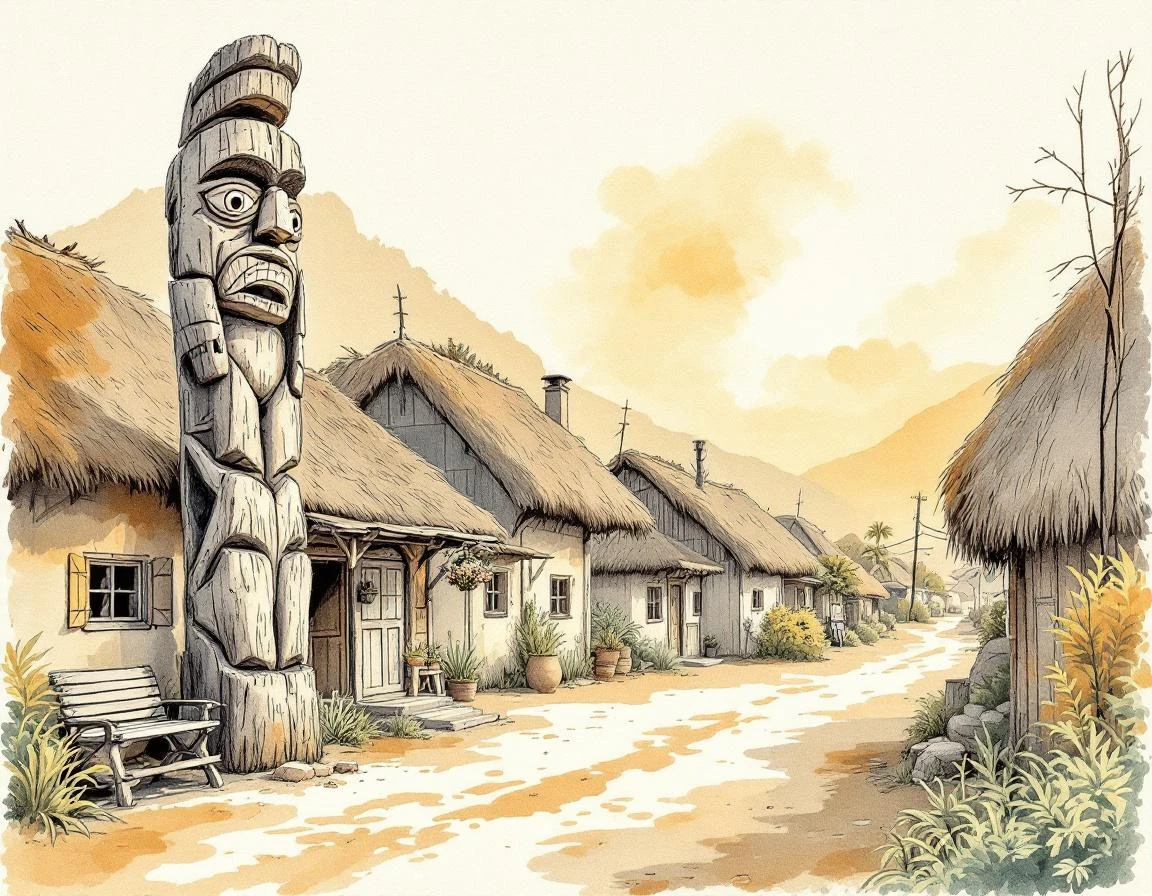

Indigenous Pacific Island Settlement Naming Traditions
Pacific Islander cultures developed detailed place naming systems shaped by maritime geography, long-distance voyaging, and the tight weave between community identity and specific island places. In Polynesia, settlement names often encoded navigational knowledge. Hawaiʻi's *Waipio* ("curved water") and *Kailua* ("two seas") functioned as practical sailing references as much as addresses. Micronesian traditions on Pohnpei and Chuuk embedded tidal and current information directly into coastal place names, making the landscape itself a kind of chart. Melanesian communities, particularly in Vanuatu and the Solomon Islands, used place names to record land tenure and clan boundaries. A village name might carry the name of a founding ancestor, a specific yam variety first cultivated there, or a remembered conflict. These names were not fixed: they shifted with political alliances and could be deliberately changed to mark a rupture or a new beginning. The spread of Christianity and colonial administration across the nineteenth and twentieth centuries imposed European names over many of these systems, sometimes transliterating existing names, more often replacing them entirely. Recovery efforts in Fiji, Sāmoa, and Aotearoa New Zealand have worked to restore original names and, where possible, the knowledge embedded in them.
Navigational Knowledge
Pacific Islander place names carry navigational knowledge: reef passages, landing sites, current patterns, star paths. A name wasn't decorative; it told you where you were and what to watch for. Coastal terminology runs through these toponyms in precise ways. A name might describe how a reef passage behaves in certain swells, or how a headland looks from the east versus the west. Island profiles appear often: the silhouette of a landform from a specific approach direction, useful after days at sea with nothing else to confirm your position. Hazards got the most specific treatment. Different reef types, submerged features, and seasonal current behavior mattered enough to encode in the names themselves, which meant the knowledge traveled with the word rather than requiring separate instruction. The revival of traditional navigation, visible in the voyages of the Polynesian Voyaging Society and the *Hōkūle'a*, has drawn renewed attention to what these naming systems actually contain. Scholars and navigators working together have found that the place names function as compressed field notes: generations of observation packed into language that survived even when the practices around it went dormant.
Settlement Pattern Markers
Pacific Islander settlement names tend to reflect the specific conditions of the land they describe. On high islands, names often reference altitude zones, watershed boundaries, or valley systems that shaped how communities divided and used territory. Atoll toponyms work differently: they typically mark a settlement's position within the ring structure, distinguishing lagoon-side from ocean-side locations, or noting proximity to major passages between water bodies. Fresh water sources appear repeatedly in settlement names across the region, which makes sense given how scarce and unevenly distributed reliable water could be. Agricultural features show up too: irrigation channels, terraced slopes, areas reserved for particular crops. In places with long histories of inter-community conflict or competition over limited land, some names record defensive considerations: high ground, natural barriers, positions that mattered when territory was contested. Naming density itself varied with resources. Areas that could support dense, stable populations accumulated more place names; marginal zones, with fewer permanent settlements, were mapped more sparsely. The result is a toponymic record that encodes environmental constraints and possibilities across an enormous range of island types, from the volcanic peaks of Hawaiʻi and the Marquesas to the low coral atolls of Micronesia and the Tuamotus.
Genealogical Connections
Place names across Pacific Island societies carry genealogical weight that English lacks a clean word for. A settlement name might encode who first cleared that land, which ancestor arrived after a particular migration, or which deity made the ground sacred: legal record as well as oral history, readable by anyone who knows the tradition. The concept appears across Austronesian languages as *vanua*, *fenua*, or *whenua*: land, community, and people understood as a single thing, not three things in relation. A place name in this tradition is not a label attached to geography; it is a claim, a history, and an identity compressed into a word or phrase. Migration sequences were often preserved as ordered lists of place names. Recite the names in the right order and you have narrated the journey, established the lineage, and asserted the tenure simultaneously. Sacred sites received names that acknowledged specific ancestors or deities, which meant speaking the name was itself an act of acknowledgment. These connections have not dissolved under colonial renaming, climate displacement, or economic migration. Communities carry the genealogical names with them, maintain them through practice, and treat their preservation as something closer to a legal obligation than a cultural preference.
Colonial Disruptions
Colonial authorities renamed islands, bays, and settlements after European explorers, missionaries, and administrators. Mission stations and administrative centers became new settlement nodes, displacing the spatial logic of communities organized around Indigenous toponyms. Where Indigenous names survived in official records, they were often mangled in transcription, misapplied to different features, or stripped of the meanings that made them useful. Nuclear testing programs in Micronesia and Polynesia, military installations, and phosphate mining operations introduced entirely new naming layers that had nothing to do with the places they occupied. Pacific Islander communities kept traditional toponyms alive through oral tradition despite this pressure. The names persisted in navigation chants, land tenure disputes, genealogical recitation, and everyday speech: the same channels that had transmitted them for centuries before any European ship appeared on the horizon. Decolonization movements across the Pacific have treated the restoration of Indigenous place names as substantive political work, not symbolic gesture. In Hawaiʻi, Aotearoa, and the Federated States of Micronesia, official recognition of traditional toponyms has advanced alongside broader assertions of sovereignty, sometimes replacing colonial designations outright, sometimes running parallel to them in bilingual signage and legal documents. The names themselves carry tenure, history, and orientation. Getting them back onto maps matters.
Using Pacific Island Settlement Names with Care
Names drawn from Pacific Island settlement logic need more care than a generic tropical village list. The place may be a lagoon-side hamlet, a volcanic valley, a reef passage, a mission settlement, a relocated atoll community, or a village whose name is also an argument about land tenure. The useful result should make the writer ask who has the right to say the name, who remembers its older form, and what knowledge travels inside it. For invented worlds, borrow the discipline rather than the sacred material: let currents, reefs, freshwater, ancestry, and navigation shape the name, but do not lift real community names as decoration.
Start from the Water
Many Pacific settlement names begin with orientation. Which side faces the lagoon? Where is the reef break? What season makes landing dangerous? A generated name should be tested against those physical questions before it is judged for beauty. If the settlement sits on an atoll, the name may need to notice narrow land, brackish water, and the passage between ocean and lagoon. If it sits on a high island, ridge lines, valleys, freshwater, and cultivated slopes may matter more.
Keep Ancestry Present
A name may carry a founder, a migration route, a deity, a chiefly line, or a remembered dispute over land. Treat that as a living claim rather than a quaint origin story. If the story includes colonial maps, missionary spellings, or administrative renaming, decide which version appears on the sign and which version people use at home. The tension between those two names can do more narrative work than an over-decorated invented word.
Avoid Postcard Language
Do not choose a name because it sounds breezy, blue, or vaguely island-like. Pacific Islander naming traditions are precise. They record hazard, food, lineage, weather, routes, and law. A name that only says paradise has failed before the story begins. The stronger candidate will usually feel plainer and more exact: something tied to a channel, a landing, a garden, a reef tooth, a rain pattern, or the ancestor whose claim still organizes the village.
Test the Social Use
Put the final candidate into a council argument, a navigation lesson, a birth announcement, and a government form. If it changes temperature across those uses, it probably has enough life for fiction or worldbuilding. If it only works as a label under a painted beach, cut it. Settlement names in this tradition should feel like part of the community body: spoken in ceremony, shouted from a boat, printed badly by outsiders, and corrected by people who know exactly what the word is supposed to hold.