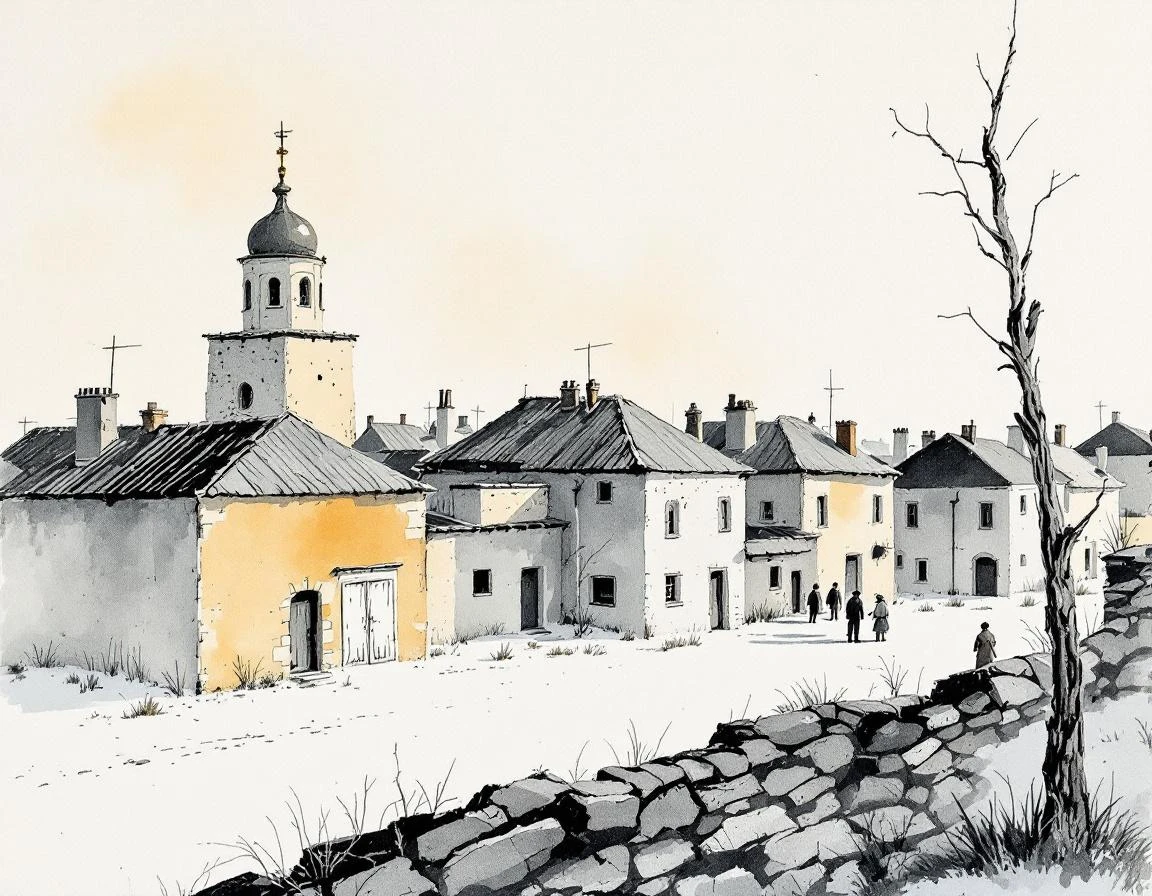

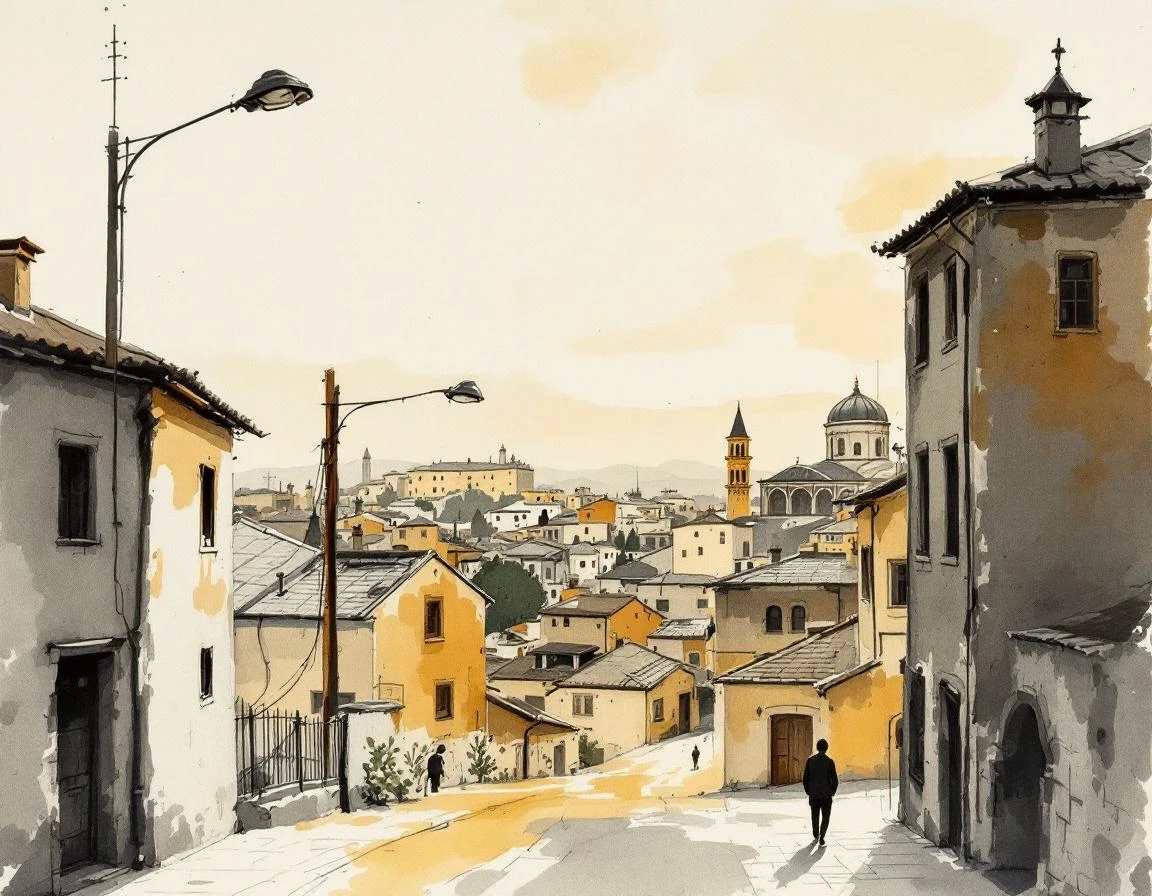
Steppe Region Town and Settlement Naming Traditions
Steppe settlements were named by people who moved. That fact shapes everything. Across the belt running from Ukraine through Kazakhstan to Mongolia, naming conventions reflect the logic of pastoral life: seasonal routes, water sources, pasture quality, and the memory of which clan camped where for how many generations. Turkic and Mongolic roots dominate the region's place-name vocabulary. *Aul* and *ail* (encampment) appear throughout Central Asia; *kol* and *nor* mark lakes and watering points that determined where anyone stopped. Many settlement names preserve a geographic fact that no longer looks like one - a ford that silted up, a winter pasture now under cultivation, a spring that dried out in the nineteenth century. Russian imperial expansion added a second layer. Administrative posts, Cossack stanitsas, and railway junctions received names that either transliterated existing nomadic terms or replaced them with saints' names and dynastic honorifics. Soviet planners later renamed many of these in turn. Across Kazakhstan and southern Siberia especially, a single town may carry a Kazakh toponym, a tsarist spelling, a Soviet replacement, and a post-1991 restoration. Climate and terrain pressed hard on the vocabulary. *Steppe*, *tal*, and *dala* all mean roughly "flat open land" in their respective languages, and they recur in compound names across the region the way "ford" and "bridge" recur in English place-names. Altitude, wind exposure, and the presence of salt flats all left traces. A name ending in *-tuz* often signals saline ground nearby - useful information for anyone crossing the steppe with livestock.
Nomadic Heritage
Steppe settlement names often trace back to nomadic gathering places or seasonal camps that hardened, over generations, into permanent towns. You see this in the vocabulary itself: Mongolian toponyms draw on *khot* (settlement), *bulag* (spring), and *nuur* (lake), each marking something a pastoral group could not afford to lose track of. Kazakh place names work similarly, with *kent* for settlement and *tau* for mountain. Some names are more specific still, preserving the old distinction between winter quarters (*kishtak* or *kystau*) and summer pastures (*jailoo* or *zhailau*). What makes the pattern interesting is what it reveals about timing. Permanent settlement came late across much of the steppe, and many town names still carry the names of the clan leaders or tribal groups who moved through that territory seasonally before sedentarization changed the calculus. The land was named for movement, not for staying - for springs and passes and grazing grounds rather than for administrative districts or agricultural holdings.
Ecological References
Water sources show up constantly in steppe place names - springs, wells, lakes, rivers - because water was never guaranteed and everyone knew exactly where to find it. Grass varieties, winter fodder shrubs, and the rare forested hollow where livestock could shelter through a blizzard left their marks on local toponyms as well. So did the small topographical accidents that broke the wind: a ravine, a low ridge, a rocky outcropping. Older names sometimes preserve animal references, marking former hunting grounds or reliable spots for particular game. Taken together, these names read less like administrative labels and more like a survival index, encoding the environmental knowledge a community needed simply to get through the year.
Imperial Transformations
Steppe settlement names carry the fingerprints of every empire that moved through. Russian Imperial expansion seeded the region with Slavic place names, especially along rail corridors and the administrative posts built to manage nomadic populations who had no interest in being managed. Soviet renaming campaigns went further: mining towns and collective farms got rechristened after revolutionary figures or Marxist abstractions, sometimes more than once as political fashions shifted. In Inner Mongolia and Xinjiang, Chinese administrative policy produced dual naming systems, official Mandarin names sitting beside Mongolian or Uyghur ones that locals continued to use regardless. Since 1991, Kazakhstan, Mongolia, and the other post-Soviet steppe states have been working backward through the layers. Some towns have recovered pre-Soviet names; others have been given new ones that signal independence rather than restore anything historical. The result is a naming record where imperial control, ideological rebranding, and national reassertion can sit inside a handful of syllables.
Modern Development Patterns
Naming patterns across the steppe shifted visibly during Soviet industrialization. Mining towns and processing centers often received functional labels tied to their economic purpose, such as Karaganda, named for the black caragan shrub but reframed as a coal capital, or commemorative names honoring party figures, many of which survived independence simply through inertia. The Virgin Lands campaigns of the 1950s seeded dozens of new settlements across northern Kazakhstan with names that read like slogans: progress, harvest, dawn. Border garrisons tended toward the military, named for commanders or campaigns. After independence, renaming efforts drew on a different register: Kazakh poets, Kyrgyz khans, episodes from national epics. Almaty displaced Alma-Ata. Astana became Nur-Sultan, then Astana again. The reversals themselves tell a story about contested memory. Smaller settlements, though, often escaped the renaming cycles. Many still carry names rooted in pasture quality, water sources, or the clan that wintered there: *Sarybulak* for a yellow spring, *Qonyrat* for a tribal lineage. These names were never ideological enough to bother replacing. The result is a toponymy where Soviet functional labels, post-independence commemorations, and pre-modern pastoral geography sit a few kilometers apart, each layer legible to anyone who knows what to look for.
Steppe Region Town and Settlement Names: A Working Naming Guide
Steppe Region town and settlement names should feel used, not arranged. Start with the ground: grasslands, caravan wells, nomad camps, khanate forts, rail halts, and wind-scoured border towns. Then decide what sort of place is being named, because a winter camp, fortress town, rail stop, market encampment, monastery settlement, or border post asks for a different kind of word than a capital or a ruin. The generator can give you a quick spread, but the choice still has to sound like someone could say it while giving directions, filing a complaint, selling grain, dodging patrols, or pointing at a storm line. Keep a few candidates that disagree with each other. One may sound local before it is pretty; another may feel like a mapmaker cleaned it up too much. That friction is useful.
Who Gets to Name the Place
Pick the naming authority before you fall in love with the syllables. Local speech mispronounces and preserves names in ways officials rarely predict. A tax office wants tidy spelling. A caravan leader wants speed. A priest, elder, guild clerk, surveyor, rebel, party official, or company lawyer may all have a reason to push a different version. For Steppe Region town and settlement names, the useful candidate usually reveals who got to write the sign and who kept saying the older word anyway. Read the name in a sentence of dialogue. If every character would pronounce it the same way, the place may be too clean.
Language Care Before Style
Mongolic, Turkic, Tibetan, Russian, Chinese, and Persianate layers belong to different histories. Steppe names need movement and pasture, not random harshness. This is where many generated names go wrong. They borrow surface sound while ignoring who owns the language, whether the place is real, and what history the word may touch. Fiction gives you room to invent, but it does not make every source available for casual decoration. If you need a real cultural reference, narrow it to a specific region and period. If you are making a secondary world, decide what parts of the naming logic you are adapting and what parts you are leaving alone.
The Work Inside the Name
The town needs work inside it. Maybe people came for a ferry, a mine, a shrine, pasture, a school, a harbor, a wall, or a road that cut through older country. Maybe they stayed because leaving cost too much. Let that practical reason roughen the name. A good result can hold an official story and a private one at the same time: the polished name on the station board, the clipped version in a market, the older name used at home, the insult outsiders keep repeating. That layered feel matters more than a rare letter combination.
The Scene Test
Before keeping a result, run it through a small scene. Put it on a weather report, in a grandmother's warning, on a livestock permit, and in the mouth of someone who wants the place forgotten. For Steppe Region town and settlement names, the winner should make one concrete promise about geography, class, danger, faith, trade, or memory. It should also leave room for a writer to disagree with it later. Town names age. They get translated badly, painted over, shortened by children, revived by activists, sold by developers, or cursed by people who left. Choose the one that can survive that kind of handling.