
Himalayan Region Town and Place Naming Traditions
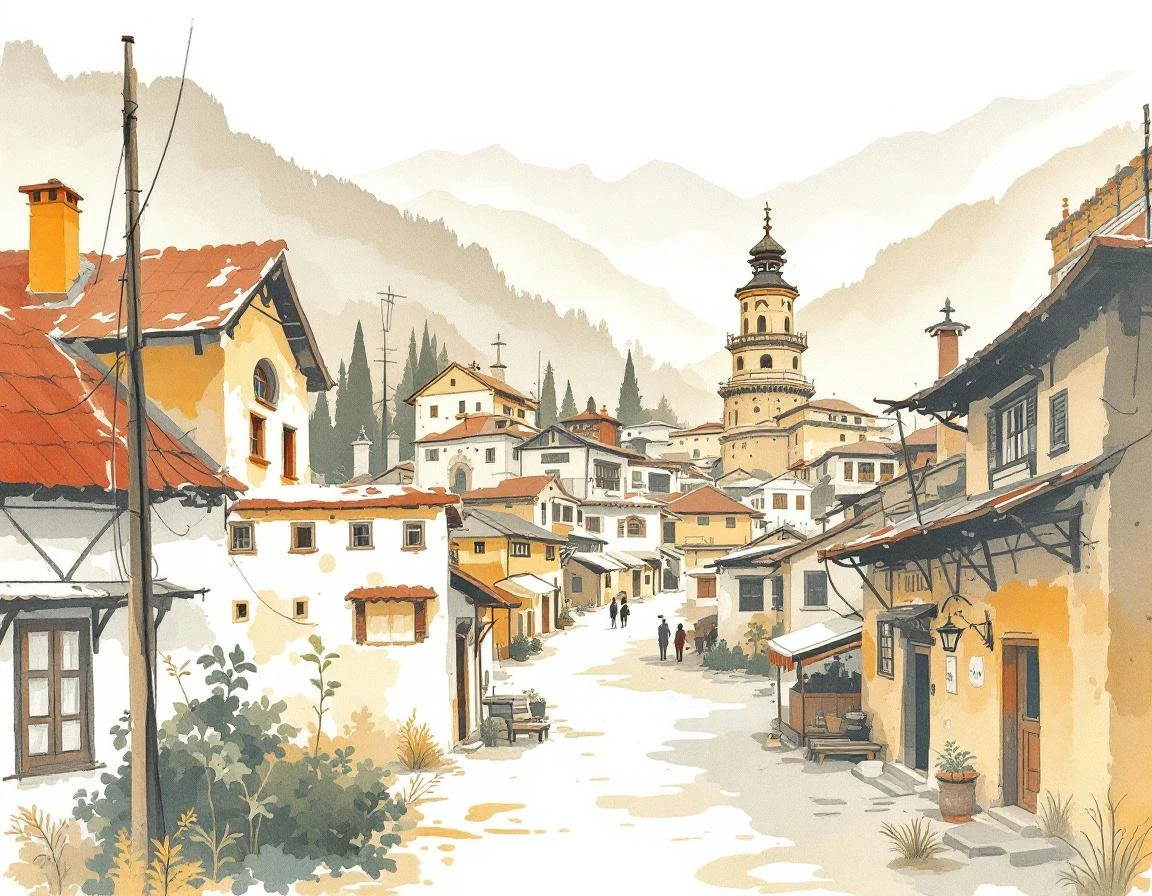
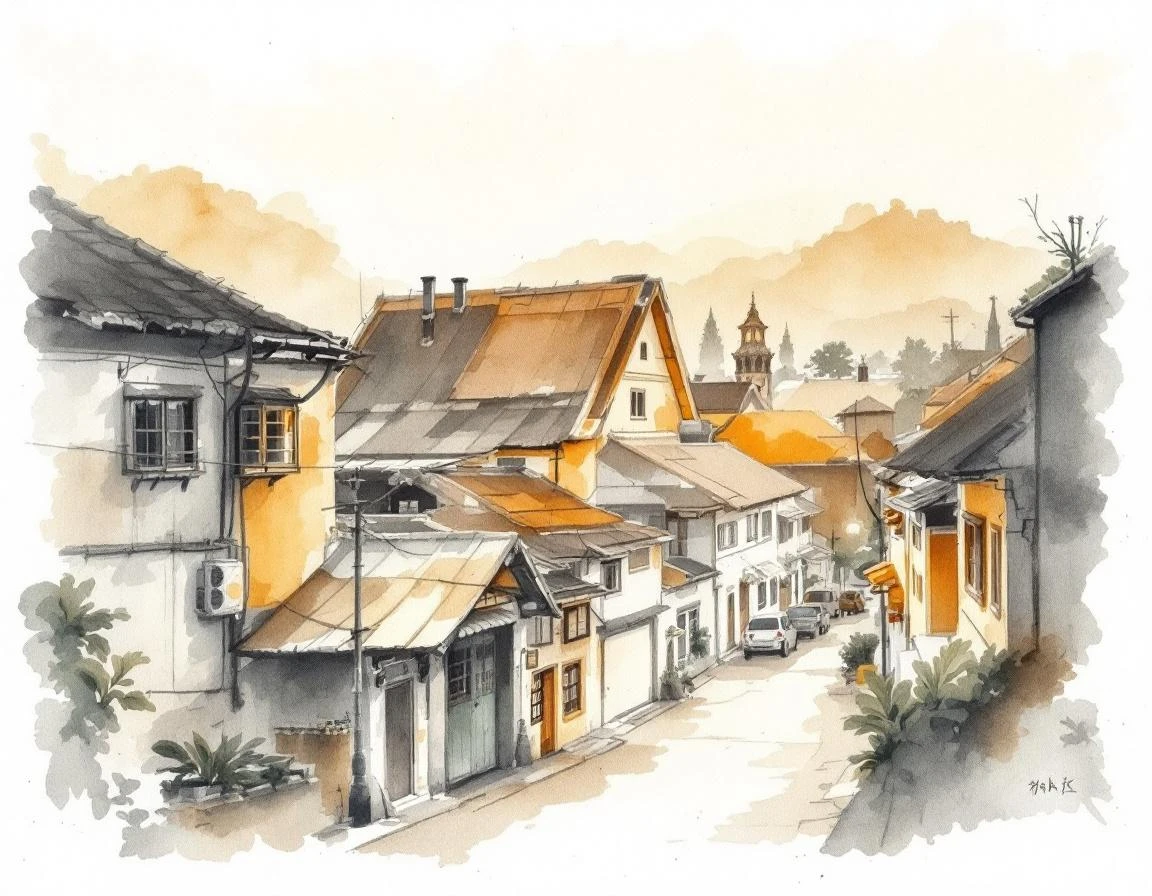
Place names in this region tend to be functional rather than decorative. A name like *Namche* ("sky market") describes what the place is and where it sits. *Thyangboche* records a founding story. Dzong names, such as Paro Dzong and Trongsa Dzong, tell you the settlement grew around a fortress-monastery, which in Bhutan often meant it grew around administrative and religious power simultaneously. Buddhist and Hindu traditions left deep marks on the naming record. Peaks became associated with specific deities: Chomolungma, the Tibetan name for Everest, means "Goddess Mother of the World." Pilgrimage sites carry names that encode the nature of the sacred encounter, such as *tirtha* in Sanskrit and *neykor* in Tibetan, rather than the geography alone. The same mountain might hold three or four names depending on which community is speaking and which tradition they are drawing from. Linguistic layering is the norm, not the exception. Tibetan, Nepali, Sanskrit, Dzongkha, and dozens of smaller languages have all left sediment in the place-name record. Colonial cartographers added another layer, often mishearing, mistransliterating, or simply inventing spellings that bore little relation to local pronunciation. Many of the anglicized names on nineteenth-century Survey of India maps persist on modern trekking charts, sitting awkwardly alongside the names local people actually use. Altitude and terrain shaped naming in practical ways. Passes are named for the conditions that define crossing them. Villages are named for the water sources, the aspect of a slope, or the season in which they are inhabited. In terrain where the difference between a north-facing and south-facing slope can mean the difference between a winter settlement and a summer one, that kind of precision matters.
Altitude and Topography
Settlement names across the Himalayan region tend to describe the land with unusual precision - a necessity in terrain where a few hundred meters of elevation separates pasture from permanent snow. Tibetan toponyms embed this directly: *la* marks a mountain pass, *tso* a lake, *lung* a valley. Nepali names work the same way, with *danda* for ridge, *khola* for stream, *lek* for high pasture. Bhutanese place names add *jong* (fortress) and *thang* (meadow or plain) to the same logic. The pattern is practical rather than poetic. In compressed mountain environments where vegetation zones, snowlines, and viable settlement elevations shift within short distances, vague names are useless. A traveler who knows that *la* means pass and *tso* means lake can read a map - or navigate without one. The specificity of the naming tradition is inseparable from the difficulty of the terrain it describes.
Religious Meaning
Religious concepts run deep in Himalayan place names, shaped by centuries of Buddhist and Hindu practice across the same mountain terrain. Tibetan, Bhutanese, and northern Nepali toponyms draw on *gompa* or *gönpa* (monastery), *chörten* (stupa), and the names of specific deities and lineage lamas. Further south, Hindu nomenclature dominates: particular gods, pilgrimage temples, sacred rivers. Mountains, lakes, and caves often carry the names of the practitioners who meditated there, a convention rooted in the belief that sustained practice consecrates a place. The Tibetan tradition of *beyul* - hidden valleys sanctified by masters like Padmasambhava - surfaces in place names across Nepal and Sikkim. Where Buddhism, Hinduism, and older animist traditions have coexisted for generations, compound names pull vocabulary from all three, sometimes in the same word. The place is not secular geography with religion layered on top; the religion is part of how the place is read.
Linguistic Diversity
Place names in the Himalayan region carry the weight of several distinct linguistic traditions layered on top of one another. Indo-Aryan languages dominate the southern foothills, where Sanskrit-derived elements appear frequently in towns with deep Hindu roots. Moving north and east into Tibet, Bhutan, and the upper reaches of Nepal, Tibeto-Burman languages take over, bringing their own phonology and naming logic. Nepali toponyms often draw from both families simultaneously, which makes sense given Nepal's position at the boundary between the two. Smaller languages - Newari, Sherpa, Tamang, Limbu - leave their marks in the territories where those communities have historically lived. British colonial administrators added another layer in the hill stations and administrative centers they established, though this influence is thinner and more localized than in the plains. The result is that neighboring valleys can have place names drawn from entirely different linguistic traditions, a direct consequence of terrain that historically kept communities separate. Himalayan geography did not encourage the kind of cultural homogenization that flattens naming conventions elsewhere.
Administrative Evolution
Himalayan town names carry the weight of several overlapping administrative histories. The vocabulary shifts by region: *drong* (town) or *tsho* (settlement district) in Tibetan areas, *gaun* or *nagar* in Nepali-speaking valleys, *gewog* and *thromde* in Bhutan. Colonial reorganization and post-colonial nation-building standardized many of these names to fit national administrative hierarchies, and Chinese governance in Tibet produced a dual system - official Mandarin names running parallel to traditional Tibetan toponyms that locals continue to use. Tourism added another layer. Settlements along popular trekking corridors near Everest or Annapurna sometimes acquired simplified or respelled names designed for international trail maps rather than local use. Even so, the underlying naming logic has proven durable. Most Himalayan toponyms still describe topography, mark religious sites, or encode local cultural memory, patterns that survived in part because of the region's long geographic isolation and the strength of its oral traditions.
Himalayan Region Town and Place Names: A Working Naming Guide
Himalayan Region town and place names should feel used, not arranged. Start with the ground: high passes, monastery valleys, glacier rivers, hill stations, trade trails, and terraced slopes. Then decide what sort of place is being named, because a monastery town, pass market, hill station, fortress village, pilgrimage stop, or tea slope town asks for a different kind of word than a capital or a ruin. The generator can give you a quick spread, but the choice still has to sound like someone could say it while giving directions, filing a complaint, selling grain, dodging patrols, or pointing at a storm line. Keep a few candidates that disagree with each other. One may sound old enough to have enemies; another may feel like a mapmaker cleaned it up too much. That friction is useful.
Who Gets to Name the Place
Pick the naming authority before you fall in love with the syllables. Locals shorten names in ways officials rarely predict. A tax office wants tidy spelling. A porter wants speed. A monk, elder, trader, surveyor, rebel, guide, or company lawyer may all have a reason to push a different version. For Himalayan Region town and place names, the useful candidate usually reveals who got to write the sign and who kept saying the older word anyway. Read the name in a sentence of dialogue. If every character would pronounce it the same way, the place may be too clean.
Language Care Before Style
Tibetan, Nepali, Bhutanese, Ladakhi, Sikkimese, Hindi, colonial hill station, and local Indigenous names do different work. This is where many generated names go wrong. They borrow surface sound while ignoring who owns the language, whether the place is real, and what history the word may touch. Fiction gives you room to invent, but it does not make every source available for casual decoration. If you need a real cultural reference, narrow it to a specific region and period. If you are making a secondary world, decide what parts of the naming logic you are adapting and what parts you are leaving alone.
The Work Inside the Name
The town needs work inside it. Maybe people came for a ferry, a mine, a shrine, pasture, a school, a harbor, a wall, or a road that cut through older country. Maybe they stayed because leaving cost too much. Let that practical reason roughen the name. A good result can hold an official story and a private one at the same time: the polished name on the station board, the clipped version in a market, the older name used at home, the insult outsiders keep repeating. That layered feel matters more than a rare letter combination.
The Scene Test
Before keeping a result, run it through a small scene. Put it on a weather report, in a grandmother's warning, on a trekking permit, and in the mouth of someone who wants the place forgotten. For Himalayan Region town and place names, the winner should make one concrete promise about geography, class, danger, faith, trade, or memory. It should also leave room for a writer to disagree with it later. Town names age. They get translated badly, painted over, shortened by children, revived by activists, sold by developers, or cursed by people who left. Choose the one that can survive that kind of handling.