
Midwest Town Names - American Towns from Ohio to the Dakotas
Pull names from the Great Lakes factory towns, the corn belt farming communities, and the small towns that gave American realist fiction, including Sinclair Lewis, Sherwood Anderson, and Willa Cather, much of its raw material.
The Midwest Naming Tradition
The American Midwest - Ohio, Michigan, Indiana, Illinois, Wisconsin, Minnesota, Iowa, Missouri, the Dakotas, Nebraska, Kansas - was named in several overlapping waves. French colonial names survive along the Great Lakes and major rivers: Detroit (*de troit*, "the strait"), Chicago (from the Miami-Illinois *shikaakwa*, "wild onion" or "wild garlic"), Milwaukee (from Algonquian, "gathering place by the water"), Des Moines (*rivière des Moines*, "river of the monks"). Indigenous names were either preserved (often corrupted), translated into English, or replaced entirely: Lake Michigan (*misi-gami*, "great water" in Ojibwe), Lake Erie (from the Erie Nation, possibly meaning "long tail" in reference to the lake's shape), Minnesota (*mni sota*, "clear blue water" in Dakota Sioux), Ohio (from Seneca *ohiiyo'*, "great river"). When settlers named new counties and towns, they sometimes reached for Indigenous terms - a kind of nostalgic acknowledgment of the peoples they were displacing. The Northwest Ordinance of 1787 organized the territory north of the Ohio River for systematic settlement, imposing a land survey grid (the Public Land Survey System) that gave the Midwest its characteristic square-section geography. That grid shaped naming too: county roads numbered by section, county seats planted at centers.
Industrial Cities and Farm Towns
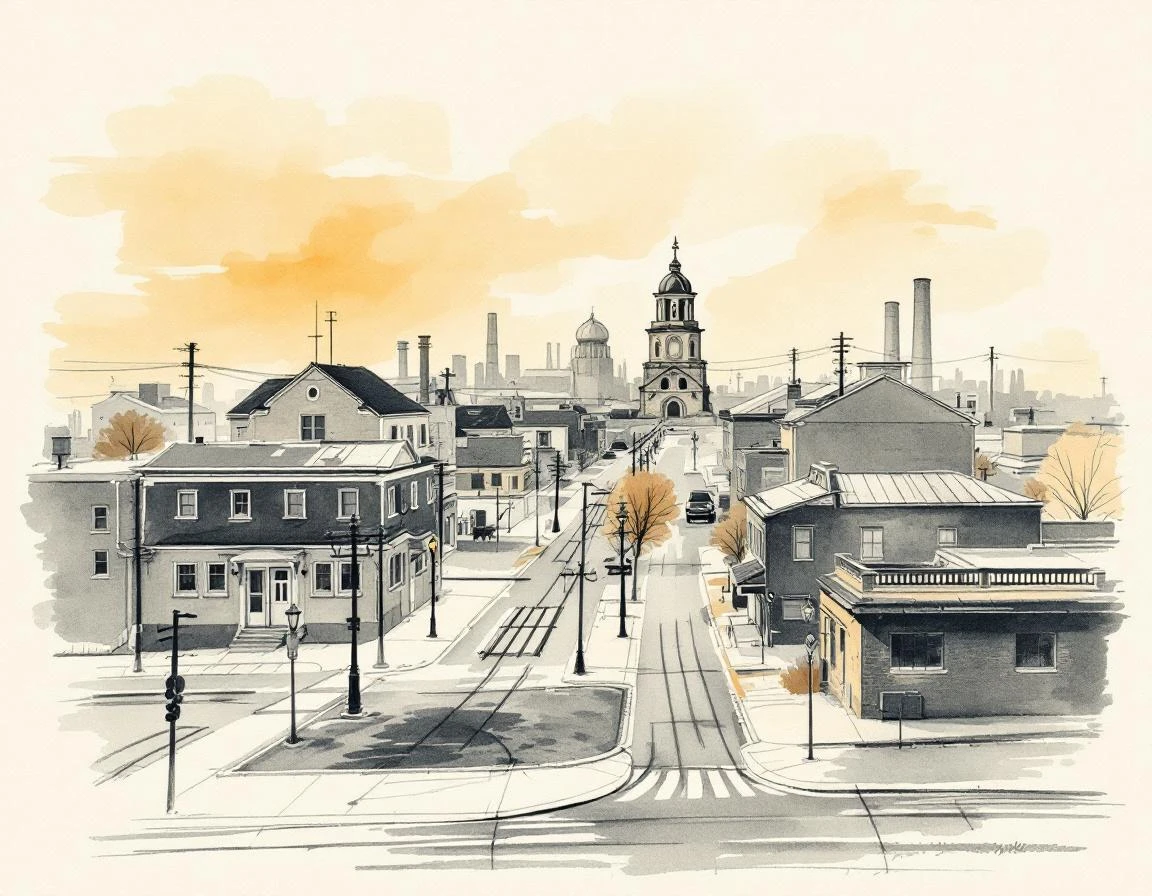
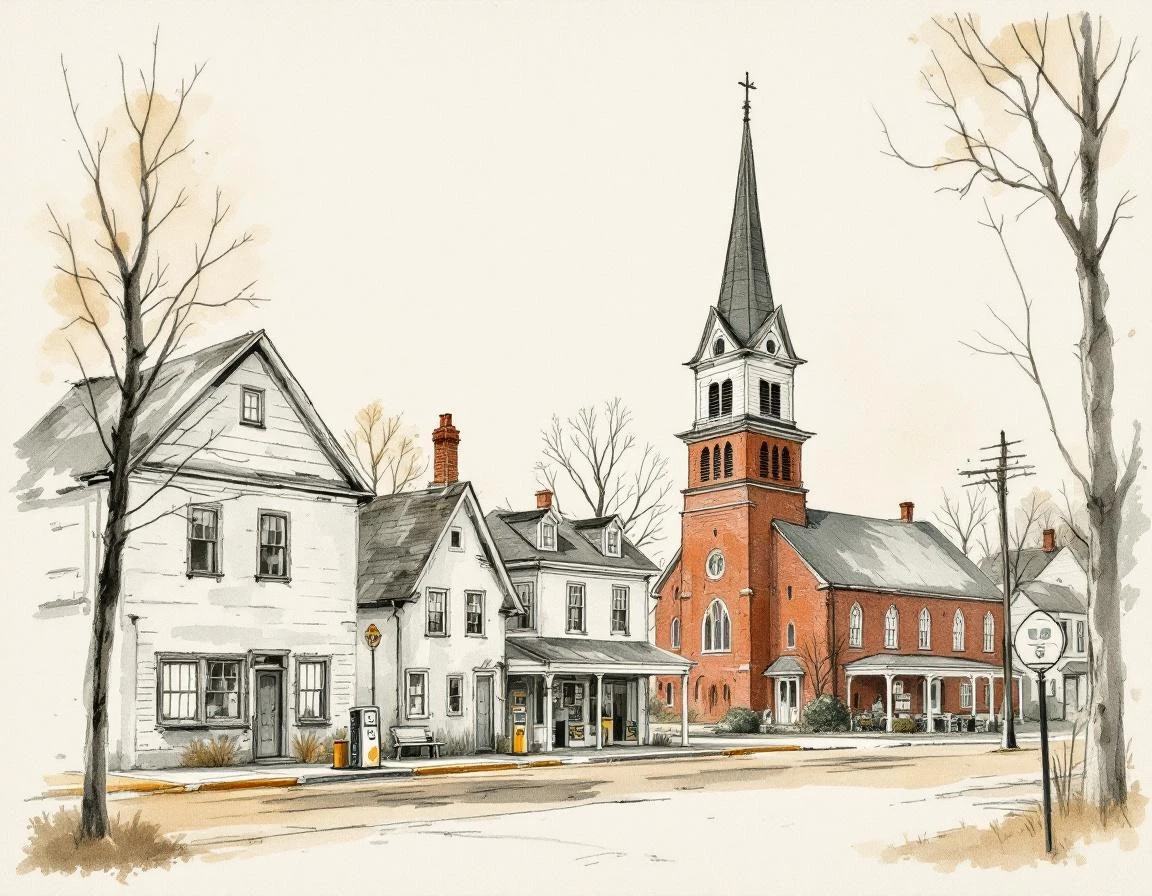
Detroit, Cleveland, Chicago, Gary - these cities grew around concentrated resources, and their names are entirely ordinary. Cleveland comes from General Moses Cleaveland, the surveyor who platted it. Chicago derives from a Potawatomi word for wild garlic or wild onion. Gary, Indiana was built from scratch in 1906 by U.S. Steel. The names were never the point; the industries were - automobiles at the intersection of Minnesota iron ore and Appalachian coal, Lake Erie steel, the rail and meatpacking nexus that Carl Sandburg called "hog butcher for the world." The farm town is a different kind of place, literary and mythological in ways the industrial city rarely is. Sherwood Anderson's Winesburg, Ohio is a fictional composite; Sinclair Lewis's Gopher Prairie, from *Main Street*, is a barely disguised Sauk Centre, Minnesota; Garrison Keillor's Lake Wobegon is somewhere west of the Mississippi and nowhere at all. What these invented towns share with the real ones behind them is deliberate ordinariness - the sense that meaning accumulates quietly, in places that do not announce themselves. The Great Lakes region now carries a post-industrial geography. Cleveland, Detroit, Buffalo, Pittsburgh (technically Appalachian, spiritually Midwestern) - the Rust Belt cities whose populations fell as manufacturing left. Their current cultural identity is shaped by that specific experience: prosperity, then its departure, then the long work of figuring out what comes after.
Using the Generator
For industrial-era Midwest settings - the labor union period, the Great Migration's destination cities, the WWII mobilization, the postwar boom - naming should reflect the specific industrial geography of each city. Chicago received more Black Southern migrants than any other Northern destination, and that fact shapes everything from neighborhood names to the sound of the city's surnames. For farm town Midwest settings, the literary tradition runs from Sinclair Lewis's *Main Street* to Sherwood Anderson's *Winesburg, Ohio*: the rural community novel, the small-town social world, the deliberate ordinariness that Lewis was satirizing and Garrison Keillor was celebrating in what amounts to the same town. Names should carry that quality. For contemporary Rust Belt settings, naming reflects cities that were once nationally significant and are now navigating what comes next. Youngstown, Gary, Flint: the deindustrialization and the opioid crisis are not backdrop, they are character, and the names should feel like they belong to people who stayed.
Midwest Town Names: A Working Naming Guide
Midwest town names should feel used, not arranged. Start with the ground: Great Lakes ports, prairie grids, corn belts, grain elevators, steel towns, union halls, and railroad depots. Then decide what sort of place is being named, because a farm town, county seat, industrial city, lake port, university town, or rail junction asks for a different kind of word than a capital or a ruin. The generator can give you a quick spread, but the choice still has to sound like someone could say it while giving directions, filing a complaint, selling grain, dodging patrols, or pointing at a storm line. Keep a few candidates that disagree with each other. One may sound official but brittle; another may feel like a mapmaker cleaned it up too much. That friction is useful.
Who Gets to Name the Place
Pick the naming authority before you fall in love with the syllables. Local speech borrows names in ways officials rarely predict. A tax office wants tidy spelling. A sailor wants speed. A priest, elder, county clerk, surveyor, union organizer, or company lawyer may all have a reason to push a different version. For Midwest town names, the useful candidate usually reveals who got to write the sign and who kept saying the older word anyway. Read the name in a sentence of dialogue. If every character would pronounce it the same way, the place may be too clean.
Language Care Before Style
French, Indigenous, German, Scandinavian, Slavic, and English settler layers vary by state. A Dakota prairie town and an Ohio canal town need different music. This is where many generated names go wrong. They borrow surface sound while ignoring who owns the language, whether the place is real, and what history the word may touch. Fiction gives you room to invent, but it does not make every source available for casual decoration. If you need a real cultural reference, narrow it to a specific region and period. If you are making a secondary world, decide what parts of the naming logic you are adapting and what parts you are leaving alone.
The Work Inside the Name
The town needs work inside it. Maybe people came for a ferry, a mine, a shrine, pasture, a school, a harbor, a wall, or a road that cut through older country. Maybe they stayed because leaving cost too much. Let that practical reason roughen the name. A good result can hold an official story and a private one at the same time: the polished name on the station board, the clipped version in a market, the older name used at home, the insult outsiders keep repeating. That layered feel matters more than a rare letter combination.
The Scene Test
Before keeping a result, run it through a small scene. Put it on a weather report, in a grandmother's warning, on a grain contract, and in the mouth of someone who wants the place forgotten. For Midwest town names, the winner should make one concrete promise about geography, class, danger, faith, trade, or memory. It should also leave room for a writer to disagree with it later. Town names age. They get translated badly, painted over, shortened by children, revived by activists, sold by developers, or cursed by people who left. Choose the one that can survive that kind of handling.