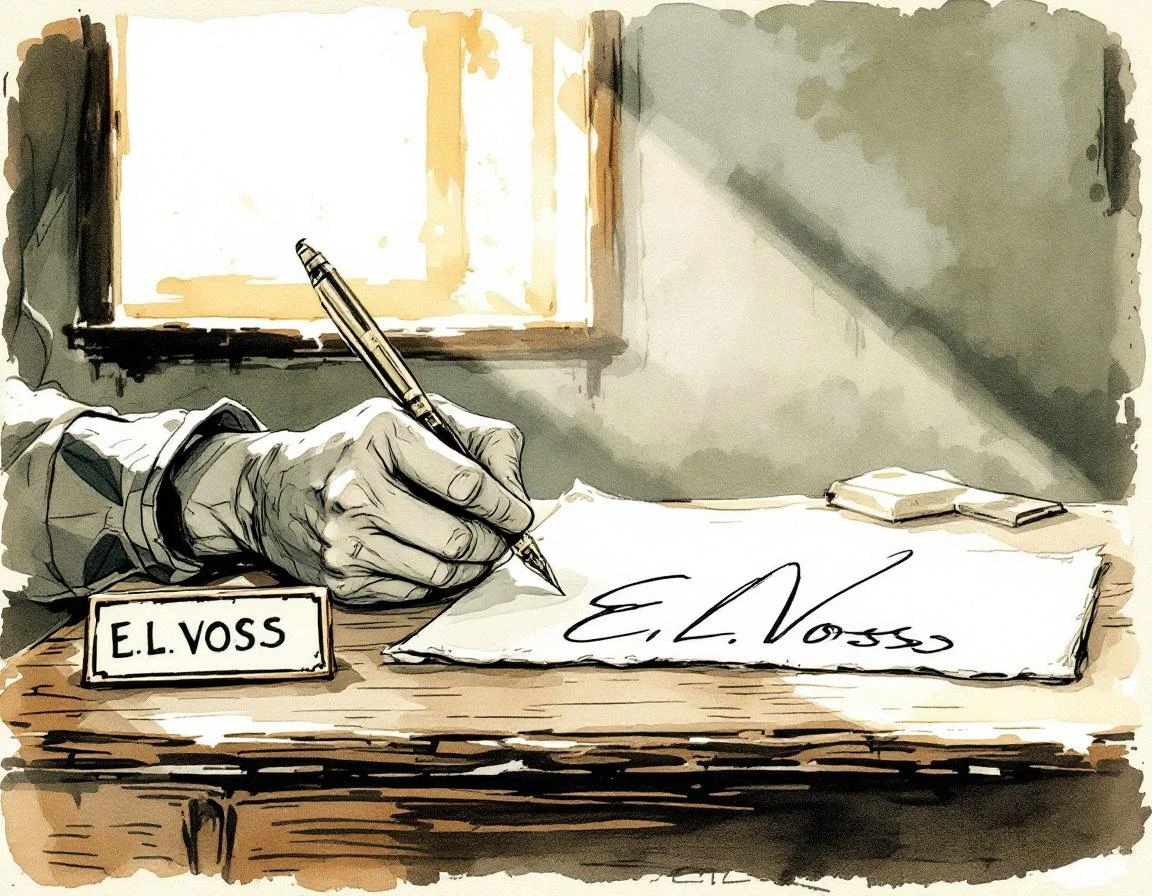

Mystery Pen Name Generator: Creating a Usable Author Identity for Detective Fiction
Choosing a pen name for mystery fiction matters more than most writers expect. Readers browse by feel before they read a word, and a name that fits the genre, angular and controlled, can pull someone in from a crowded shelf.
Why Mystery Authors Choose Pen Names
Mystery writers adopt pen names for reasons particular to the genre's traditions and marketplace. Some authors use pseudonyms to separate their detective fiction from careers in law enforcement or criminal justice, which lets them draw on professional knowledge without compromising their day jobs. Others choose names that project the analytical, observational quality central to the genre's appeal. A well-chosen mystery pen name can signal subgenre immediately. Readers browsing a shelf know, almost instinctively, whether a name belongs to a cozy or a hardboiled procedural. The genre has a long tradition of distinctive pseudonyms: Agatha Christie's clarity, Ellis Peters's slightly antiquarian ring, P.D. James's cool authority. Each name does quiet work before the cover copy begins. Many successful mystery writers favor names with a period quality, something that nods to the Golden Age without feeling costumed. That sensibility still sells. Readers who love Dorothy L. Sayers or Ngaio Marsh are not shy about their preferences, and a name that rhymes with that tradition can earn trust quickly. Regional or cultural specificity is another reason writers reach for pseudonyms. A name can quietly signal setting: a Welsh village, a Chicago precinct, or Edwardian London. Writers running multiple series often use different names to keep the tones from bleeding together: a lighthearted amateur sleuth series and a grimmer police procedural rarely share an audience, and separate names help readers find what they came for.
Characteristics of Effective Mystery Pen Names
Mystery pen names tend to cluster around a recognizable set of qualities: balanced syllables, a faint suggestion of classical education, occasionally a literary echo that genre readers will catch without quite being able to place. The initials convention, A.C. Doyle, P.D. James, E.X. Ferrars, has never really left mystery publishing, partly because it reads as formal without being stuffy, partly because it keeps the author at a slight remove, which suits the genre's temperament. Subgenre matters more in mystery than in most fiction. A name that fits a cozy set in a Cotswolds village reads differently from one attached to a hard-boiled procedural or a locked-room puzzle in the Christie tradition. Readers sorting through a crowded shelf are pattern-matching faster than they realize, and a name that signals the wrong register loses them before the jacket copy does its work. The generator tries to produce names that sit convincingly inside those traditions rather than merely sounding vaguely bookish. When you are evaluating what it gives you, it helps to picture the name on a cover designed for your specific corner of the genre and to say it aloud, since audiobook narrators will introduce you by it, and so will you, eventually, at a reading.
Using Our Mystery Pen Name Generator Effectively
To get useful results, tell the generator something specific about your fiction. A cozy set in 1930s Cornwall needs a different name than a contemporary procedural set in Baltimore. What kind of detective do you write: amateur, police, private investigator, forensic specialist? What is the period and setting? These details shape naming conventions in ways that matter: readers of Agatha Christie-style puzzle mysteries bring different expectations to an author name than readers of James Ellroy. If you care about how the name sounds, say so: formal versus approachable, gender-neutral versus clearly gendered. If you are writing under a pen name partly for privacy reasons, mention that too. The more concrete you are, the less generic the output. Vague inputs produce vague suggestions. If you already have a fragment you like, share it: a surname, a rhythm, or a first initial. The generator works better as a refinement tool than with a blank page.
Testing and Refining Your Mystery Pen Name
Before settling on a name, run each serious contender through a few tests. A name that fits a Cotswolds village mystery can feel wrong on a hardboiled procedural set in Detroit; the genre signals are different, and readers pick up on that faster than you might expect. Search each candidate online. Mystery fiction has a long history and a devoted readership; the last thing you want is to share a name with a mid-century pulp writer whose work carries baggage, or to collide with someone currently publishing in your subgenre. If you have beta readers or a writing group with actual genre knowledge, ask them. Not "does this sound like an author?" but "what kind of book do you imagine this person writing?" The gap between your answer and theirs is useful information. Check domain and social media availability early. Mystery writers tend to build platforms around the work itself: research methods, puzzle construction, and the traditions of the form. The name needs room to grow beyond a single book. Finally, picture the name on a cover. A cozy with illustrated teacups and a noir with a rain-slicked street are asking different things from a byline. If the name only works for one, that is worth knowing before you commit.
Building a Mystery Author Brand Around Your Pen Name
Your pen name is a starting point, not a finished identity. Once you have one, the rest of the brand tends to follow from it: the typeface on your website, the tone of your newsletter, whether your author photo leans toward Agatha Christie's formal reserve or something grittier. Some mystery writers develop a logo or a recurring visual motif that travels across covers and series pages. Others let the name do the work quietly, building recognition through consistency rather than design. Neither approach is wrong. What matters is that the name and the surrounding material feel like they belong to the same person. The communication side is worth thinking about too. Readers of detective fiction often want to know how the puzzle was built. A newsletter that talks through research methods, historical sources, or the mechanics of fair-play plotting can deepen the relationship without requiring you to perform a personality. Writers like John Dickson Carr and Dorothy L. Sayers were open about their craft; that transparency became part of what readers trusted. In a genre where series run long and sleuths become companions, a name readers can find again matters. That is the practical case for getting it right early.