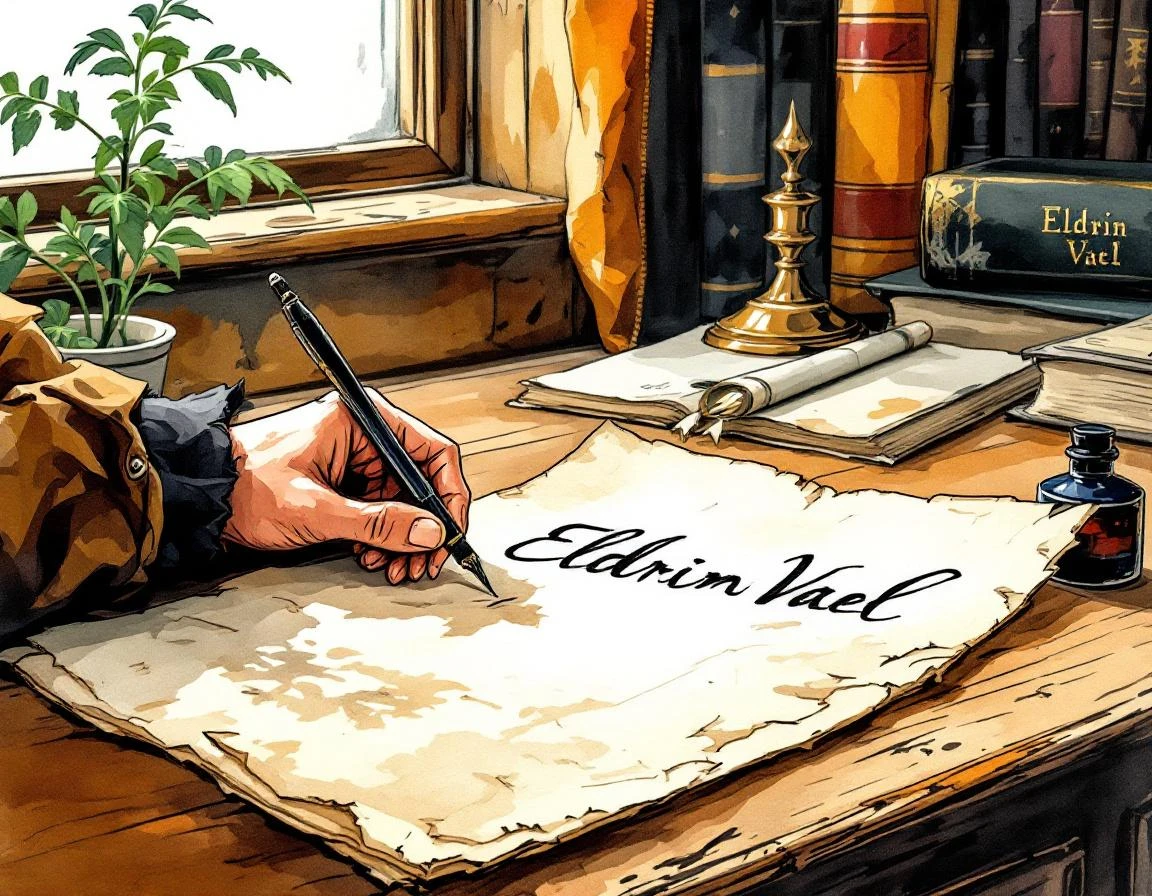

Fantasy Pen Name Generator: Crafting an Author Identity for Magical Worlds
Fantasy readers browse by feel. A name like *Ursula K. Le Guin* or *Robin Hobb* does real work before anyone reads the first sentence: it signals register, suggests a tradition, makes a quiet promise about what's inside. Your pen name can do the same. The genre has its own naming conventions, and they're worth studying before you invent. Tolkien drew on Old English and Norse phonology. Le Guin chose initials partly to sidestep assumptions about women writing science fiction. Robin Hobb is a pseudonym itself; Margaret Ogden wrote under a name that sounds like it belongs in the world she built. None of these choices were arbitrary. A pseudonym that fits the work earns trust. One that strains for effect, all apostrophes and hard consonants, tends to date quickly and signals effort over confidence.
Why Fantasy Authors Choose Pen Names
Fantasy writers adopt pen names for practical and creative reasons. Some use pseudonyms to keep their speculative fiction separate from work in other genres or from a day job, which avoids confusion and opens up room for a different register. Others choose names that fit the tone of their fantasy worlds better than their birth names do. A pen name can quietly signal subgenre. The initials convention Tolkien used, the plain Anglo-Saxon plainness of Robin Hobb, the compressed strangeness of N.K. Jemisin's initials-plus-surname - each positions the writer within a tradition before the reader opens the book. For many readers, the name and the world become the same thing. Ursula K. Le Guin is inseparable from the Earthsea archipelago in a way that a more generic name probably would not be. Your pen name does not need to announce your subgenre outright. But it will carry associations whether you intend them or not, so it is worth thinking about what those associations are and whether they match what you are actually writing.
Characteristics of Effective Fantasy Pen Names
Fantasy pen names tend to cluster around a few recognizable strategies. The most durable ones borrow from Old English, Norse, or Celtic phonology: hard consonants, unexpected vowel pairings, and syllable counts that sit slightly outside everyday speech. Think of how Ursula K. Le Guin carries a different weight than a plainer name would, or how T.H. White signals literary seriousness before you've read a word. Initials are common in the genre for practical reasons: they obscure gender, compress awkwardly long surnames, and look clean on a spine. They also carry a faint suggestion of the academic or archival, which suits writers working in secondary-world traditions. Some authors choose names that gesture toward their source material: a name rooted in Slavic sounds for Slavic-inflected folklore, or something with Welsh orthography for Arthurian work. That kind of coherence can make the name feel like the first sentence of the book. The generator works through these same principles: phonological weight, genre legibility, and the practical question of whether a reader can say the name aloud when recommending your book to someone else. A name no one can pronounce does not travel far by word of mouth.
Using Our Fantasy Pen Name Generator Effectively
Tell the generator what kind of fantasy you actually write. Norse mythology and Tolkien-derived secondary worlds call for different sounds than a wuxia-inflected setting or something rooted in West African oral tradition. Dark, morally ambiguous work (think Joe Abercrombie's *First Law* books) reads differently on a cover than hopeful, luminous adventures in the vein of Robin McKinley. The name should fit the shelf the book belongs on. Be specific about what you're drawn to: particular consonants, syllable counts, whether you want something that reads as gendered or neutral, whether you need real separation between your pen name and your legal identity. Practical constraints are worth naming early. If you already have fragments, bring them in: a sound you keep coming back to, a word from a language you love, or half a name that almost works. It is easier to refine something partial than to build from nothing. Once you have candidates, say them out loud. Imagine a convention badge, a spine, someone recommending the book to a friend by name. The names that survive that test tend to be the ones worth keeping: distinctive enough to stick, easy enough that readers will not stumble over them twice.
Testing and Refining Your Fantasy Pen Name
Before committing to a name, run each serious candidate through a few practical checks. Search the name alongside terms from your subgenre. A name that suits a Dunsany-inflected secondary-world story may read as ironic or mismatched on a grimdark military fantasy cover; register matters, and fantasy readers notice. Search more broadly too: you want to know whether the name already belongs to a working author, a controversial figure, or anything that will follow you into every Google result. If you have beta readers or a writing group familiar with the genre, ask them cold: no context, just the name. First impressions are the data point you cannot manufacture yourself. On the practical side, check domain availability and social media handles together, not separately. Fantasy readers gather on Goodreads, Reddit's fantasy forums, and genre-specific corners of the internet, and a fragmented or unavailable username across those platforms creates friction you do not want at launch. Finally, look at the name in actual cover typography. Fantasy titles lean toward stylized letterforms: serifs with texture and display fonts with weight. A name that reads cleanly in a document can buckle or disappear in that context. Paste it into a mock cover before you decide.
Building a Fantasy Author Brand Around Your Pen Name
A pen name is only the beginning of an author identity. Once you have one, think about how it shapes everything around it: the visual register of your website, the tone of your author photo, and the typography on your covers. Ursula K. Le Guin and Gene Wolfe did not just write books; they projected a consistent sensibility across every surface readers encountered. That coherence is what you are building toward. Some authors go further and develop a sigil or emblem tied to the name, something that travels onto spines, bookmarks, and correspondence. It is an old tradition, closer to a colophon than a logo, and it works because fantasy readers tend to be collectors who notice that kind of detail. Your name will also quietly shape the voice you use in newsletters, social posts, and the author's note at the back of a book. A name with weight invites a certain register. A lighter, stranger name can permit more playfulness. Neither is wrong, but they pull in different directions, and the writers who feel most coherent are usually the ones who let the name and the voice agree with each other. In a genre where readers follow authors across trilogies and interconnected worlds, the way readers tracked Robin Hobb through the Realm of the Elderlings or followed Steven Erikson across ten *Malazan* volumes, a name that is easy to remember and search for does real practical work. The generator is a starting point for finding one worth keeping.