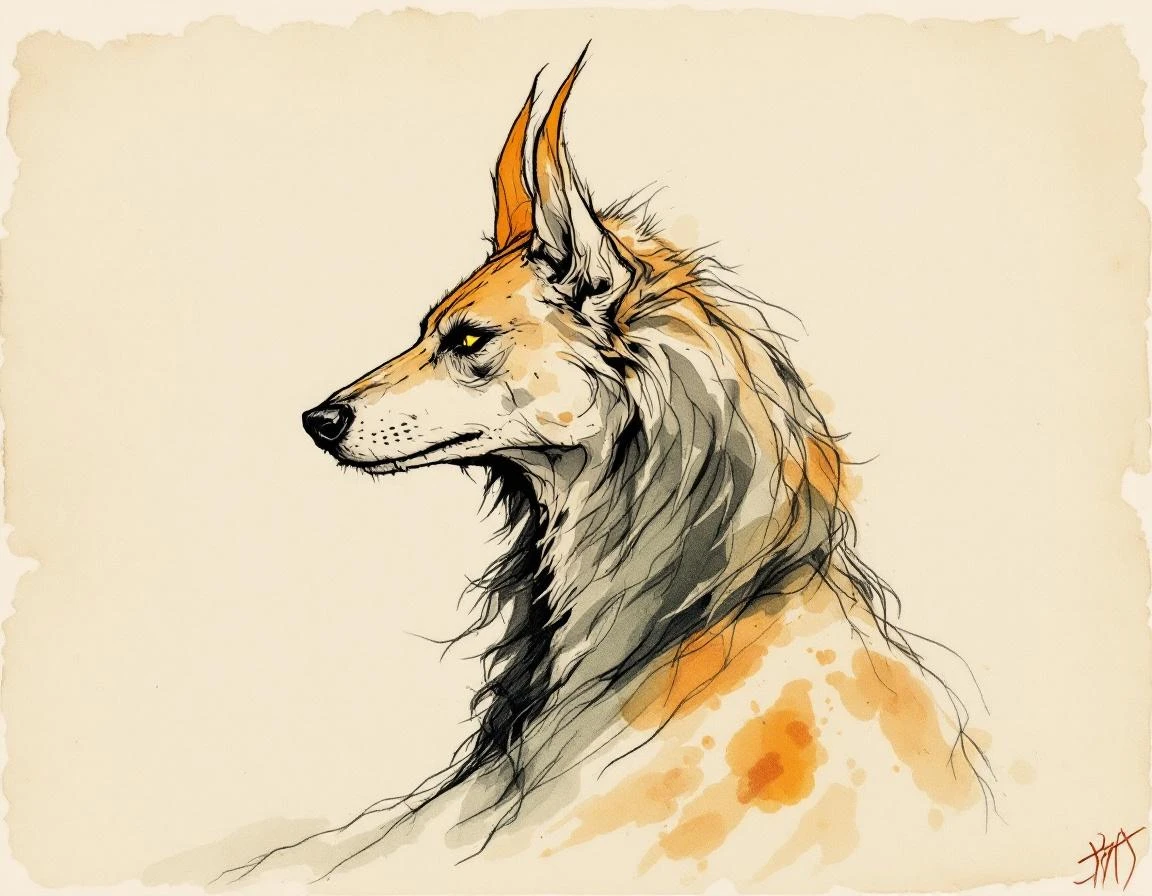


Hellhound Name Generator - Names for the Guardian Dogs of the Underworld
Generate hellhound names drawn from Cerberus mythology, Wild Hunt tradition, and spectral-dog folklore - for horror fiction, dark fantasy, and stories where the boundary between death and the living is patrolled by something with teeth.
Hellhounds Across World Mythology
Spectral dogs - guardians of the threshold between life and death, hunters in service of the dead - appear in virtually every major mythology. The most famous is Cerberus, the three-headed dog who blocks the entrance to the Greek underworld, keeping the dead inside and the living out. His name probably derives from the Proto-Indo-European word for "spotted," or possibly from a root meaning "demon of darkness": Kerberos, the spotted one. Norse mythology gives us Garmr, who guards the gate to Hel (the Norse realm of the cold dead) and will break free at Ragnarök to fight the gods - guardian and harbinger both, the end of everything wearing a dog's face. Celtic tradition has the Cwn Annwn, the Hounds of Annwn (the Welsh Otherworld): white dogs with red ears who hunt across the sky in service of the Lord of the Otherworld, their baying audible in storms. Black Dog folklore in the British tradition - the Barghest, the Black Shuck, the Padfoot - sits slightly to the side of this. These are large spectral dogs seen on lonely roads at night, and their presence predicts death: yours, or someone close to you. Not servants of death, exactly. The announcement of it.
Naming Hellhounds: The Language of Death and Hunt
Cerberus sets the template: mysterious, slightly wrong, the meaning obscured by centuries of distance. The three-headed dog who guards the most important threshold in Greek mythology has a name that no one can fully etymologize - appropriate for a creature at the edge of what human understanding can reach. For original hellhound names, the phonological profile should suggest speed, darkness, and that threshold quality: sounds that move fast like a running predator, consonants that stop suddenly like something cutting off in the dark. Hard stops, sibilants, names that can be spoken with urgency. Not cozy. Not comfortable. They should feel like shouting into the dark after something already gone. The hunting quality of hellhounds also suggests drawing from hunting and tracking traditions: words for scent, pursuit, night, teeth, speed. A hellhound from a Norse setting needs a different name than one from a Celtic or Greek setting, even if the essential function - death-guardian, threshold-keeper - is the same.
Hellhounds in Fiction and Gaming
Hellhounds in popular culture span a wide range: from the severely threatening (the Hound of the Baskervilles, a phosphorescent dog deployed as a murder weapon with mythological imagery deliberately invoked) to the comic (Clifford the Big Red Dog is perhaps not actually a hellhound, despite being large and red) to the genuinely terrifying (the hellhounds in *Supernatural* come for people whose souls belong to demons, invisible until the moment of death). In D&D, hellhounds are explicit: fire-breathing dogs in service of the Nine Hells, used as hunters and messengers by more powerful devils. They sit at the intersection of hunting-dog loyalty and infernal cruelty - interesting precisely because loyalty and cruelty aren't always incompatible. For literary purposes, the most compelling hellhounds are those whose fidelity is complete and whose purpose is terrible. They are loyal, utterly loyal, to the cause of death itself. There's something genuinely affecting about a creature who is a good dog in every sense of "good dog" while doing the work of the underworld. The best hellhound fiction leans into that paradox rather than resolving it.
Using the Generator for Your Hellhound
When generating hellhound names, decide first which tradition your hellhound inhabits. Greek tradition (Cerberus-adjacent) suggests ancient, slightly obscure names with deep mythological roots. Norse tradition (Garmr-adjacent) follows Old Norse phonology: hard consonants, long vowels, names that feel like weather. Celtic tradition (Cwn Annwn-adjacent) draws on Welsh or Irish phonology - the sounds that feel like they were sung before they were spoken. Consider whether this hellhound has a personal relationship with any living character. A hellhound that is purely a force - the spectral black dog seen from a distance - doesn't need a personal name, only a class designation. But a hellhound who hunts a specific target, who has crossed paths with the same person more than once, who has developed (within its severely limited capacity for development) something that might be interest in its prey: this one needs a name specific enough to carry individual identity. For tabletop RPG encounters, hellhounds are most memorable when they feel like they have a reason for being present - a soul they're owed, a boundary they're enforcing, something they have been sent for. Let the name suggest that purpose.
Pursuit Is Colder than Fire
Hellhound names should feel like pursuit. Cerberus, Black Shuck, Garmr, and churchyard dogs all sit near this territory, but they do different jobs. Some guard thresholds. Some hunt oathbreakers. Some warn of death. Pick the job first.
Pursuit Pressure
The name should sound like something that keeps coming. Fire is optional; the chase is not.
Final Naming Pressure
A final check should put the name into a sentence where the creature or character changes the room. If the name only works as a label, keep searching. If it changes how the scene feels, even before anyone explains the lore, it belongs on the shortlist.
Pursuit Pressure
The name should sound like something that keeps coming. Fire is optional; the chase is not.
Naming Detail That Matters
Hellhound names also need a rule of appearance. Does the hound come for oathbreakers, dying families, grave robbers, or anyone who hears the chain behind them? The name should lean toward that rule. A threshold guardian and a road omen may both be black dogs, but they should not answer to the same kind of name.
Hellhound Pressure
Use this Hellhound note as a scene test, not as decoration. The name should change how the character, creature, or local rumor behaves on the page.
Hellhound Names for Omen and Obedience
Hellhound names should feel like commands, warnings, or omens rather than ordinary pet names. A gate-keeper, soul tracker, battlefield apparition, infernal hunting dog, and loyal familiar all sit in different story traditions. Decide whether the name was spoken by a demon master, carved on a warding charm, or whispered by someone the hound spared once.
Leash Names and True Names
The leash-name may be short and brutal, but the true name can carry ash, crossroads, burial smoke, iron, fever, or the last scent of a target. Test the candidate in a command and in a moment of unexpected mercy. That contrast keeps a hellhound from being only a set of glowing eyes.