
Gnoll Name Generator - Names for the Hyena-Folk of Dark Fantasy
Gnoll names for tabletop RPGs and fantasy fiction - for the hyena-formed humanoids of the dungeon tradition, rooted in demonic mythology and pack-warfare.
Gnolls in Fantasy Tradition
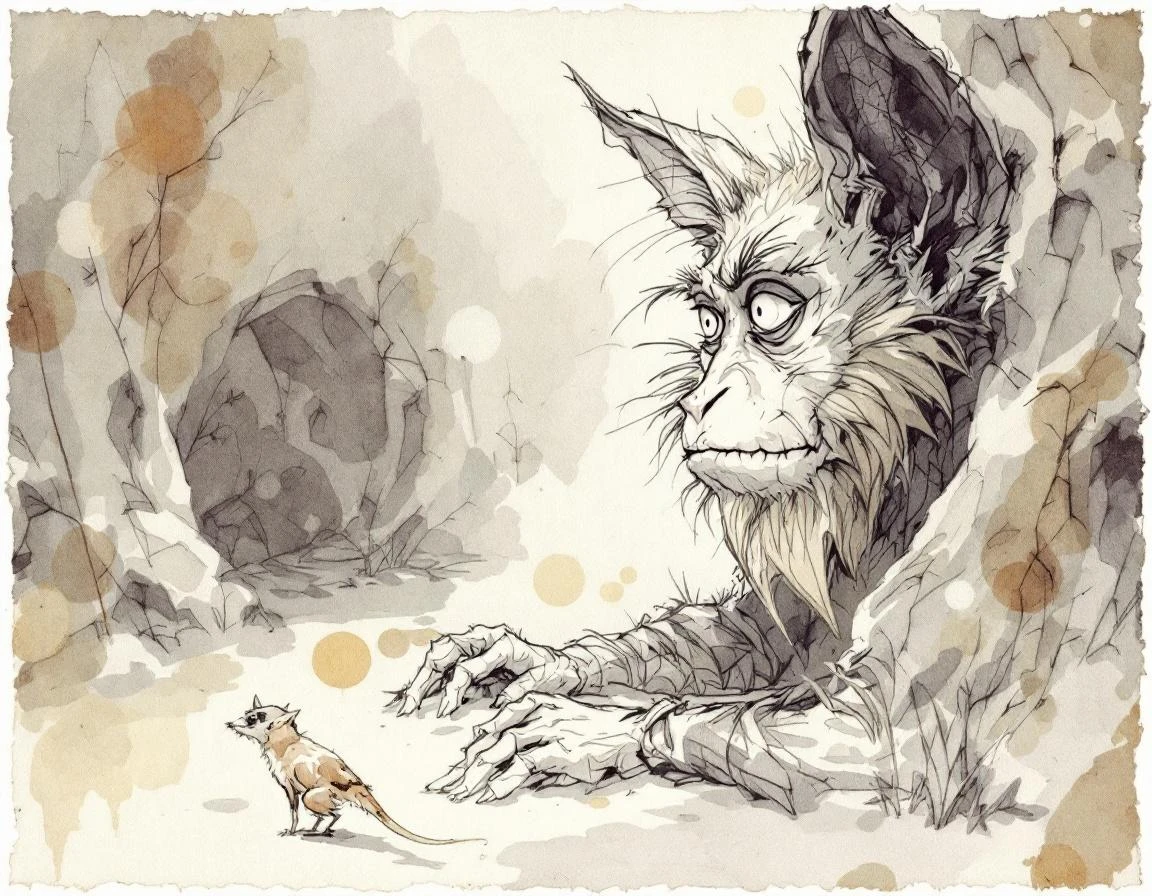
Gnolls are one of the few fantasy monster races that didn't arrive wholesale from a single mythology. The word itself may be a portmanteau of "gnome" and "troll," appearing first in Lord Dunsany's 1912 *The Book of Wonder* as simple animal-humanoids, before D&D adopted and fundamentally reimagined them. What emerged over decades of tabletop lore is something with its own internal consistency. In D&D tradition, gnolls are hyena-humanoids created by the demon lord Yeenoghu - marked by demonic origin and driven by a hunger that is both physical and spiritual. *Volo's Guide to Monsters* describes them less as a civilization than as a force of nature: they don't build, don't farm, don't preserve. A gnoll warband moves through a region the way a wildfire does, leaving nothing behind. That framing is what makes them interesting to write. Their horror is ecological rather than personal. They embody consumption with no endpoint, no satisfaction, no balance - which gives writers a vehicle for themes that are harder to dramatize directly: resource extraction, ecological collapse, addiction as something closer to a cosmic principle than a personal failing.
Gnoll Naming: Pack Hierarchy and Demonic Heritage
Gnoll naming in D&D tradition runs short, harsh, and guttural - names that sound like barks, laughs, and snarls. The hyena "laugh" is actually a submission and greeting vocalization, a biological detail worth knowing for characterization, and it suggests names built on irregular consonants, sudden stops, and sounds that feel slightly wrong in the mouth. For gnolls who feel authentic to the tradition: lean on harsh consonants (k, g, gh, kh, rr), short vowels, and names that could plausibly be shouted across a battlefield or muttered at the back of a pack. Anything melodious is wrong. Gnolls don't have a bard tradition. For gnolls with more interior life - characters who have developed individual identity beyond pack consciousness, or who come from cultures where demonic origin is something to resist rather than celebrate - slightly longer names with more internal structure can do real work. The gnoll with a three-syllable name has, in some sense, decided they are more than a consumer.
Gnolls as Characters Rather Than Monsters
Gnolls become interesting by the same logic that makes any "monster race" interesting: treat them as a culture with internal variation rather than an undifferentiated mass. If gnolls are created by demonic consumption, what does it look like when an individual gnoll - or a whole sub-group - resists that nature? What does recovery look like for a creature whose very origin is addiction? This is the territory some of the more thoughtful contemporary D&D supplements have started to map: the gnoll who has separated from the pack, who is trying to exist without consuming everything around them, who has developed some relationship with the world beyond predation. The archetype is difficult to write well precisely because it can't sentimentalize the very real violence of gnoll nature. It has to hold the horror and the possibility at the same time, without resolving the tension into something cleaner than it actually is. For tabletop player characters, gnolls work best when the player has thought seriously about what separates *this* gnoll from the pack template. The name can be the first statement of that differentiation: a gnoll who has taken a name that sounds unlike standard gnoll names is already, in the act of naming, reaching for something different.
Practical Naming Notes for Writers and GMs
When creating gnoll names for games or fiction, the phonological profile should distinguish them from other fantasy humanoids. Gnoll names should sound different from goblin names (shorter, more squeaky), orc names (Norse-influenced), and troll names (heavy, slow). Gnolls should sound predatory, quick, and slightly broken. Consider where the gnoll sits in the pack hierarchy. Alphas (typically female - spotted hyenas have a female-dominant social structure) might have more elaborate names or titles. Standard packmates might have only the briefest grunted designation. The weakest members, "the cacklers" in some traditions, might not have individual names at all, only pack designations. Gnolls who interact with other species may adopt simplified versions of their names, or be given entirely different designations by the communities they move through. A gnoll who has lived among humans for years might answer to a human name while keeping their gnoll name private - not out of shame, but because the sounds are simply difficult for non-hyena-anatomy speakers to reproduce.
Pack Sound without Making a Joke
Gnoll names need care because fantasy often treats them as disposable hyena raiders. Hyena vocalization can inspire rhythm without turning the name into a punchline: whoops, laughs, yips, abrupt pitch changes. A gnoll separated from a pack may carry a childhood pack-name, a chosen name, and an insult used by townsfolk.
Pack Pressure
The name should carry pack sound without turning culture into a joke. Belonging, exile, and insult can all leave marks.
Final Naming Pressure
A final check should put the name into a sentence where the creature or character changes the room. If the name only works as a label, keep searching. If it changes how the scene feels, even before anyone explains the lore, it belongs on the shortlist.
Pack Pressure
The name should carry pack sound without turning culture into a joke. Belonging, exile, and insult can all leave marks.
Naming Detail That Matters
A gnoll name can also mark pack politics. Who is allowed to use the birth-name? Who uses the hunt-name? Who spits an exile-name after a failed raid or a refused kill? Hyena rhythm can shape the sound, but social permission gives it meaning. Without that, harsh syllables blur together.
Gnoll Pressure
Use this Gnoll note as a scene test, not as decoration. The name should change how the character, creature, or local rumor behaves on the page.
Gnoll Names for Pack Rank and Hunger Law
Gnoll names should not stop at snarling sound. Pack position, hunting role, scar history, raid reputation, and spiritual taboo can all shape the result. A matriarch, scout, bone-reader, outcast, and war drummer need different kinds of names. Decide whether the name is given by kin, earned in the hunt, or cursed onto the character by enemies.
Pack Use and Outsider Translation
A gnoll name might have a clipped pack form and a longer translation used by traders or captives. That gap can show whether outsiders understand the culture or only fear it. Let scent, trail signs, hyena calls, shared meals, and rank challenges inform the name so the character does not become a single-note monster.