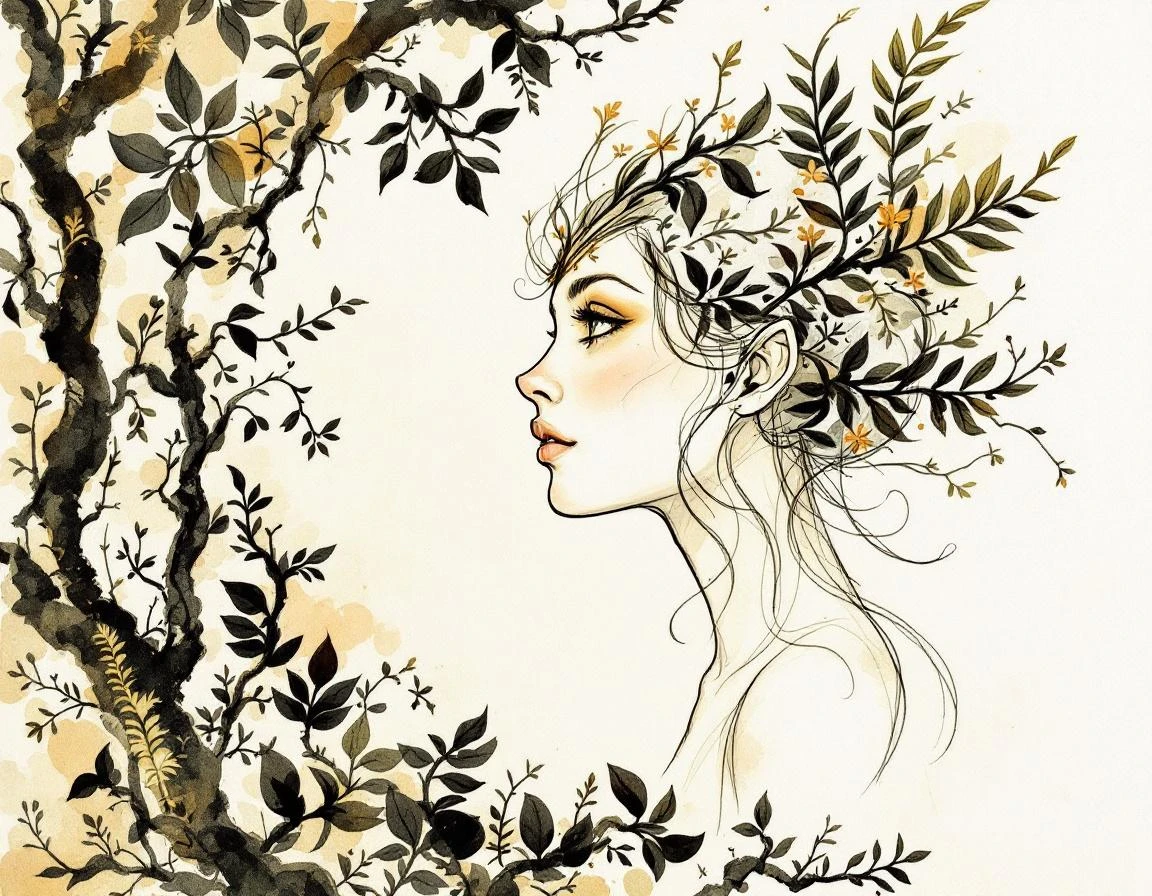

Dryad Name Generator - Names for Tree-Spirits and Forest Nymphs of Greek Tradition
Dryad names drawn from Greek mythological tradition and the literature of tree-spirit folklore - for fiction, tabletop RPGs, and any story set in forests older than the civilizations that border them.
Dryads in Greek Mythology and Nymph Classification
In ancient Greek mythology, dryads are tree-nymphs - spirits that inhabit and personify individual trees or groves. The classification was elaborate and geographically specific: Dryads proper were spirits of oak trees (from *drys*, the Greek word for "oak"); Hamadryads were nymphs so bound to a particular tree that they died when it did; Meliai were nymphs of ash trees; Epimedes and other specialized types inhabited specific species. The most famous dryad in classical literature is probably Eurydice, wife of Orpheus, who was fatally bitten by a serpent while fleeing Aristaeus through a meadow. The scene is telling: tree-spirits are at their most vulnerable when pulled away from their arboreal homes. The Hamadryad Chrysopeleia was beloved by Arcas; he saved her by cutting down her oak, a rescue that nearly destroyed the thing it meant to protect. For writers, the dryad's physical bond to a specific tree is her most interesting narrative characteristic. She cannot simply leave when threats approach. Her safety depends on the safety of her tree, her lifespan is tied to it, her existence is fundamentally *localized* in a way that most fantasy characters' lives are not. That constraint is the source of enormous narrative possibility.
Dryad Naming: Greek Botanical and Natural Roots
Dryad names in Greek tradition follow the same patterns as other nymph names: feminine, two to three syllables, derived from the thing they embody or the place they inhabit. Tree-species names provide direct material - Daphne (laurel), Meliai (ash), Pitys (pine), Balanis (acorn/oak), Kraneia (dogwood), Morea (mulberry). Greek words for arboreal qualities work just as well: *phloios* (bark), *karpos* (fruit), *kome* (foliage, or literally the hair of trees), *rhiza* (root), *pitys* (pine resin). Taking a Greek natural-world word and adding a standard nymph ending (-a, -ia, -e, -eia) produces names that feel classical without being lifted wholesale from myth. For dryads in non-Greek settings, the approach adapts. Celtic forest spirits might draw on Irish or Welsh tree-words: *dair* for oak in Irish, *derwen* for oak in Welsh, *uinnseann* for ash, *coll* for hazel. Japanese forest spirits (*kodama*) follow their own conventions entirely. Knowing which tradition your dryad belongs to is what keeps the naming from feeling like a grab-bag.
Dryads in Modern Fantasy Fiction
Dryads get very different treatments across modern fantasy. C.S. Lewis's *Chronicles of Narnia* includes tree-spirits among Narnia's sentient races - ancient beings who move slowly and care deeply about what happens to forests. Rick Riordan's Percy Jackson series features dryads prominently, often as whimsical but genuinely powerful nature spirits with distinct personalities. Ursula K. Le Guin's Earthsea doesn't use the Greek terminology, but her approach to place-spirits and beings tied to specific locations shares philosophical territory with dryad mythology. The most interesting modern treatments complicate the simple "nature spirit" template by giving dryads genuine interiority about what it means to be rooted in a specific place. A dryad who has spent three hundred years developing attachments to a forest that is now being clear-cut has a grief no other being can quite share. A dryad who discovers her tree has been cut down and survives - in traditions where this is possible - faces a real existential question: who is she now? For dark fantasy, dryads whose trees have been corrupted by blight, dark magic, or toxic soil are fascinating figures. Does the corruption of the tree corrupt the spirit? Does the spirit fight against what is happening to her source? Can a dryad whose tree has died become something other than a ghost of herself?
Using the Generator for Your Dryad Character
When generating dryad names, start with the tree. Not as visual flavor - it shapes personality, powers, and the mythological weight the character carries. An oak dryad embodies longevity, strength, and the sacred: oak was Zeus's tree, and the rustling leaves at Dodona were considered oracular. A willow dryad belongs to grief, flexibility, and the liminal edge between land and water. A cherry dryad might carry beauty and transience, something close to the Japanese *mono no aware*. An apple dryad is tangled up with temptation, knowledge, and the ambivalent symbolism fruit accumulates across mythologies. Think about how tightly your dryad is bound to her tree. A Hamadryad who dies when her tree dies is a fundamentally different character from one who maintains a bond but can move through the forest. That degree of binding shapes how she relates to almost everything: danger, strangers, the slow passage of seasons, love. For tabletop RPGs, dryad characters work best when the tree is a physical location in the campaign - somewhere the party returns to, something they come to care about through her. The tree becomes a recurring place, and what happens to it starts to matter.
Begin with the Tree
Dryad names should begin with the tree, not the generic idea of nature. Oak, laurel, ash, pine, willow, olive, and apple all imply different lives. A dryad in an orchard has labor and harvest. A boundary oak has politics. A pine dryad above the snow line will not sound like a riverbank willow spirit.
Tree Pressure
The name should know its tree. Orchard, boundary oak, laurel grove, and snowline pine all ask for different sounds.
Last Pass for This Page
A final check should put the name into a sentence where the creature or character changes the room. If the name only works as a label, keep searching. If it changes how the scene feels, even before anyone explains the lore, it belongs on the shortlist.
Tree Pressure
The name should know its tree. Orchard, boundary oak, laurel grove, and snowline pine all ask for different sounds.
Last Naming Check
One last dryad check: let the tree species discipline the sound. A willow name can bend. An oak name can hold a boundary. A laurel name may carry victory and burial at once. If the name still works after the tree is threatened, it has more than forest prettiness.
Dryad Scene Check
Use this note to test the name in a real scene, where local speech and story pressure matter more than decoration.