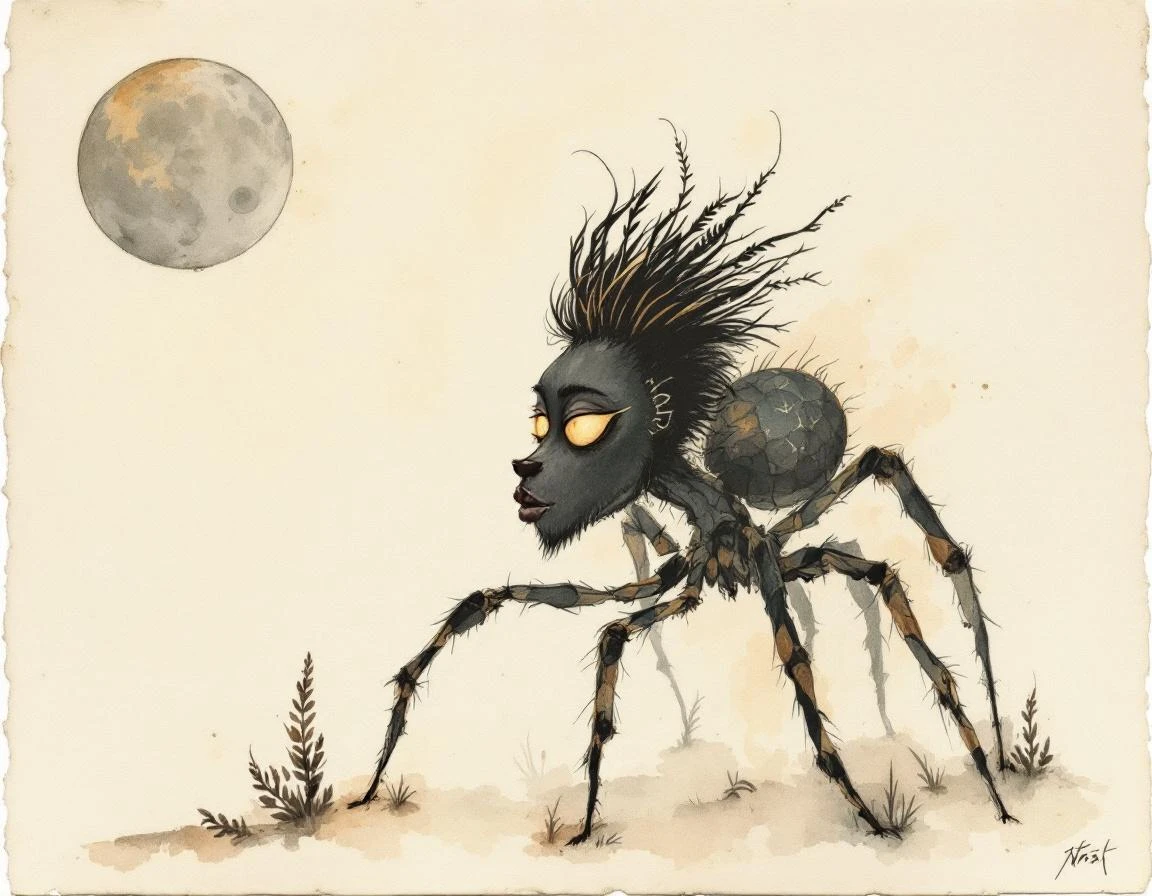


Names with a Web in Them
Anansi names need wit before grandeur. The figure comes from Akan storytelling and from Caribbean retellings where the spider is never only a spider. He bargains, steals stories, humiliates the proud, and survives by talking faster than danger can close its hand. A useful name should keep that quickness. It can be short and bright, with clipped consonants that feel easy to toss across a fire. It can carry Twi, Akan, or diaspora echoes if the setting has earned them. What it should not do is flatten a living trickster tradition into a generic spider villain. If the character is a god, the name can be older and ceremonial. If the character is a village liar, a market fixer, or a child who knows every forbidden path, the name may need to sound ordinary until the scene turns. The strongest Anansi names have two temperatures: friendly at first hearing, sharper after the bargain goes wrong. That double edge is the point.
Trickster Pressure
The name should work when it is told twice and means something slightly different the second time. Let repetition, debt, and a private joke do the work.
Folklore Pressure on the Shortlist
The old Anansi stories are about appetite, language, and social inversion. He is small enough to be dismissed and clever enough to reorder the room. That means the generator output should be tested against action, not decoration. Put a candidate into a story where someone is being cheated, rescued, or taught a lesson they did not ask for. If the name sits there politely, it is probably too clean. Anansi characters benefit from names that can be mispronounced by outsiders, shortened by family, or turned into a warning by people who lost money to them. The web image matters, but web vocabulary by itself gets tired quickly. Silk, thread, knot, trap, loom, and net can inform the sound without announcing the metaphor. A spider trickster named Webfang has already told the reader too much. A name with a sly click in the middle can do more with less.
Trickster Pressure
The name should work when it is told twice and means something slightly different the second time. Let repetition, debt, and a private joke do the work.
Using the Name in a World
An Anansi-inspired character changes the politics of a setting because tricksters expose systems. Place the name where power is brittle. A royal court uses formal titles, so the trickster's private name becomes dangerous knowledge. A port city trades rumors, so a name may travel under several spellings before the character arrives. In a children's folktale, the name can bounce. In adult fantasy, it can carry the sour taste of debt. Think about who is allowed to say the full name. A grandmother may use it as a rebuke. A rival may refuse it and choose a nickname that makes the character seem smaller. A priest may know an older form and speak it only when the story moves near myth. Those social layers matter more than making every syllable sound exotic. The name should behave as if people have used it for years, badly, lovingly, and with suspicion.
Trickster Pressure
The name should work when it is told twice and means something slightly different the second time. Let repetition, debt, and a private joke do the work.
Common Mistakes with Spider Tricksters
The lazy version makes Anansi either comic relief or a sinister spider monster. Both miss the grain of the figure. His danger comes from mind and mouth, not from fangs. Another mistake is borrowing West African or Caribbean flavor without deciding whether the story is honoring a tradition, adapting it, or inventing a related one. The page can help, but the writer still has to choose. If the name leans close to real-language material, do a quick pronunciation check and avoid treating sacred or culturally loaded terms as seasoning. If the name is invented, make the invention consistent. Decide whether final vowels are common, whether names compress in casual speech, whether honorifics attach before or after. Then let the name do story work. Anansi should sound like someone who has already found the exit, even while everyone else is still admiring the walls.
Trickster Pressure
The name should work when it is told twice and means something slightly different the second time. Let repetition, debt, and a private joke do the work.
How to Choose the Final Anansi Name
The final pass should be a little suspicious. Ask who benefits when this name is spoken. In Anansi stories, language is often a tool with a hidden hinge: a joke becomes a contract, a boast becomes evidence, a name becomes the thing that lets the small character survive the large one. Put each candidate into a bargain scene and a storytelling scene. In the bargain scene, the name should feel quick enough to dodge blame. In the storytelling scene, it should be easy for someone else to repeat with pleasure. If it cannot travel by mouth, it is not right for this tradition. Keep one plain nickname beside the formal choice. Tricksters rarely allow one name to hold all of them. The village may know the soft name, rivals may use the ugly one, and spirits may know the old name that makes the whole room go quiet. That layered use keeps the character from becoming a symbol with legs. It also gives the writer small tools for later scenes: who says which name, who refuses to say it, and who learns too late that they have been using the wrong one.
Trickster Pressure
The name should work when it is told twice and means something slightly different the second time. Let repetition, debt, and a private joke do the work.
A Useful Mouth-Test
Say the name as gossip, then as an accusation, then as the first line of a tale told to children who already know the ending. Anansi material lives by repetition, so a name that cannot be repeated with pleasure will not last. Keep spellings clean unless the story has a real reason for marks or apostrophes. The slyness should come from use, not typography. Let one consonant catch. Let one vowel open warmly. Then place the name beside a promise that sounds generous and is not. If the name seems to grin without the prose telling it to, you have probably found the right one.
Trickster Pressure
The name should work when it is told twice and means something slightly different the second time. Let repetition, debt, and a private joke do the work.
Last Check before Choosing
One more test: remove every obvious spider word and see whether the name still feels like Anansi. If it does, the character has more than costume. If it does not, the name was leaning on props. Favor a name that suggests speed, appetite, and verbal slipperiness over one that says web six ways. The old stories have survived because Anansi is useful wherever the small have to outthink the large. Choose a name that understands that pressure.
Trickster Pressure
The name should work when it is told twice and means something slightly different the second time. Let repetition, debt, and a private joke do the work.